
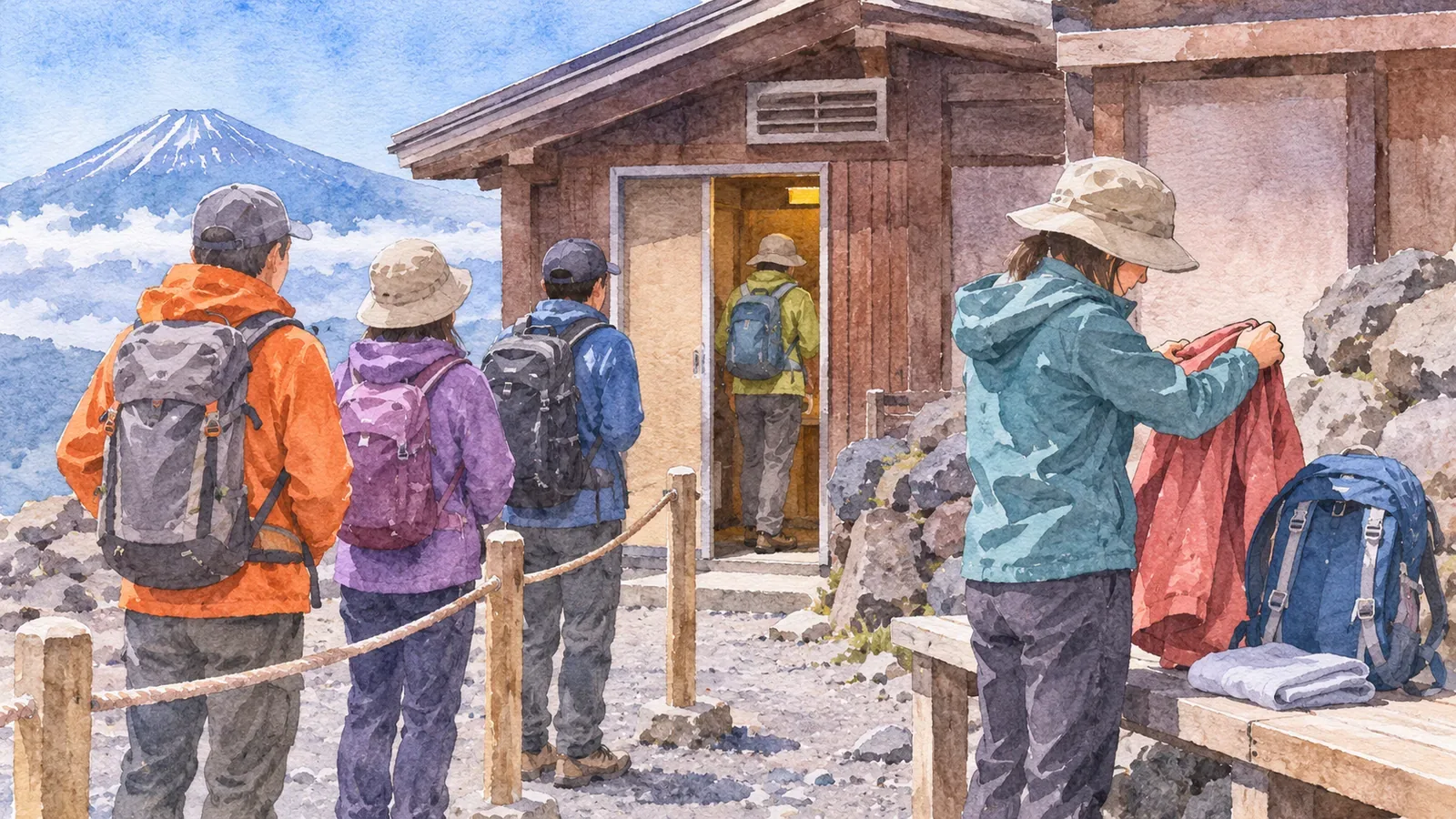
When a mountain toilet is busy, avoid occupying a cubicle to rest or to change clothes that could wait. Take the time you need for personal care, assistance or a change of clothes for health reasons. Find out where the toilets and changing facilities are, and agree on a meeting spot for your group.
Find out when it gets busy and which facilities are available
Mount Fuji’s official FAQ says crowds usually peak from late July to late August, especially on weekends and public holidays. In 2014, the Ministry of the Environment advised visitors to carry a portable toilet in case the public toilets were busy. Build waiting time into your itinerary and check opening dates and collection arrangements for the year of your visit.
A Ministry of the Environment report explains that hut toilets can serve hikers passing through as well as overnight guests. It also proposes temporary booths for portable toilets to help during peak periods. Check which sites have booths and which facilities are open to hikers who are not staying overnight.
Check where the toilets are along your route, and the dates and hours they are available. A hut’s opening hours may differ from its toilet hours. Leave enough time in the itinerary so you don’t have to hurry to make up for a queue.
Find a separate place to change
Mount Fuji’s official FAQ asks hikers to avoid resting in the toilets, and the Ministry’s 2014 guidance also asks people to avoid napping there. The FAQ says some huts have changing rooms. If you want to use one, check with the hut when booking or before your visit.
If you know you’ll want to change clothes, find a place the operator designates for that purpose. When you need to change out of wet clothing or deal with something urgent, take care of it before continuing. Ask the operator where you can change safely if you’re unsure. Allow people the time they need for personal care or assistance even when there’s a queue.
When getting ready in a cubicle, keep clothes and other items out of the bowl and take your rubbish with you. The 2022 profile of the seventh-station toilet on Mount Fuji’s Yoshida descent trail explains that foreign objects in the treatment tank can damage the equipment. Sourcing and transporting replacement parts takes work. Follow the signs for what can go in the bowl.
Choose somewhere with stable footing and privacy, away from traffic and entrances. Stop walking before changing clothes or taking things out of your pack. Give people time to use the changing room or toilet and follow the operator’s instructions.
Agree on your group’s order and meeting spot
Your group can agree who gets ready and heads to the toilets first. Follow the instructions on site when you join the queue. Don’t skip ahead to join a companion who is already in line. Try adding three entries to your itinerary.
Under “toilet options,” write down the locations and hours. Under “changing options,” note separate places to change and when you might need them. Under “group order,” agree who goes first, who watches the packs and where you’ll meet afterwards.
Let everyone know they can say when they need the toilet. Change the group’s order as needed. If something is urgent, ask the operator for help and let them manage the queue. Keep entrances clear, and have anyone meeting up wait away from the line. If someone is watching a pack, agree who is responsible for it and keep it out of the walkway.
Plan an alternative for long queues
In 2022, a report on the seventh-station toilet on Mount Fuji’s Yoshida descent trail featured circle and cross signs indicating which women’s cubicles were free. The signs made it easier to see which cubicles were available farther inside. Check how the queue and facilities are arranged when you arrive.
If you plan to use a portable toilet, check where you can use it before you leave. The Ministry’s report highlights the need to make portable toilets easy to obtain, use and dispose of, and to prevent used bags from being left by the trail. Follow the product instructions and local guidance, and take the bag down with you if there is no collection point.
Write down the next available toilet if the queue is long, and where you can use a portable toilet and how you can dispose of it. Check the local operator’s guidance for instructions and collection points.
In short — Plan changing and toilet stops separately
Avoid napping or resting in a toilet. Use a changing facility for changes that can wait. Allow time for personal care, assistance or a change of clothes for health reasons, and follow the posted queue instructions.
Before leaving, list the toilets, changing facilities, your group’s order and alternatives for long queues. Confirm them against signs and operator instructions on site. Stop somewhere with stable footing and room for others to pass before taking notes or changing clothes.
References and sources
- Ministry of the Environment — Guidance for using public toilets on Mount Fuji (2014)
- Official Mount Fuji Climbing Website — Toilet at the seventh station on the Yoshida descent trail (2022)
- Ministry of the Environment — Provision and maintenance of mountain hut toilets (Chapter 2)
- Official Mount Fuji Climbing Website — Frequently asked questions