
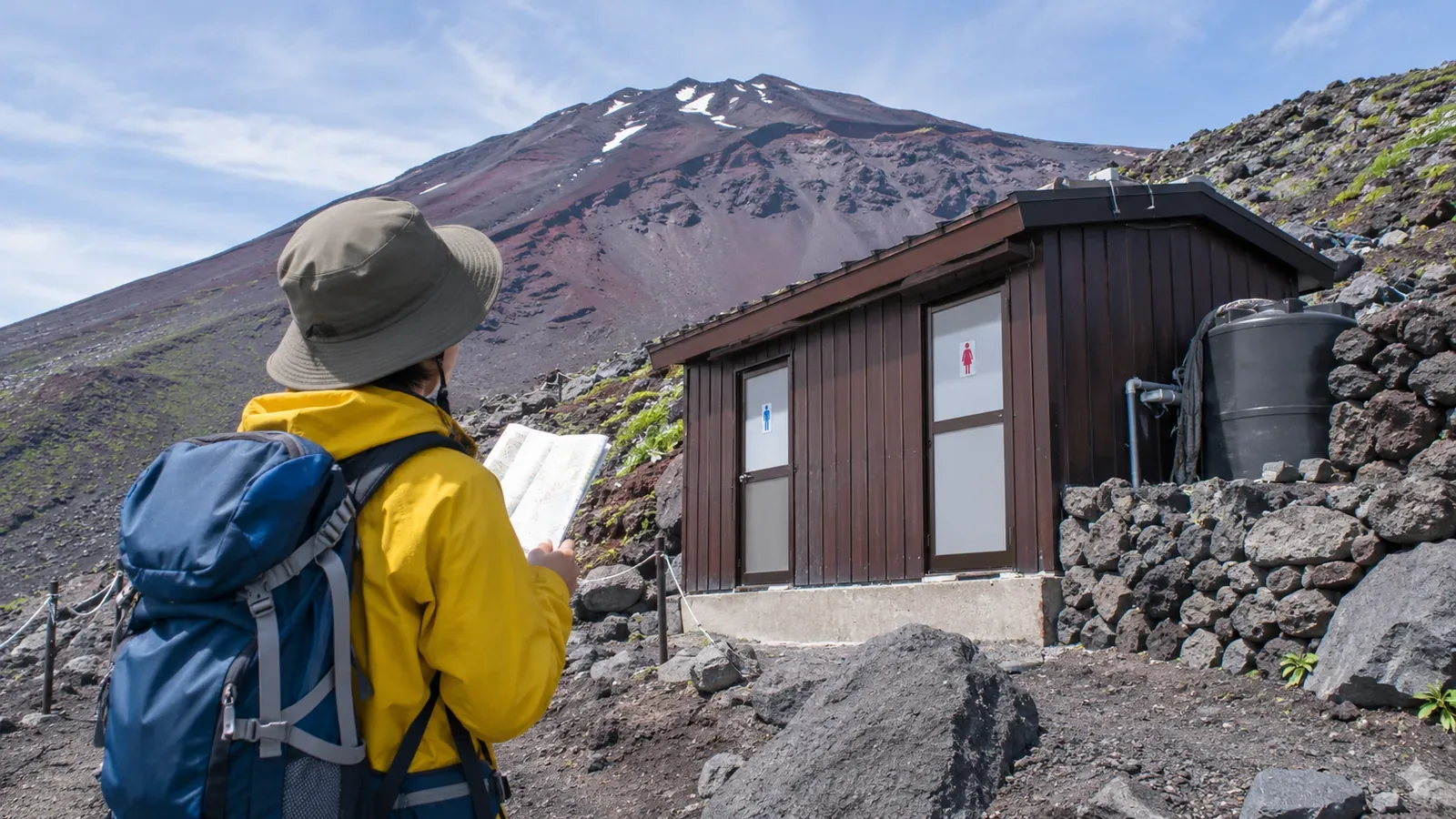
A trail may be open when a toilet along it is closed. Using Mount Fuji’s 2026 schedule as an example, here is how to estimate time to the next available facility and pack portable toilet kits. Before leaving, check facility information and trail access for the year you visit.
Check trail access and toilet opening times
Toilets may be unavailable because of seasonal closure, limited hours or a fault. The official Mount Fuji site lists trail opening periods and individual facility dates and hours separately. Check both the route and the toilets you plan to use.
An Environment Ministry report explains that hut toilets can serve passing hikers as well as overnight guests. If a toilet in your itinerary belongs to a hut, check its specific access conditions, especially after the hut closes for the season.
A 2022 ranger’s report on the biological toilet at the seventh station of the Yoshida descent explains that foreign objects can break the machine and that sourcing and transporting parts takes time. Have a backup plan if a toilet becomes unavailable unexpectedly.
Different hours on Mount Fuji in 2026
In the official 2026 schedule, the public summit toilet on the Fujinomiya side was listed for July 10 to September 10, from 4 a.m. to 4 p.m. The seventh-station public toilet on the Yoshida descent was listed as open around the clock from July 1 until noon on September 11. The sixth-station Yoshida public toilet was listed until noon on September 10. These are 2026 examples.
Check the route and the full facility name. There are several toilets near the summit, and you may be looking at another facility. If you expect to arrive outside its hours, check where you can stop earlier and where portable kits can be used.
The official site says opening periods can change with weather and other conditions. If dates conflict, compare the year, route, facility name and update date, then check with the operator.
Estimate how long it takes to reach the next available toilet
List toilets and huts in the order you pass them, from the start to the end of your hike. Note each location’s dates, hours, treatment system and source. Compare those details with when you expect to pass, and mark any toilet that is closed or unconfirmed. Estimate the hours between each confirmed open facility and the next.
If access is uncertain, ask or plan a backup before counting on that toilet. Allow time for queues too. The ministry report suggests temporary portable toilet booths at places with long lines in peak season. Check whether there actually is a booth where you are going.
Imagine a route with a trailhead, Hut A, Hut B, the summit and the end of the trail. If the summit has no toilet and Hut B is closed, the stretch from Hut A to the end is one long gap. Add breaks and waiting to your walking estimate. If you need to review the plan on the trail, stop on stable footing and leave room for others to pass.
Pack for the gaps between facilities
A portable toilet kit lets you collect waste in a bag and carry it out. The Environment Ministry’s technical guide covers this separately from treatment by equipment on site. Read the product instructions for fitting and sealing the bag. Check for a designated collection point or learn the waste rules where you will take it home. Keep used bags out of fires, toilet tanks and the side of the trail.
Estimate how many kits you need from the length of the gaps and how often you normally go. Bring extras in case the hike runs long or a facility is out of service. Each person in your group should check how to use the kit and how many they need. Leave room to carry unused kits back too.
If you plan to pick up or buy kits locally, check where and when they are available. If you cannot confirm, bring your own. The official Mount Fuji site asks hikers to bring a kit for emergencies and carry it out after use. Plan how you will seal and store it on the hike and where you will hand it in or dispose of it afterwards. Follow the kit and local instructions for paper.
Prepare for the time between available facilities
Plan for opening dates and hours as well as queues or temporary outages. Use the gaps between confirmed facilities to work out how many kits to bring, where to use them and how to carry them out and dispose of them. Follow the latest trail restrictions from the manager.
References and sources
- Mount Fuji Ranger Diary No. 110: The Toilet on the Yoshida Descent Trail
- Japan Ministry of the Environment: Future Provision and Maintenance of Mountain Hut Toilets, Chapter 2
- Japan Ministry of the Environment: Guide to Toilet Waste Treatment in Natural Areas
- Official Mount Fuji Climbing Site: Climbing Season and Facility Opening Periods
- Official Mount Fuji Climbing Site: What to Know Before Climbing Mount Fuji