
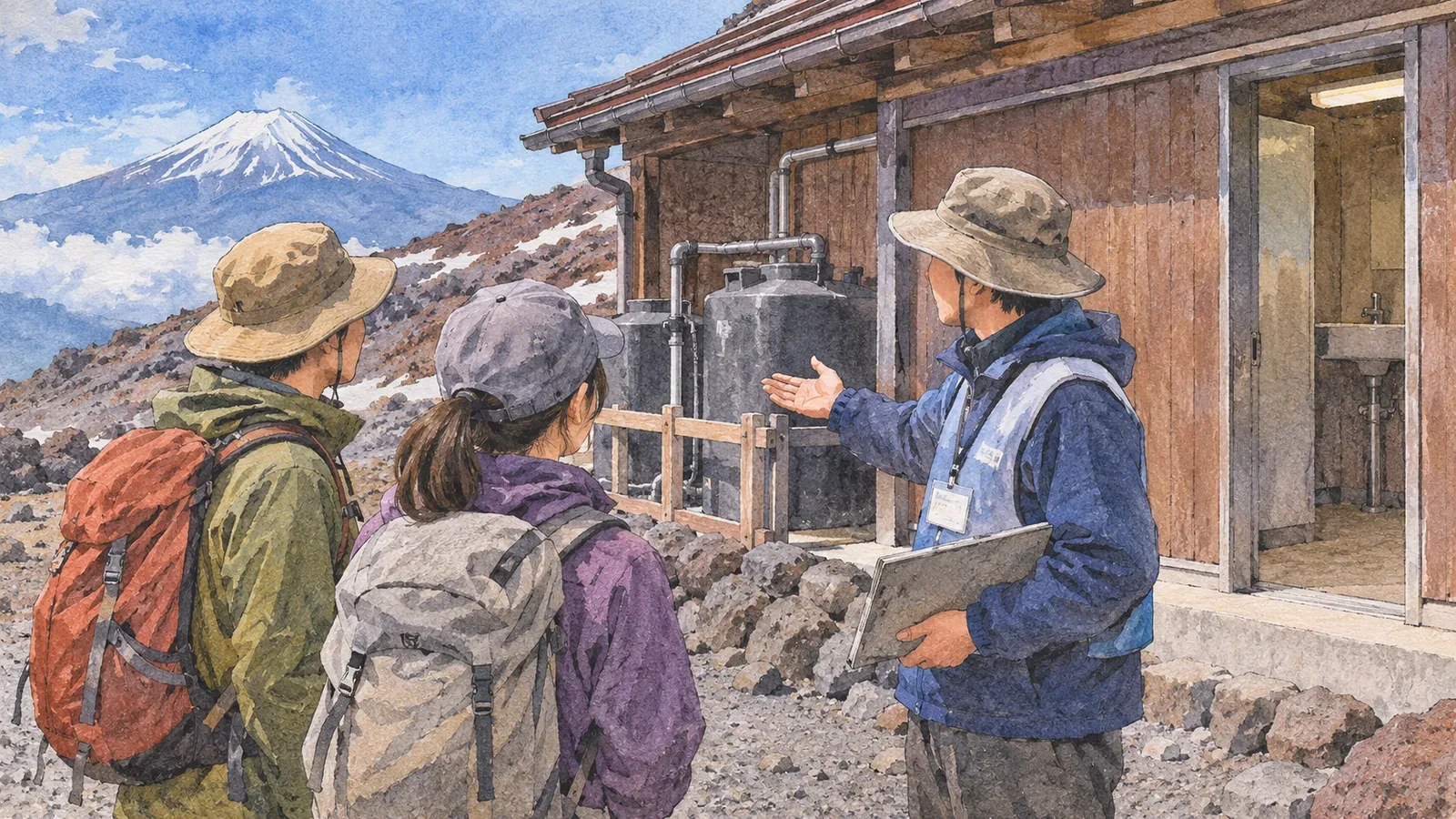
A fee or contribution for a mountain toilet helps pay for cleaning, operation of treatment equipment and removal of waste or sludge. Mount Fuji also has trail or entry fees at trailheads and accepts voluntary donations. Check what each payment covers, and read the instructions at the toilet you use.
What it costs to keep a toilet running
An Environment Ministry report records that untreated human waste used to seep into the ground or be discharged after the season, causing odors, polluting water sources and affecting the landscape. Once treatment equipment is installed, it still needs operation, inspection and management of what remains after treatment.
In 2022, a ministry ranger listed some costs of the biological toilet at the seventh station of the Yoshida descent: staffing, fuel for the generator and materials such as buckwheat hulls for the treatment chamber. Waste from treatment is carried down for disposal, for example when the hulls are replaced. A breakdown also means sourcing and transporting parts.
An earlier ministry report on hut toilets gives examples where user revenue did not cover upkeep and where cleaning and sludge disposal placed a burden on operators. To learn about a particular facility’s costs, check the operator’s explanations or annual reports.
When reading about spending, look for installation, day-to-day operation and cleaning, or servicing and repair. Cleaning and replacing a broken machine, for example, are different expenses.
Toilet contributions and hiking fees
The official Mount Fuji FAQ asks users to pay a separate toilet contribution, usually around ¥100 to ¥300, at the amount posted at the facility. It generally asks for coins, although some facilities accept electronic payments. Check the toilets on your route to see how to pay.
Yamanashi Prefecture says the former Mount Fuji Conservation Contribution ended in fiscal 2024 and was folded into the trail fee from fiscal 2025. The official FAQ says Shizuoka incorporated it into the entry fee from fiscal 2025. Treat old pages about the conservation contribution as records of that scheme. Check the current guidance before paying.
Shizuoka’s page, updated in July 2026, says the entry fee funds conservation, safety, hiker support and administration of access rules. A committee and the prefectural assembly review the specific uses annually. The fiscal 2025 spending table includes subsidies for projects such as operating first-aid stations and installing biological toilets.
Installation costs and day-to-day maintenance
The Fujisan World Cultural Heritage Council’s page was updated May 31, 2023, and describes the former scheme. Its examples include hut biological toilets and temporary public toilets. It separately says routine upkeep of hut toilets and similar facilities is paid for through toilet contributions. Yamanashi’s historical guidance also distinguishes spending on new or renovated toilets from day-to-day upkeep paid for by users.
If a document says money goes to toilets, check whether it means construction or renovation, equipment replacement, operation and cleaning, or sludge removal. Check the year and facility. If it remains unclear, show the operator the relevant passage and ask.
What to check in the operator’s information
For toilets built with subsidies, the Environment Ministry report recommends that operators publish how user fees are spent and what share of maintenance costs they cover. If you find a facility’s explanation or accounts, check the year and the types of expenses.
Note five things: the name of the payment, such as contribution or fee; the facility and location; what the money is spent on, such as installation, cleaning or sludge removal; the date or fiscal year; and the amount and payment methods.
Check before leaving and compare your notes with the posted price and payment methods on arrival. In your itinerary, list toilet fees, trail or entry fees and voluntary donations separately, with the facility and date checked. If a source has no date, compare it with the latest official information. Stop somewhere safe and keep the passage clear before using your phone or taking notes.
Check the payment name, facility and year
Read fee and contribution notices with the name, facility, purpose and year in mind. Mount Fuji’s former conservation contribution has changed, and the official FAQ asks for separate toilet contributions. Check how the payment supports upkeep and prepare the amount and method shown at the facility.
References and sources
- Mount Fuji Ranger Diary No. 110: The Toilet on the Yoshida Descent Trail
- Fujisan World Cultural Heritage Council: Introduction of the Mount Fuji Conservation Contribution
- Japan Ministry of the Environment: Future Provision and Maintenance of Mountain Hut Toilets, Chapter 2
- Official Mount Fuji Climbing Site: Frequently Asked Questions
- Yamanashi Prefecture: The Mount Fuji Conservation Contribution Scheme
- Shizuoka Prefecture: How the Mount Fuji Entry Fee Is Used
- Shizuoka Prefecture: Use of the Mount Fuji Entry Fee in Fiscal 2025