
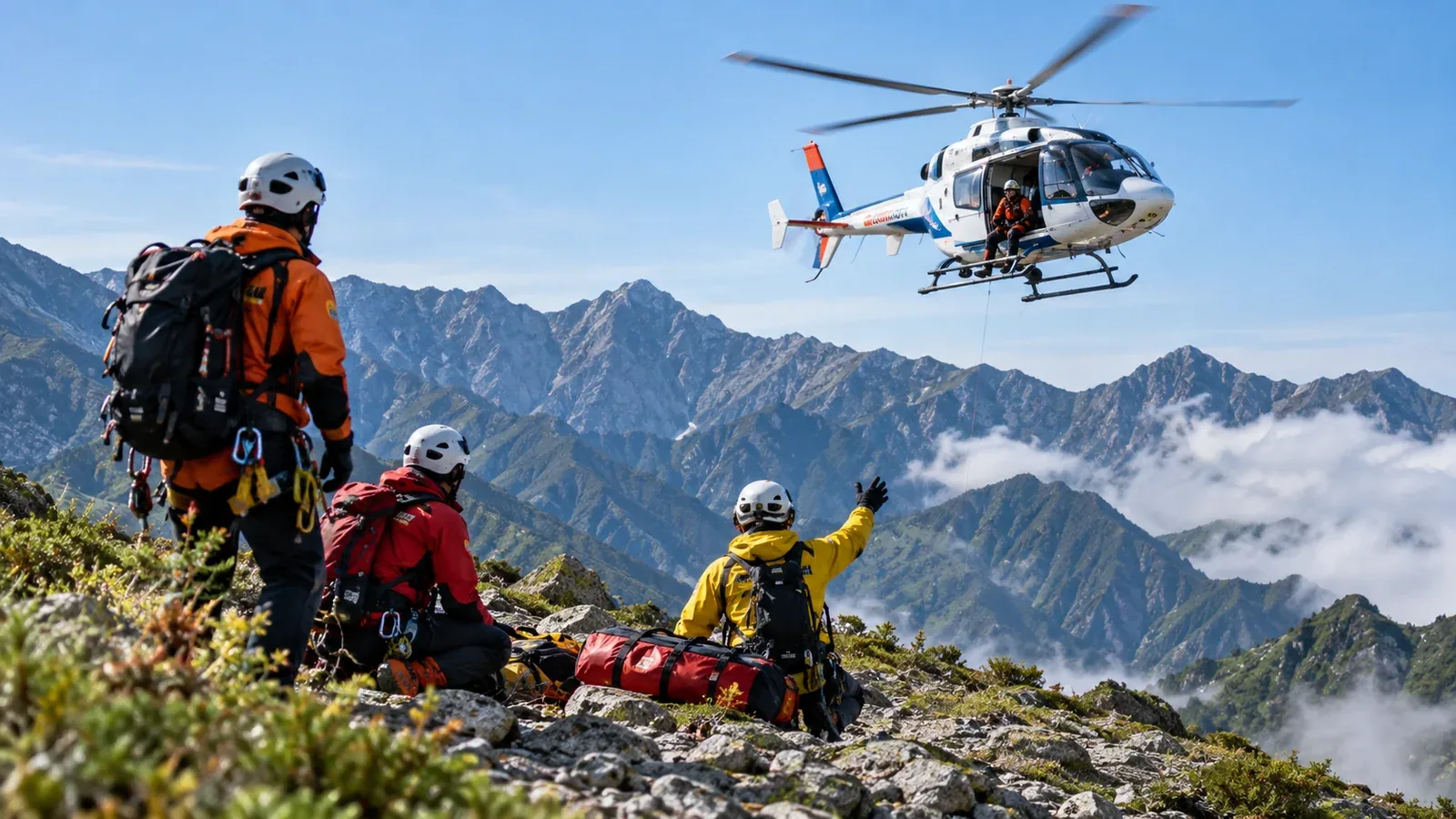
Who comes to help when you get into trouble in the mountains? Rescue helicopters are familiar from news footage, but it can be hard to tell whether one is operated by the police, a fire service or a private company.
Mountain rescue organizations differ in their roles, authority, costs and operating conditions. Knowing how rescue works helps you prepare for a trip. This article explains what police, fire services and private teams do and how they work together.
Police mountain rescue teams
Prefectural police carry out mountain searches and rescues. Police forces covering mountain areas may have specialist teams or units, such as the Nagano Prefectural Police mountain rescue team and the Toyama Prefectural Police mountain patrol unit. Staffing and operations vary by region.
Police search for, rescue and assist people in distress. Fire services can also respond to reports and carry out searches and rescues, coordinating with police when needed. If you need mountain rescue in Japan, call 110 or 119, explain the situation and follow the dispatcher’s instructions.
Specialist officers train for the work they do, which may involve rock and snow travel, first aid and helicopter rescue. Teams such as Nagano’s also visit mountain huts and other locations to promote accident prevention. Public funds support police and fire services, but some local authorities charge a fee for rescue by a disaster-response helicopter in designated areas. Check the rules of the operator and the region.
Fire service mountain rescue teams
Fire services respond to incidents in the mountains within their area. Some departments, such as the Tokyo Fire Department, have dedicated mountain rescue units. In other areas, a general rescue team may respond.
Both police and fire services search and rescue. Who does what depends on the region and the incident. Fire service ambulance crews can also take rescued people to hospital.
Helicopters operated by prefectural governments or fire services may be sent to mountain emergencies. As with police helicopters, weather and visibility can prevent them from flying or operating at the scene.
Private rescue teams and mountain guides
Private mountain rescue takes several forms.
Local private rescue teams and member services. Teams formed by local mountain safety associations may respond at the request of police or other authorities. Their work may incur charges. The current Jiro member service arranges and provides search and rescue under its contract. Reimbursement of costs paid by members is a separate type of insurance.
Private helicopter operators. Depending on the contract, region and incident, a private aircraft operator may take part in a search or other operation. These helicopters are also subject to weather and visibility. If you need rescue, call 110 or 119 first, then follow the instructions for contacting your insurer or member service. Check in advance whether private helicopters and search costs are covered.
Certified hiking guides. If an accident happens during a guided trip, the guide may call for help, give first aid and liaise with rescue teams. When hiring a guide, check their qualifications and experience for the planned route and season.
How teams work together and what limits them
Police, fire services and local rescue organizations may work together, depending on the incident. In Nagano Prefecture, police and fire services search and rescue on the ground and by helicopter, and they ask local mountain safety associations and others to assist as needed.
Bad weather, high winds or poor visibility can prevent helicopters from going out. Ground searches can take longer at night, in snow or in remote or difficult terrain. Teams decide when and how to act for each incident, taking rescuers’ safety into account.
While waiting, follow the dispatcher’s instructions and keep warm in a safe place. To describe your location, share GPS coordinates, a trail sign, nearby landmarks and the route you took. Warm clothing and emergency equipment can help if the team takes time to reach you.
How to join a mountain rescue team
If you’re interested in the work, start with the route into the relevant organization.
Police mountain rescue officers. Apply to a prefectural police force first. Once recruited, officers can pursue a specialist role through assignments and training. How preferences, suitability and postings are handled varies by force. Check recruitment information from police forces such as Nagano and Toyama that describe mountain rescue work.
Fire service mountain rescue personnel. Start by applying to a local government or fire department as a firefighter. Experience, training and assignments can lead to a rescue role. Check the recruitment information for your chosen service, such as the Tokyo Fire Department.
Private and volunteer teams. Ask local mountaineering clubs or mountain safety associations about how to participate. Mountaineering organizations and prefectural federations run rescue courses. Check the intended audience and experience required with the organizer.
Where to start
Before your hike, read the local police or government guidance and find out how rescue works in that area. If you need rescue in Japan, call 110 or 119. For insurance and member services, check eligibility, limits and notification rules for private helicopter or search costs. If hiring a guide, check their qualifications and experience for the planned route and season.
References
- National Police Agency: Mountain and water incident reports
- Fire and Disaster Management Agency white paper and Tokyo Fire Department mountain rescue information
- Japan Mountaineering and Sport Climbing Association official information
- Prefectural police mountain rescue information
References and sources
- National Police Agency: Mountain and water incidents
- Nagano Prefectural Police: Mountain information
- Toyama Prefectural Police recruitment
- Tokyo Fire Department recruitment: Emergency response
- Fire and Disaster Management Agency white paper: Rescue operations
- Nagano Prefecture: Response to mountain emergencies
- Saitama Prefecture: Disaster-response helicopter rescue fees
- Gifu Prefectural Police: What to do in a mountain emergency
- Jiro: Frequently asked questions
- Japan Mountaineering and Sport Climbing Association: Mountain rescue courses