
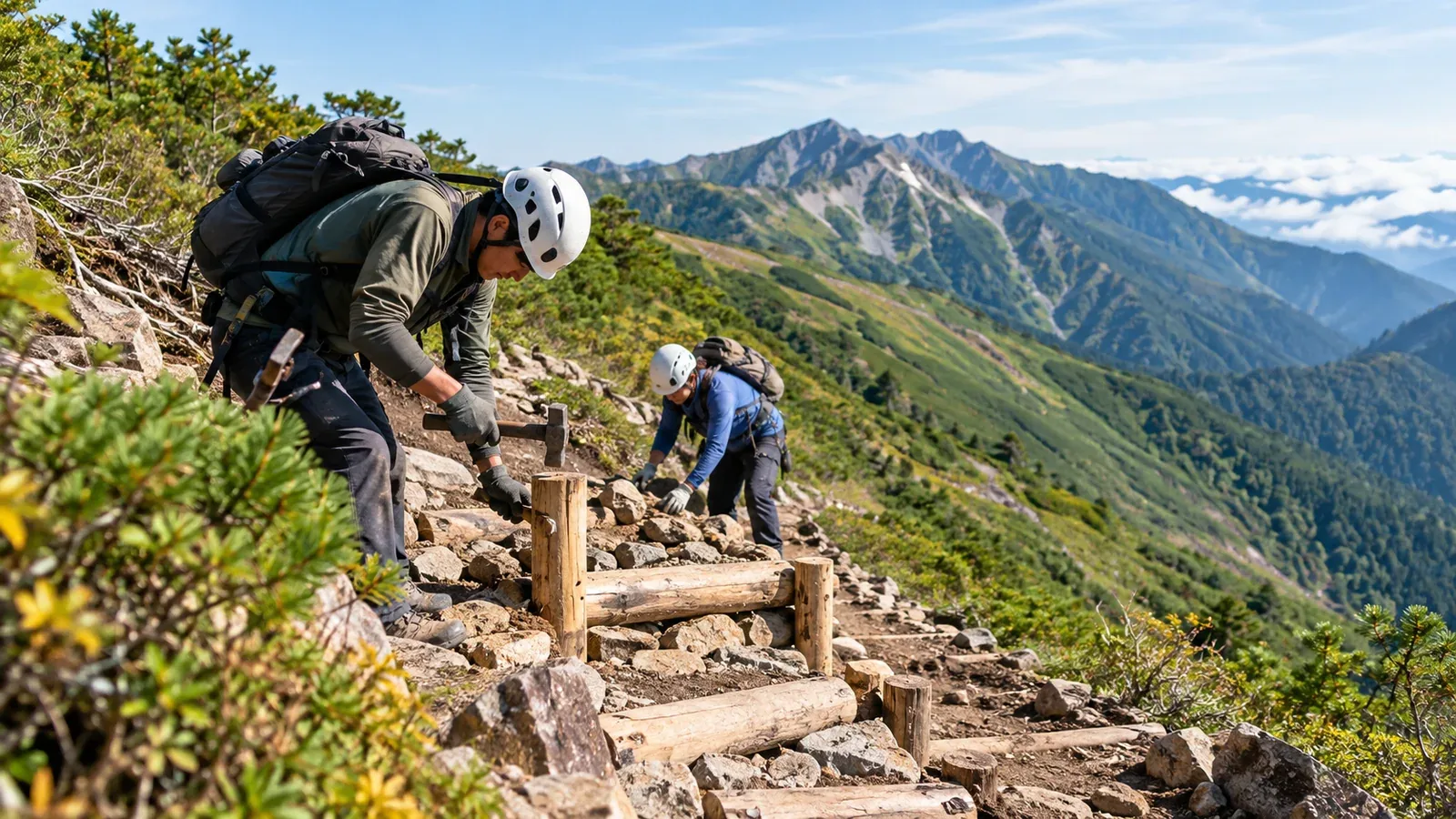
Trails need work to stay walkable. Rain washes away soil, roots become exposed, trees fall across paths and signs deteriorate. In many mountain areas, teams return each season to keep paths usable. Who does that work, how is it organized, and where does the money come from?
A mountain path may look like a feature of the landscape, but several groups often share its upkeep throughout the year. Understanding who does what is part of getting to know the places where you hike.
Who is responsible for trail maintenance?
Responsibility depends on land ownership and management and on who runs the park project. In national parks, national or local agencies and approved operators can carry out projects under the Natural Parks Act. Some paths have no designated manager. Where a trail crosses national forest, municipal land or private property, coordination with forest offices, local governments or owners may be needed.
Managers may do the work themselves, or other groups may carry it out under contracts, grants or agreements. Local authorities, mountain huts, nonprofits, clubs and volunteers are among those involved. The group doing the work and the organization responsible for the trail may differ.
What trail work involves
The work depends on the type of trail and the extent of the damage. These are common jobs.
- Clearing vegetation. Trim overgrown grass and branches to keep the way clear. Timing depends on vegetation, weather and how the trail is used.
- Managing drainage. Rain and snowmelt flowing along a trail can erode it. Crews use features such as water bars to divert and spread runoff off the path according to the terrain.
- Repairing steps and holding soil in place. Logs or stones can restore a step or slow soil loss. Crews choose the method to suit the terrain and damage.
- Clearing fallen trees. Trained crews remove trees blocking the way using safe procedures. Tools and the extent of work depend on conditions.
- Checking and replacing signs and ropes. Crews replace signs that have become illegible or deteriorated ropes at hazardous sections.
Where vehicles and heavy equipment can’t reach, work is mostly done by hand. Materials may have to be carried in on foot. The distance and how supplies can be moved affect the time and cost.
Where the money comes from
Trail maintenance is funded in three main ways.
Public funds come from national, prefectural and municipal budgets. Natural park budgets, contracts and grants may pay for trail work. The amount and what it can be used for vary by project and area.
Entry fees and contributions are ways visitors help pay. Mount Fuji ended its former voluntary conservation contribution after fiscal 2024 and now charges a trail access fee. Other areas may collect voluntary contributions. Check the official information for how money is collected, where it applies and what it pays for.
Private funding and donations can be raised by nonprofits, mountaineering clubs and other groups, including through crowdfunding and business partnerships. Mountain huts sometimes repair nearby trails. Who pays varies by project.
The mix differs between areas. Next year’s budget or donations may differ, so managers also have to work out how to keep up patrols and maintenance after a repair.
Who takes part
Trail work brings together specialist contractors, public agency and hut staff, local organizations and volunteers.
Mountain hut staff may monitor and repair nearby trails alongside running their huts.
Public-sector staff include municipal maintenance staff. In national parks, Ministry of the Environment rangers and assistant rangers patrol, monitor how trails are used and coordinate with local groups. Who carries out the work depends on the project and may include contractors.
Members of nonprofits and mountaineering clubs often care about a particular mountain area or trail. They may train to take part in maintenance, or volunteer for clean-ups and minor repairs.
Volunteer hikers join activities organized by managers and local groups. Some clean-up and light tasks are open to beginners. Check the role, required equipment and experience in each listing.
Understanding trail construction and how water flows helps in all these roles. In some countries, trained volunteer trail crews do maintenance. Groups in Japan are also working on ways to pass on these skills.
How hikers can help
To help on a mountain you often hike, ask the local tourism or environment office or the national park office who manages the trail and where to look for openings. Managers and local mountaineering clubs sometimes post opportunities on their sites.
Follow the organizer’s instructions. Structural work such as drains and retaining features can make damage worse if done without the right knowledge. Work in the mountains also exposes you to fast-changing weather and falls, so bring at least the equipment you’d need for an ordinary hike there.
If you can’t join a work party, you can still report the location and condition of a damaged section. Avoid widening paths by walking around mud or taking off-trail shortcuts, and follow closure and detour notices.
Where to start
Check official trail information and any contribution fees with the local authority or national park office before your next trip. For volunteer work, look at local club notices or the Ministry of the Environment’s national park pages. Mountain huts also publish trail updates that can help you understand local conditions.
References
- Ministry of the Environment: Natural Parks Act information
- Ministry of the Environment: National park management
- Forestry Agency: National forest management
- Official Mount Fuji climbing site: Trail access fee
References and sources
- e-Gov Japan: Natural Parks Act
- Ministry of the Environment: Survey of trail management in national parks
- Ministry of the Environment: Mountain conservation in national and quasi-national parks
- Ministry of the Environment: Work in Daisetsuzan National Park
- Ministry of the Environment: Daisetsuzan trail maintenance technical guidelines
- Ministry of the Environment: Guidelines for visitor funding in national parks
- Ministry of the Environment: People who work in national parks
- Forestry Agency: Public participation in forest management through agreements
- Official Mount Fuji climbing site: Trail access fee and how it is used