
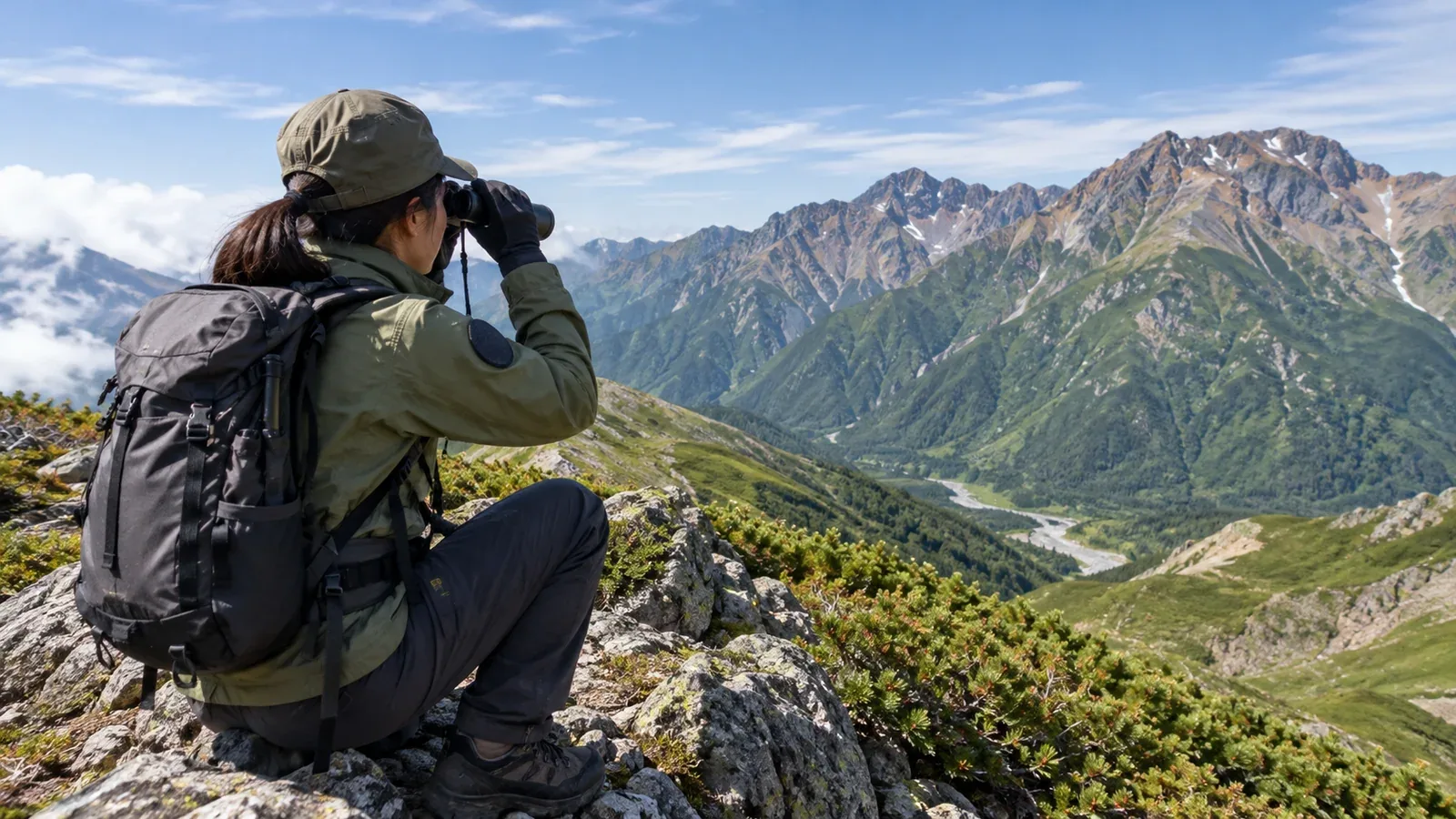
In a Japanese national park, you may see staff checking trails or talking to visitors. The Ministry of the Environment’s conservation officers, also known as rangers, are national civil servants. Their work takes them into the mountains and includes park management and wildlife conservation.
This article looks at what rangers do, which exams and routes lead to the work, and what to check if you’re considering a career in conservation.
What is a park ranger in Japan?
The ministry’s nature conservation staff work at its headquarters, regional environmental offices, national park management offices and ranger offices. Parks familiar to hikers, including Oze, Yakushima, Shiretoko and Daisetsuzan, have offices responsible for them.
In national parks, the Natural Parks Act provides for the protection and appropriate use of landscapes. Depending on the assignment, staff also work with laws protecting wildlife and the natural environment. Balancing conservation with public use is one of the most demanding and interesting parts of the work.
The ministry recruits nature conservation staff through Japan’s national civil-service examinations for the comprehensive and general service tracks, followed by its own selection, including agency recruitment interviews. Ranger describes an assignment or set of duties after hiring. Check the ministry’s latest guidance for qualifying exam categories and recruitment steps.
What rangers do
Park patrols
During patrols, staff check trail conditions and explain local rules on activities such as collecting plants or camping. If a problem comes up, they coordinate with the relevant department. Weather, route conditions and safety policies determine when and how they go into the field.
Ecosystem monitoring
Staff record changes in vegetation, invasive species and wildlife activity. Where trampling has damaged alpine plants, recovery may need to be tracked for years. Accurate, consistent records can inform revisions to management plans.
Managing visitor use
In heavily visited places, rangers may help operate legally designated visitor-use zones or work on rules to reduce pressure on the environment. Coordination with mountain huts, municipalities and tourism organizations, along with paperwork, can take up a substantial part of the job.
Education and local partnerships
Rangers may help run nature programs for schools and the public, contribute to guide training and prepare safety information for hikers. In some areas they work with police or fire services on preventing incidents and sharing information when they occur.
Hiring routes and skills
The national civil-service examination route
The ministry lists Forestry and the Natural Environment, and Chemistry, Biology and Pharmacy, for its comprehensive track. For the general track it lists Forestry, Agriculture, Architecture, Civil Engineering, and Agricultural and Rural Engineering. Check both the National Personnel Authority’s exam guide and the categories the ministry accepts.
Exam subjects and selection methods vary by category. Prepare to explain your interests and experience at the ministry’s recruitment interview. If you hike, think of concrete examples of problems you’ve seen and how they relate to conservation or visitor use.
The ministry recruits for both tracks without a guarantee of placement in a particular region. Staff may work at headquarters or at offices around Japan, including in coastal areas, wetlands and islands.
The Active Ranger route
The ministry also publicly recruits Active Rangers on fixed-term appointments to assist conservation officers. They patrol, collect field observations and help with outreach. Check each announcement from the ministry or a regional office for location and employment terms.
Apply directly for a listed vacancy, which may involve a review of documents and an interview. It is a chance to gain field experience. A permanent nature conservation post has a separate hiring process.
Related work in municipalities, nonprofits and the private sector
The national ministry oversees national parks, while prefectures manage quasi-national and prefectural natural parks. Local government conservation posts also exist. Nonprofits that help manage national parks and organizations that run ecotourism programs do related work. These can be options if you’re drawn to ranger duties.
How to tell whether the work suits you
The job combines fieldwork with applying regulations, working with stakeholders, managing data and writing reports. Consider the possibility of transfers and the conduct rules for civil servants. Depending on the activity, outside work is restricted and may require approval or permission.
A deep interest in a region or ecosystem, experience hiking or observing nature, and a willingness to work with local people on problems are useful in practice.
Start by asking whether you’re interested both in the mountains and in building systems to protect them.
What to do next
Check the ministry’s nature conservation recruitment page for eligible categories and agency interview steps, and the National Personnel Authority for exam subjects and dates. For Active Ranger jobs, look at listings from the ministry or its regional offices. A guided nature observation event or Nordwand’s community can also help you meet people involved in conservation on the ground.
References
- Ranger work in Japan’s national parks (Ministry of the Environment)
- Active Ranger duties and vacancies (Ministry of the Environment)
- National civil-service exam information (National Personnel Authority)
- Natural Parks Act (e-Gov legal database)
- National park office directory (Ministry of the Environment)
- Nature conservation staff recruitment (Ministry of the Environment)
- Civil-service conduct and outside work (National Personnel Authority)