
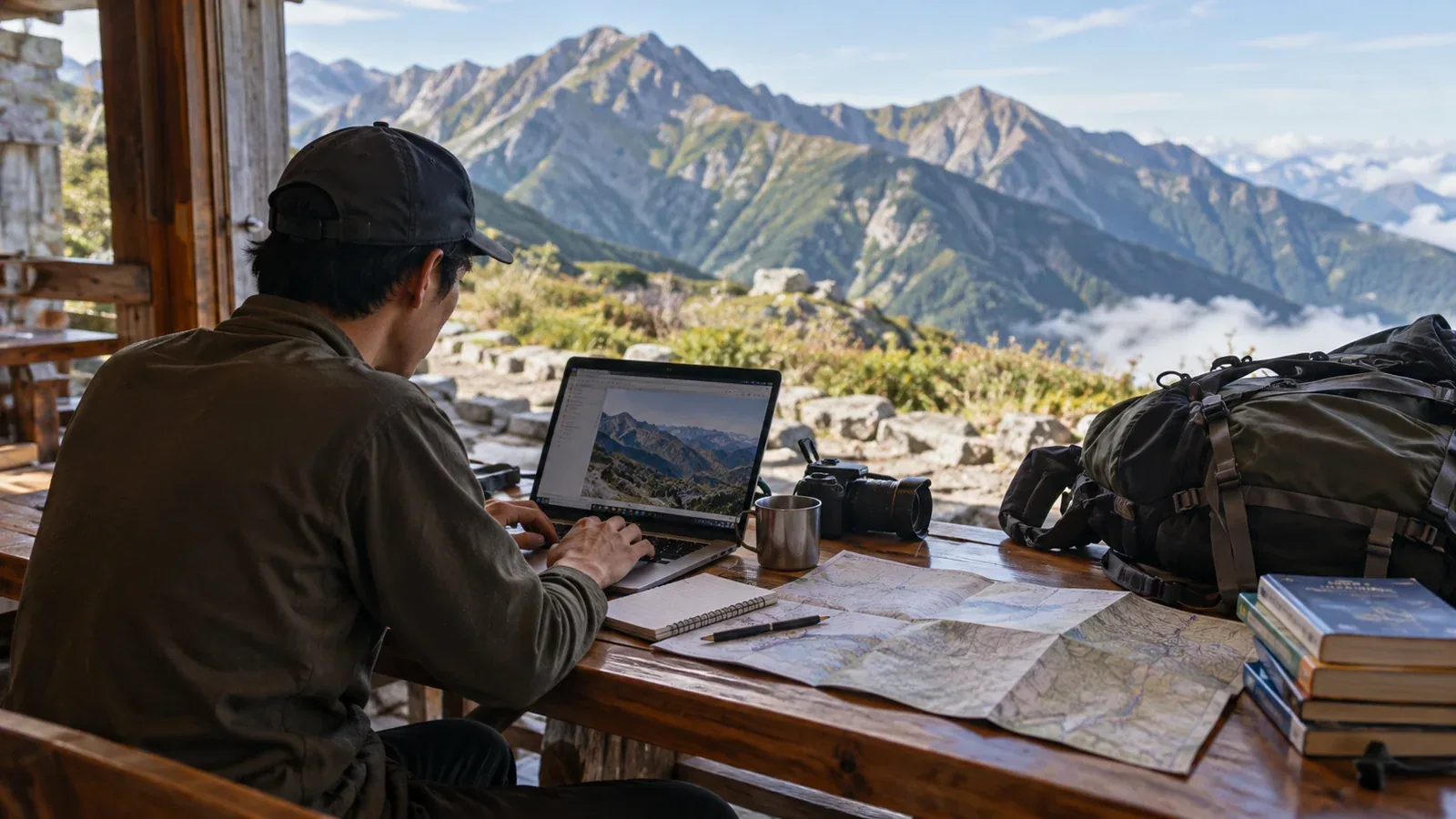
“I love the mountains and want to make them part of my work” is an understandable starting point. Finding a workable business is more complicated. This article looks at building a business from the ground up. A separate article covers becoming a guide.
Mountain businesses can draw on skills, experiences, information, equipment or places. Start by deciding where you can offer something people value. Enthusiasm alone can lead you into an already crowded market or cause you to misread demand. This article covers choosing a business, planning how it will make money and assessing risk.
What kinds of businesses can work around the mountains?
Here are some broad areas to consider.
Experiences and services. You might support hiking tours, photograph the mountains, teach outdoor cooking, refer clients to guides or run hiking classes. When you work directly with customers, the number of bookings you can handle depends on your time and staffing.
Content and media. Examples include advertising and sponsorship for blogs, social media and video, e-books and photo books, and paid newsletters. The initial cost can be low, but budget time for production and ongoing distribution and check what it takes to earn revenue.
Equipment and retail. Examples include a specialist gear shop, online or physical, buying and reselling used gear, and making and selling clothing or accessories. Purchasing, inventory and logistics take money.
Places and facilities. You might operate a mountain hut, open a café or lodging near a trailhead, or start a climbing gym. These projects can take substantial investment and depend heavily on location and approvals.
Specialist skills. Examples include repairing and adjusting gear, licensing mountain photography, or explaining weather information. Set a price based on the skill required and what clients will pay. If you run a service that issues its own weather forecasts, check the Japan Meteorological Agency’s permit requirements.
To choose an area, ask what skills or knowledge you can offer and how many customers would actually pay for it.
Plan how the business will make money
It’s easy to get started before you know where the money will come from. Even an established audience of hikers needs a reason to pay if the business is going to last.
There are three common revenue models.
One-off sales. Revenue comes in with each sale of a product or booking for a tour. Alongside the number of transactions and revenue per sale, account for costs such as supplies and transaction fees.
Subscriptions or memberships. Customers pay monthly or annually. Regular users can make revenue easier to predict. Estimate the work and costs of keeping the service current and how many customers might cancel.
Referrals and commissions. You refer customers to providers such as guides and receive a commission when they book. Even without inventory, put responsibilities and fees in writing with partners. Check the Travel Agency Act if the service also arranges accommodation or transport.
You can use one-off sales to test demand and try a membership if customers want to return. Before starting, estimate both your break-even point and cash flow, including whether you can pay expenses that come due before customers pay you.
Permits and legal requirements
Some mountain businesses need registration, a permit or a notification. Check before you commit money or make bookings.
Travel services. If you organize or sell hiking tours and arrange transport or lodging, you may need to register under the Travel Agency Act. The treatment depends on whether you only guide or also handle travel arrangements. Check with the Japan Tourism Agency or the relevant prefectural office.
Mountain guide qualifications. Each qualification from the Japan Mountain Guide Association and similar organizations has a defined scope. Check the skills and credentials for the terrain, season and activities, along with client requirements and local rules or ordinances.
Food and drink. Depending on the activity, serving or selling food can require a permit or notification. If you’re using an existing hut or facility, tell the operator and local public health office who will run the business and what food you’ll prepare and sell, and where.
National park and mountain rules. Procedures under the Natural Parks Act or facility rules can depend on where you work and what you do. Explain the activity to the site manager. If you buy used goods for resale, check secondhand dealer licensing. For online sales, check required disclosures such as prices and return terms.
Describe the actual activity to the responsible authority to confirm which steps apply. A business support office or a specialist in the field may also help.
Start small and test the idea
Committing heavily to premises, stock or staffing before you understand demand can leave you with fixed costs and fewer ways to pull back if revenue takes longer than expected.
Here’s one way to test on a small scale.
- Write a hypothesis. Write one sentence explaining who will buy what, and at what price. For example, “An online gear consultation for beginner hikers costs ¥3,000 per session.”
- Run a small test. Complete any required procedures and safety preparations first. Then try roughly one to five transactions while limiting what you spend on stock or equipment. Social media or people you know may help you find the first customers.
- Make changes based on customer response. Talk to customers after the transaction to see what to adjust in the price, the offer or how you deliver it. Add a survey if useful.
- Expand once you can repeat the result. Before spending more on advertising or equipment, check whether the same approach repeatedly generates revenue.
Some people start on weekends or alongside their main job and wait for steadier income before going independent. Base the decision on your own finances and the risks you can afford.
Use what you know from being in the mountains
A business close to the mountains can draw on firsthand experience and trust. Testing equipment outdoors, knowing a region’s terrain and weather, and knowing people in the hiking community are hard to reproduce from a desk.
Design the business around what customers struggle with and what they’ll pay for. Building something you want yourself gives you a starting point. Check how many other people actually share that need.
Some tourism associations and local authorities support businesses connected to hiking. Ask the municipality about any relocation or startup assistance.
What to do next
Choose an experience or service, content, retail, a facility or a specialist skill. Write one sentence saying who will buy what and at what price. Then ask the relevant authority, such as the Japan Tourism Agency, a public health office or a park office, what procedures apply. List what you need for the first small transaction. Nordwand’s community is also a place to talk with people considering a mountain-related business.
References
- Overview of the Travel Agency Act (Japan Tourism Agency)
- National park notifications and applications (Ministry of the Environment)
- Guide qualifications and professional scopes (Japan Mountain Guide Association)
- Startup and business support (Small and Medium Enterprise Agency)
- Food business permits and notifications (Ministry of Health, Labour and Welfare)
- Permits for forecast services (Japan Meteorological Agency)
- Secondhand goods businesses (National Police Agency)
- Disclosures and rules for distance selling (Consumer Affairs Agency)
- Self-check for a startup’s financial plan (Japan Finance Corporation)