
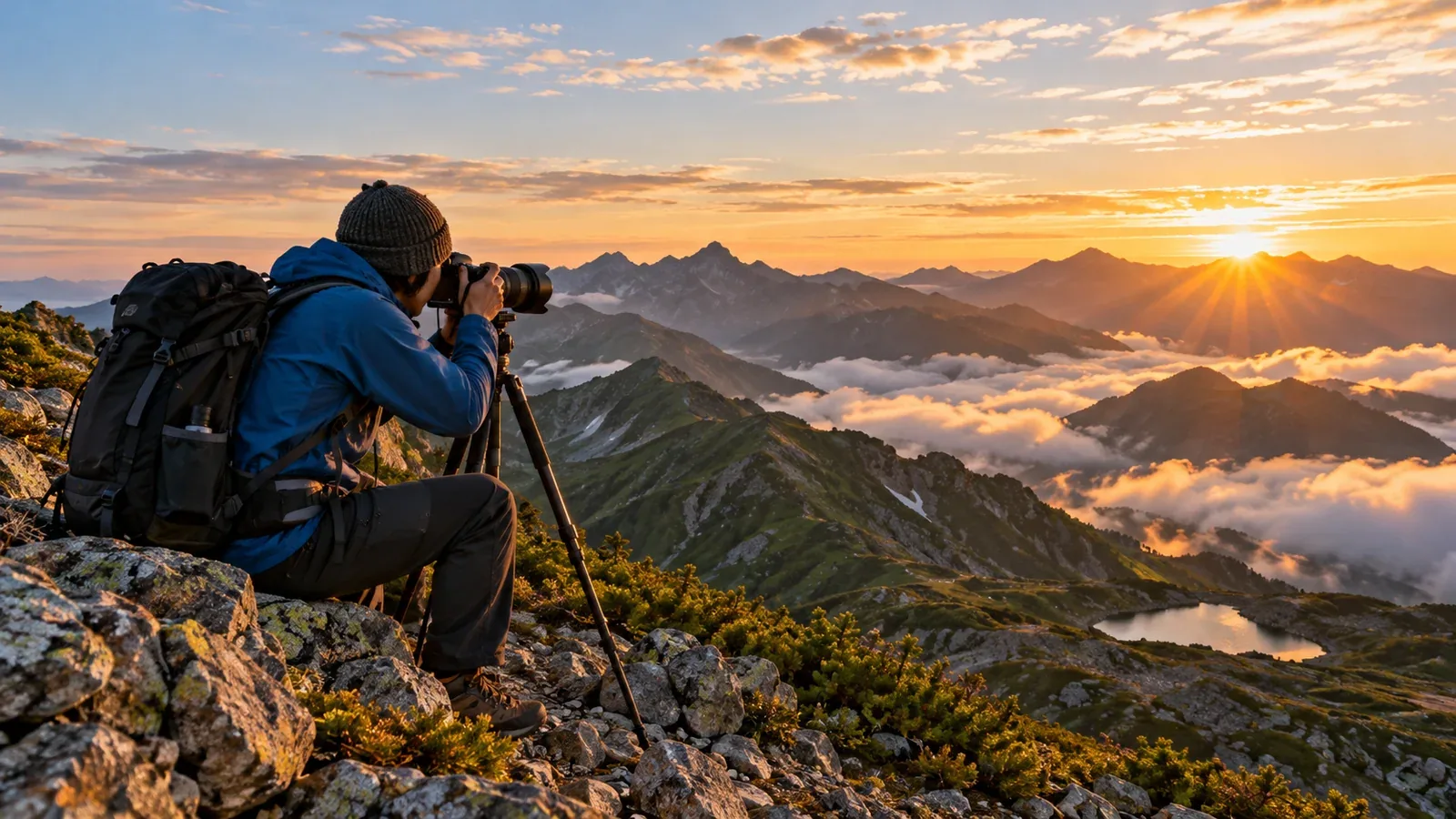
Many hikers have wondered whether they could make a living photographing the mountains. Mountain photography is a real profession, but it can be hard to see how a love of photography and the outdoors turns into income.
This article looks at how mountain photographers get paid, which skills to build first and what to consider before turning a hobby into a business. It focuses on how the work is organized and the choices available.
What does it mean to work as a mountain photographer?
It helps to group mountain photographers’ income into three broad areas.
The first is licensing existing photographs. You grant publishers, media outlets, advertising agencies or gear makers permission to use your images. Examples include magazine covers, guidebook illustrations and images for trail maps. A license can cover a single use or a package of uses across several media.
The second is commissioned photography. Gear manufacturers and outdoor brands may commission shoots for catalogs or advertisements, and magazine or book editors may hire a photographer for a particular story. A quote needs to account for scheduling, bad-weather plans, equipment and any crew required.
The third is related work and revenue, including workshops, photo books, exhibitions, and advertising or sponsorship on social platforms or YouTube. Which ones you pursue depends on whom you want to reach and what work is available.
Combining several income streams can help smooth out fluctuations.
Which comes first: photography or mountain skills?
In mountain photography you need to reach the shooting location and get back safely. A ridge at sunrise, a snowy winter peak or a meadow in the alpine zone may require fitness, route-finding and the ability to handle changing weather.
Without a safe way to reach the location, you have fewer chances to put your photography skills to work. Following a trip plan and local rules while expanding the places you can safely photograph is one of the strengths a mountain photographer can build.
Beyond the basics of exposure, white balance and focusing, mountain work brings a few particular challenges.
- Keeping detail in highlights. Snowfields and sunny ridges can have very bright areas next to deep shadows. Check the histogram and consider bracketing exposures.
- Changing light color. The color of the light changes around sunrise and sunset. Shooting RAW makes it easier to adjust white balance during processing.
- Managing gear in the cold. Batteries may run down faster at low temperatures. Follow the manufacturer’s guidance and protect spare battery terminals before keeping the batteries warm in an inner pocket.
- Balancing weight and equipment. A tripod, extra lenses and filters can affect the image, and carrying them reduces your margin on the trail. Choose what to leave behind based on what the shoot needs and how demanding the route is.
A practical approach is to improve your hiking skills while learning photography. If you’re far behind in either, you’ll have fewer opportunities to practice the other.
What makes a photo useful to a client?
A striking image of a mountain and an image an editor can use may serve different purposes. For paid work, start by thinking about what the client needs and work backward from there.
Publishers and media outlets value photographs that clearly show a season, location and set of conditions. Details such as “Northern Japanese Alps, autumn colors, clear weather, ridge traverse” help editors find and select an image. If people are identifiable, check what consent or paperwork the intended use and publisher call for. Check location rules and any required application with the site manager before shooting.
For gear commissions, the product needs to appear at an appropriate scale, angle and brightness. A client will look at whether the photo shows texture and details, and whether it looks natural in use.
Vertical compositions can suit social media and websites viewed on phones. Alongside wide horizontal views, consider the format in which the image will appear.
A personal photo book and a photograph licensed or commissioned for a specific use often begin with different intentions. Your focus will shape which skills you practice.
Preparing for paid work
Some preparations can start while you build skills. Others are easier once you have a collection of work to show.
What to do while building your portfolio
- Organize your portfolio by season, region and conditions so you can quickly choose images that suit a client or publication.
- Record the date, location, weather and equipment in the Exif data or a notebook. A stock licensing service may request this information.
- Learn the basics of copyright and contracts. Confirm the media, duration, fee and scope of any reuse in writing or electronically. Seek professional advice if you’re unsure.
What to do once you have a collection of work
- Look into stock licensing platforms in Japan and abroad. Check their terms for review criteria, fees and any exclusivity requirements.
- Contact mountain and outdoor publishers and magazine editors. Some accept pitches or submissions. A publication credit can help you get the next commission, so a small outlet can be a starting point.
- Consider a solo or group exhibition. The costs and returns vary, but exhibitions can help people discover your work and give you a chance to meet others in the industry.
Starting alongside another job
You can start while keeping another job, or move into freelance work by combining several income sources.
Starting on the side can give you time to develop your style and discover what you shoot best with less pressure to earn. Fitting photography around another job also limits your time and energy and can make it harder to plan shoots during peak seasons or take longer trips.
If you’re considering freelancing, ask whether photography income has consistently covered a share of your living costs and whether certain clients or publications are returning. Ongoing relationships are a better sign of stability than one large commission.
Some combine photography with guiding or working on hiking tours. When you’re working on a tour, participants’ safety and your assigned duties come first. Check the Japan Mountain Guide Association or other issuing bodies for qualification scopes and training.
What to do next
First, sort your portfolio by season, region and conditions. Look at each photo through a client’s eyes and ask which publication might use it and for what purpose. Then check the submission and contract terms at stock sites and mountain media. Talking to people pursuing similar work can help you see how to proceed. In the Nordwand community you can find or create a group for your interests.
References
- Japan Mountain Guide Association: certification information
- Template for licensing photographs and other works (Agency for Cultural Affairs)
- Things to check when using someone’s likeness or work (Agency for Cultural Affairs)
- National park notifications and applications (Ministry of the Environment)
- Rules for designated public-use areas in national parks (Ministry of the Environment)