
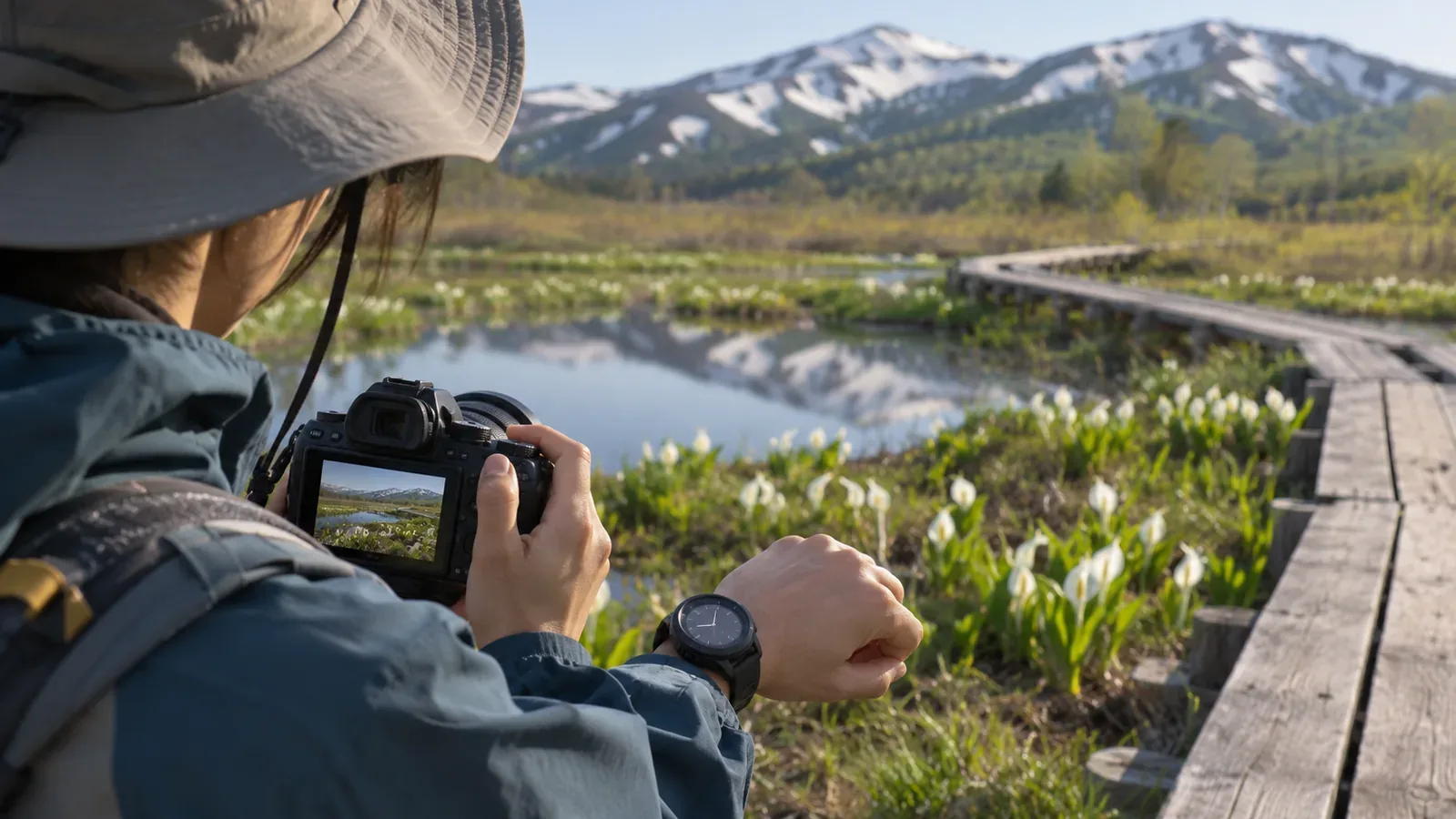
Choose a photo spot by checking whether you can go there and still return on time. If you miss the shot, save it for another hike. Guidance from Oze and Tateyama, together with police safety advice, can help you check where you can go and how much time you have to get back.
Check Where You’re Allowed to Go
The Oze Preservation Foundation asks people to keep tripods and feet out of the wetlands, including when sitting on a boardwalk or in a rest area. Fukushima Prefecture’s Oze guide also asks visitors to stay out of the wetlands and keep trekking poles and tripods out. The boardwalks were built after past damage to the wetlands. The foundation asks hikers to put caps on their poles and keep the tips from going off the trail.
Check the access and tripod rules for the area you’re visiting. Alongside the rules for protecting wetlands, ask the site manager about equipment on boardwalks and at viewpoints. On narrow stretches and busy paths, take a handheld shot or skip it.
Before setting out, sort the shots you’re considering into those you can take from a trail or viewpoint and those that would take you off the trail. Leave the off-trail shots out of the plan. Deciding on the spot can cost time and put pressure on your judgment. If you plan to bring a tripod, check with the site manager or look on the official website before you go.
Photograph Wildlife Without Following It
In a May 13, 2019 ranger diary, a staff member from the Tateyama office of Japan’s Ministry of the Environment described visitors getting too close to rock ptarmigans or stepping into vegetation to observe or photograph them. The ranger asked people to avoid both. The birds use the vegetation for feeding and laying eggs.
The same account describes a rock ptarmigan that approached while the ranger stayed back with a telephoto lens. In spring the birds may travel in pairs, and the ranger asked visitors to watch quietly. Follow local guidance and pay attention to the situation when deciding how much space to give a bird.
Even where you can watch without following, check that you’re leaving the path clear and the bird undisturbed. Decide when to stop and record whatever you see before then. If the bird disappears, let it go and get back to your hike.
Set Aside Time for the Descent First
Ibaraki Prefectural Police recommend planning to descend in daylight and carrying a headlamp or similar light. Include time for breaks, photos and checks of the route and weather as well as the walking itself. Daylight changes with the seasons. Look up the sunset time for the place and date you’ll be hiking.
The U.S. National Park Service also advises checking your fitness and experience, the time the activity takes, and the weather, then leaving the plan with someone you trust. Choose a route the group can comfortably complete in both directions. During breaks, check the remaining walking time and how everyone feels. If you’re running late, cut back or skip the later photo stops. Leave room for the walk to take longer than planned.
The National Astronomical Observatory of Japan calculates sunset assuming a clear view to the horizon. Allow for stretches shaded by ridges or trees and leave time to finish descending while it’s light. Carry a headlamp in case it gets dark. Remember that waiting for the right light also uses time you have set aside for the return.
Make a Photo Plan That Fits the Hike
Set your photo priorities the night before. Look up sunset for the location and date and choose a target time to finish descending with a margin. Estimate the time your group needs for the descent and breaks, set a turnaround time and fit photography around it. Sort the shots into ones you most want, ones you’ll take if there’s time, and ones you’ll leave for another day. Drop any shot that would take you off the trail or require following an animal. On the day, cut photo stops if the weather, your pace or how the group is feeling calls for it.
When you reach the turnaround time, put the camera away even if you haven’t got the shot. Writing this down makes the decision easier on the trail. Tell someone you trust your route, expected return and turnaround time. Note any shots you missed and the local access or tripod rules for your next hike.
Save the Missed Shot for Another Hike
Choose a photo spot you can access, where you can watch without following wildlife and where you can keep to your turnaround time. Keep out of wetlands and vegetation, leave wildlife alone and work back from sunset to set your time limit. Check local rules and sunset before leaving, and save any missed shots for next time.
References and sources
- Oze Preservation Foundation: Rules and Etiquette
- Fukushima Prefecture: Hiking Precautions in Oze
- Japan’s Ministry of the Environment: Observing Rock Ptarmigans (May 13, 2019)
- Ibaraki Prefectural Police: Preventing Mountain Accidents
- U.S. National Park Service: Trip Planning Guide
- National Astronomical Observatory of Japan: How Can I Find Sunrise and Sunset Times?