
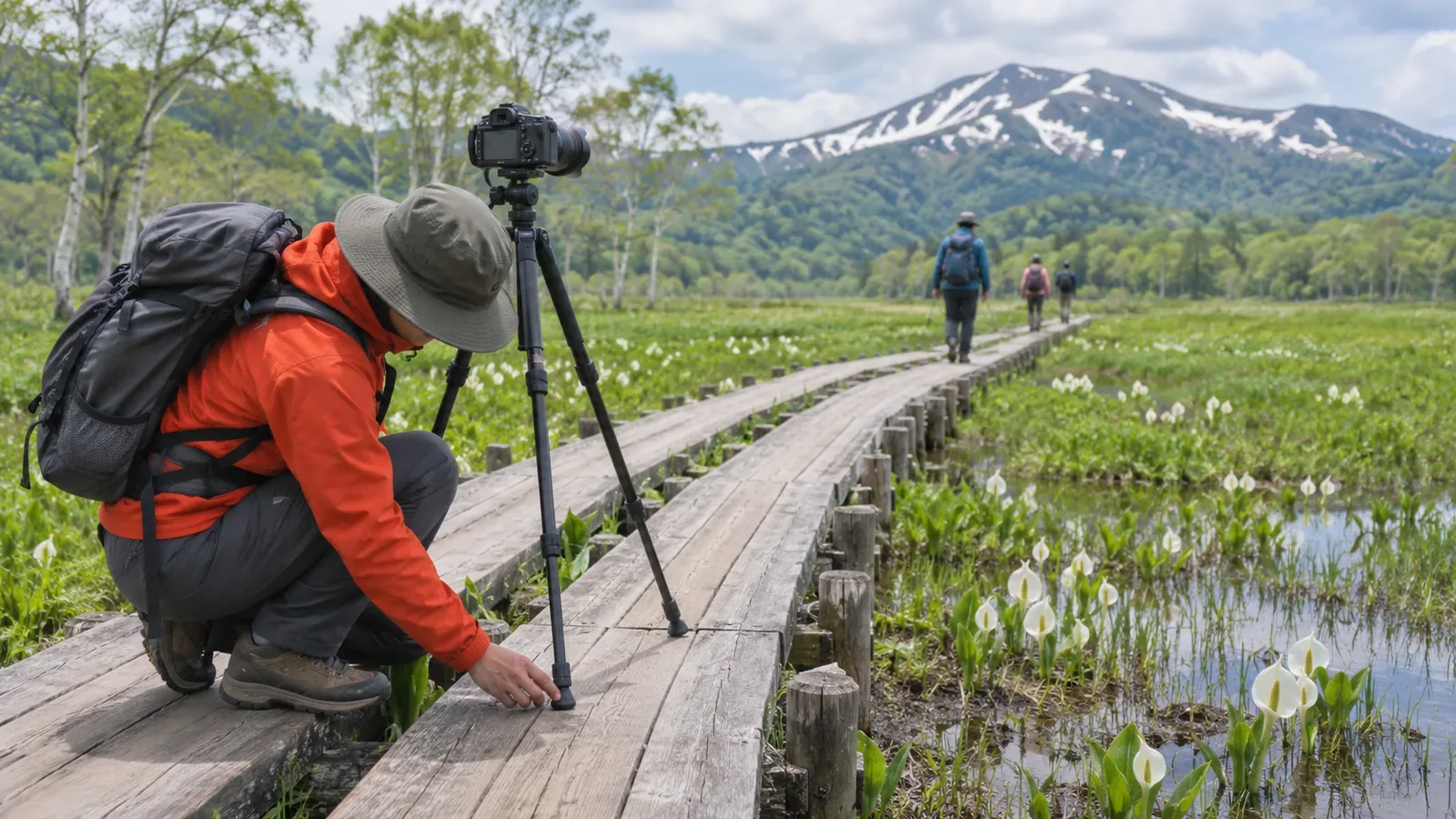
Before setting up a tripod on a boardwalk, check the site manager’s guidance and how people are using the path. Oze asks photographers to keep tripods out of the wetlands. Check local instructions and foot traffic even if you stay on the boards. Can all the feet stay on the boardwalk? Can others pass? Do the local rules allow it? If you can’t answer, keep the tripod packed and move on.
Why boardwalks are there and what local guidance says
The Oze Preservation Foundation explains that boardwalks protect the wetlands. It asks visitors to keep tripod feet out of the wetlands and to keep their own feet on the boards when sitting on a boardwalk or at a rest area. Fukushima Prefecture also asks visitors to stay out of the wetlands and keep trekking pole tips and tripods off them. The boardwalks were installed after foot traffic damaged the wetlands.
According to the Oze Preservation Foundation, the first boardwalks helped people cross muddy ground. The network was later developed to protect the wetlands. In July 2025, Ozenuma Visitor Center described crews carrying timber from a helicopter drop-off point to the work site and repairing damaged boards by hand. That maintenance keeps the walking surface safe and lets visitors cross without stepping into the wetland.
Even when the tripod feet would stay clear of the wetland, check whether tripods are allowed on that section of boardwalk. Read the visitor centre’s guidance before setting out and follow signs and staff directions on site. Check the responsible authority’s rules in other areas. If you can’t confirm that a tripod is allowed, take a handheld photo where you can stop safely, or keep walking.
Three things to check before unpacking the tripod
These checks draw on the guidance above. Keep the tripod packed unless you can meet all three.
First, check that all the feet will fit on the boardwalk and stay clear of the wetland and plants. Keep every leg inside the edge. The tripod industry association says to keep every leg out of places closed by fences or ropes. Allow room for your stance, the spread of the legs and your pack. If there isn’t enough space for everything, leave the tripod packed.
Check your footing too. Fukushima Prefecture warns that wet boards can be slippery. The Oze Preservation Foundation describes improvements to reduce tripping. Skip stopping points where the boards are wet, uneven or damaged.
Second, keep the way clear. In Oze, walk on the right and give way to uphill hikers. The tripod association asks photographers to avoid tripods when it’s crowded. A tripod across a narrow walkway can block people or trip them. If someone is likely to approach from either direction, leave the tripod packed.
Third, follow the site manager’s guidance. Fukushima Prefecture directs visitors to the Oze Preservation Foundation’s website for detailed rules. Use the industry association’s advice alongside the rules of the site manager. Check the local guidance before your trip. If you can’t tell whether tripods are allowed, leave yours packed.
Set up briefly and carry the tripod safely
Stop somewhere with stable footing and room for others to pass before extending the legs or attaching the camera. Do this with both feet planted. If there’s nowhere to stand clear on the boardwalk, save the photo for later.
Once the tripod is up, stay with it. Keep it with you, avoid leaving it to hold a spot and free up the space as soon as you finish. The tripod association says that occupying a spot for a long time can keep others from enjoying the view. It also warns that inconsiderate behaviour can lead to restrictions on tripods or photography.
When you move, the association recommends removing the camera, retracting the legs and carrying the tripod upright. This keeps long legs from swinging into people. Pack up where you have stable footing and space for others to pass. Before walking, check the distance to people around you and keep your gear and tripod feet within the boardwalk. Follow the equipment instructions and stay on the boards while packing.
Decide before the hike when you’ll skip the tripod
It’s tempting to take the photo once you’ve made the trip. Decide ahead of time when to pass: a foot might extend beyond the boardwalk, the boards are wet, the surface is uneven or damaged, people are approaching, or you can’t confirm the local tripod rules. If any one of these applies, keep the tripod packed.
You can take a handheld photo, use a different spot where it’s safe to stop, or continue without taking a photo. Choose the option that lets others pass and protects the wetland.
If you want to note why you skipped a spot for next time, stop where the footing is stable and there’s room for others to pass. Make the note while standing still.
When in doubt, keep the tripod packed and protect the wetland and the passage
The guidance asks you to keep tripods out of the wetland, leave space for others to pass and share the view. Check the site manager’s instructions and leave the tripod packed if you can’t confirm it’s allowed. The local examples are from Oze. Before your trip, check the latest guidance for the area you’ll visit.
References and sources
- Oze Preservation Foundation — Rules and etiquette
- Fukushima Prefecture — Precautions for hiking in Oze
- Oze Preservation Foundation — Boardwalk history and maintenance
- Ozenuma Visitor Center — Boardwalk repairs, July 31, 2025
- Japan Photo and Imaging Accessories Association, Tripod Division — Tripod etiquette