
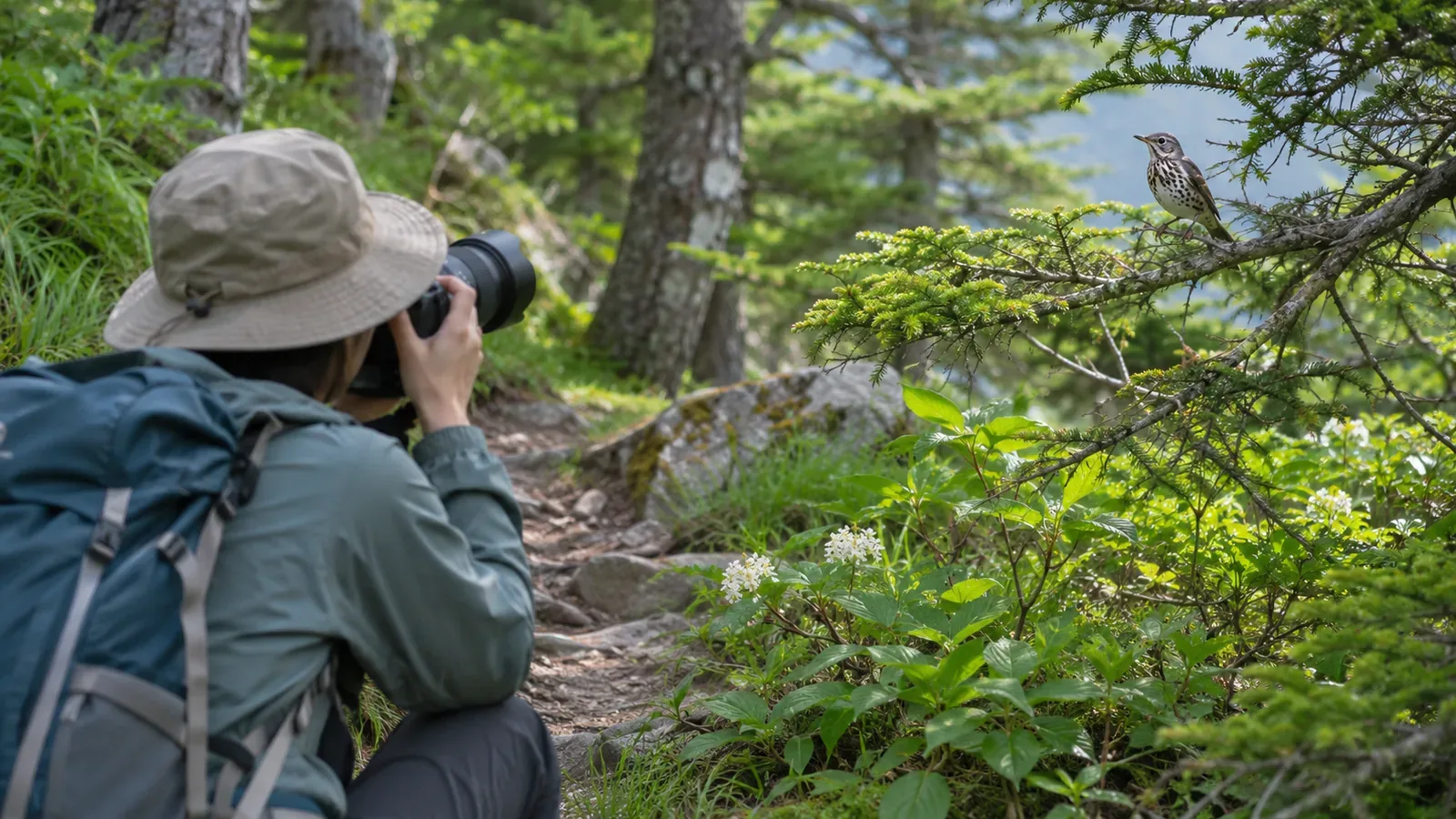
A bird on a mountain trail can make you wish you could fill more of the frame. Before taking another step toward it, stop. Watch from where you are and give the bird and its surroundings priority. Even a tiny bird in the frame, or an encounter you never photographed, can be part of your record of the day.
Stop Where You Spot the Bird
First check that you can stop safely and that others can get past. On a narrow trail, keep your camera away until you reach a spot with room to pass. Stay on the trail and out of the vegetation, even if the bird moves out of sight.
Nagano Prefecture asks visitors to watch rock ptarmigans quietly from a distance. Follow local instructions for the species and situation, and leave the distance between you and the bird as it is. The Wild Bird Society of Japan recommends quietly backing away if a bird changes posture or gives an alarm call.
In a 2019 account from Tateyama, Japan’s Ministry of the Environment describes a rock ptarmigan that came closer while a photographer stayed back. If a bird approaches, keep its path clear, follow local guidance and watch quietly.
Keep Clear of Nests and Bird Families
The Wild Bird Society of Japan asks photographers to stay away from wild birds’ nests. A parent that senses danger or notices changes around the nest may abandon its young. If you spot a nest or chick, leave the area without going closer to find a better view.
If a bird appears to be carrying food, let it go without following. Quietly ask your companions to give it room as they pass. Avoid deliberately moving closer to see how it reacts.
If all you hear is a call, listen from a place where you can stop on the trail. Keep out of the brush. If the bird stays hidden, walk on. You can jot down what you saw or heard and where you were, then try identifying the bird at home.
How to Shoot From a Distance and Know When to Stop
Use binoculars or a telephoto lens from an open trail or a designated viewing area. Long lenses and tripods can take up room, so check how much space is available and follow local rules. A quick handheld photo may be enough. You can also simply watch.
If the bird appears small, you can leave it that way or crop the picture later. Even a crop may fail to show the features you need for identification. If you cannot identify the bird, record it as unidentified or make clear that any identification is tentative.
Check your itinerary before getting absorbed in a photo. If the bird disappears, let it go and get back to your hike. If others are having trouble getting past, stop shooting, say a word to each other and make room.
Think Before Sharing a Sighting
The Wild Bird Society of Japan recommends withholding the precise location and removing GPS data from images. A landmark can also give the spot away, so check the photo and caption. The society advises keeping photos of nesting birds and newly fledged chicks off social media, and sharing information about rare birds after they have left the area. Check what local managers or conservation groups recommend as well.
In your notes, record the date, the features you saw and what you were able to confirm. If you are unsure about the species, leave it as a possibility and look it up in a field guide later. Ask before posting a picture that shows other hikers or people in your group.
Follow local instructions, keep your distance and quietly move away if you find a nest or a family with young. An encounter can still stay with you through the sight of the bird or the sound of its call.
Put the Bird First
Watch from where you first spotted the bird. Leave it room and let it move away without following. Keep away from nests and chicks, stay on the trail and follow local guidance.
If you cannot take a photo from where you are, watch for a while or keep walking. Think about the effects on the bird and its surroundings before sharing a picture or location.