
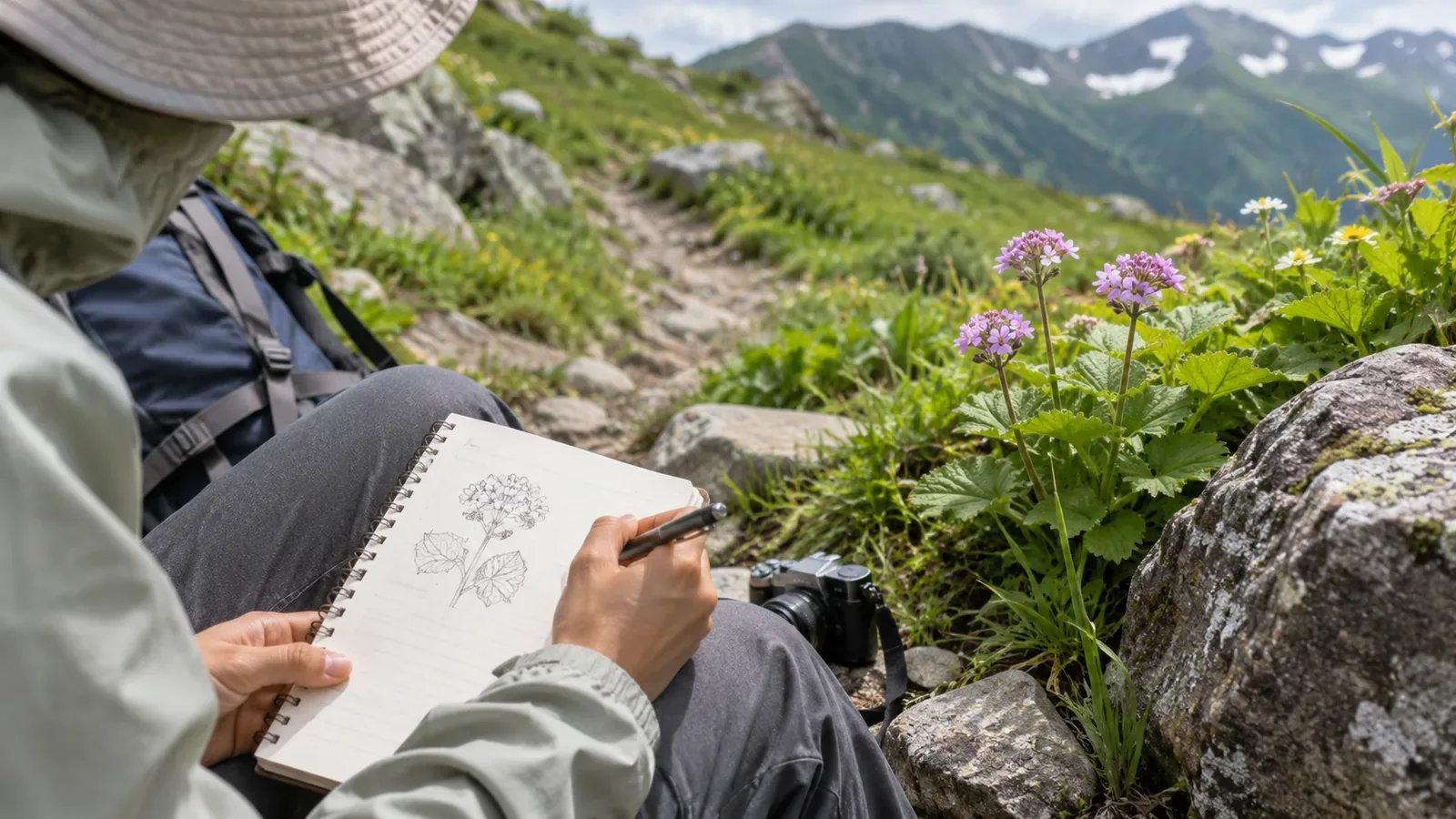
If you don’t know the species, leave its name blank until you can check it. What you saw and where you saw it can help you identify it at home. Record the features you can see from the trail, leaving the plant in place. Start with what you noticed and add the species name when you can confirm it. The same journal works for familiar plants and ones you still need to identify.
Record the features you can see without collecting
Japan’s Natural Parks Act regulates the collection of and damage to plants designated by the environment minister in special zones of national and quasi-national parks. This includes some alpine plants. The Ministry of the Environment explains that the system maintains the natural character of these areas and helps protect rare species. Its park-by-park list is dated July 22, 2025. Look up the park you plan to visit before leaving.
Nagano Prefecture’s guidance for visitors to its natural parks, updated May 25, 2026, asks people to leave plants and animals in place and enjoy them as part of the landscape. Stay on trails and keep out of vegetated and roped-off areas. Going off trail for a photo can damage the route and expose you to a fall. Trampling plants can leave bare ground that takes away from what future visitors can see. In other prefectures, check the relevant park manager’s guidance.
If the plant is too far away to see a feature, make a note of that. Write names you know on site and leave uncertain ones for later. A note such as “underside of leaf not seen” makes clear what you could check and what was outside the photo.
Fields to fill in on the trail and at home
Japan’s National Institute for Environmental Studies runs a citizen monitoring project on phenology, or seasonal events in nature. Its reports include the observation category, date, survey frequency, latitude and longitude, and remarks. Volunteers can report the categories they recognize, and repeated observations of a single species are welcome. For a hiking journal, borrow the idea of recording what you can recognize and making room for remarks.
The Phenology Observation Manual explains that flowering and changes in leaf color vary from one plant and site to another. Consistent conditions help when comparing observations. A cherry tree’s flowers can change between morning and afternoon, which is one reason to record the time of day and the setting.
On the trail, note the date, time of day, location and setting, such as forest, rocks or open grassland. Record features you saw, including the color of flowers or fruit, leaf arrangement and approximate size. Note whether you have a photo. Later, add the species name, what you consulted and the date you checked it. In the remarks, record any doubts, similar plants or tentative names.
A blank entry should show that identification is pending. First, put only confirmed names in the species field and label guesses as “possible ID” in the remarks. Second, include a description or a photo for every blank name so you have something to check. Third, when you do add a name, record the date and what supported it, such as a field guide or advice from a specialist.
Keep your original description and remarks even after identifying the plant. They can show which features helped you arrive at the name.
Take photos and record location from the trail
The citizen survey manual asks for two views of a monitored tree on its flowering date, one showing the whole tree and one showing the flowers. It also asks contributors to keep people and household nameplates out of the images. On a hike, take a view of the whole plant and a detail shot if both are possible from the trail. If you couldn’t get close enough, write that in the remarks.
Stay on the trail and skip the shot on narrow sections with poor footing. Nagano Prefecture advises people to wait on the safe uphill side of narrow paths, stay away from the exposed edge and watch for loose stones and rockfall. Take notes and photos only where you can stand safely and leave room to pass. Mark features you couldn’t see or photograph as unchecked.
The Japan Meteorological Agency monitors designated trees. The survey manual suggests signs or labels on the grounds of a managed site so a new observer can find the same tree. For plants in the mountains, leave them unmarked. Note where the plant is in relation to a sign, junction or fixed boulder so you can find the spot next year.
Check the blank entries at home and try a practice entry
Compare the photos and features with a field guide. For monitored trees that are hard to identify, the phenology manual mentions checking planting records, contacting the tree care provider or asking a local museum. You can apply the same idea by asking a knowledgeable person or institution. Ask what they can help identify and what they need. If you still aren’t sure, leave the name blank for a future outing.
Try an entry before the hike with a plant in your garden or along a road. Write a few lines about its features without naming it, and put them next to a photo. When you read them later, see whether you can picture its shape and color.
In brief: A blank name marks an identification to check
Even if you don’t know the name, you can describe the plant while following rules on access and collection. Note the features, time, location and photos on site. Add the name later with the basis for your identification, or leave it blank. Before leaving, check the park’s designated plant list and local guidance. To get started, practice writing a few lines of description.
References and sources
- Japan Ministry of the Environment: Designated plants in national and quasi-national parks
- Nagano Prefecture: Guidance for park visitors and hikers
- National Institute for Environmental Studies: Citizen monitoring of seasonal changes in plants and animals
- Climate Change Adaptation Platform: Phenology Observation Manual, version 3
- Japan Meteorological Agency: Phenological observations