
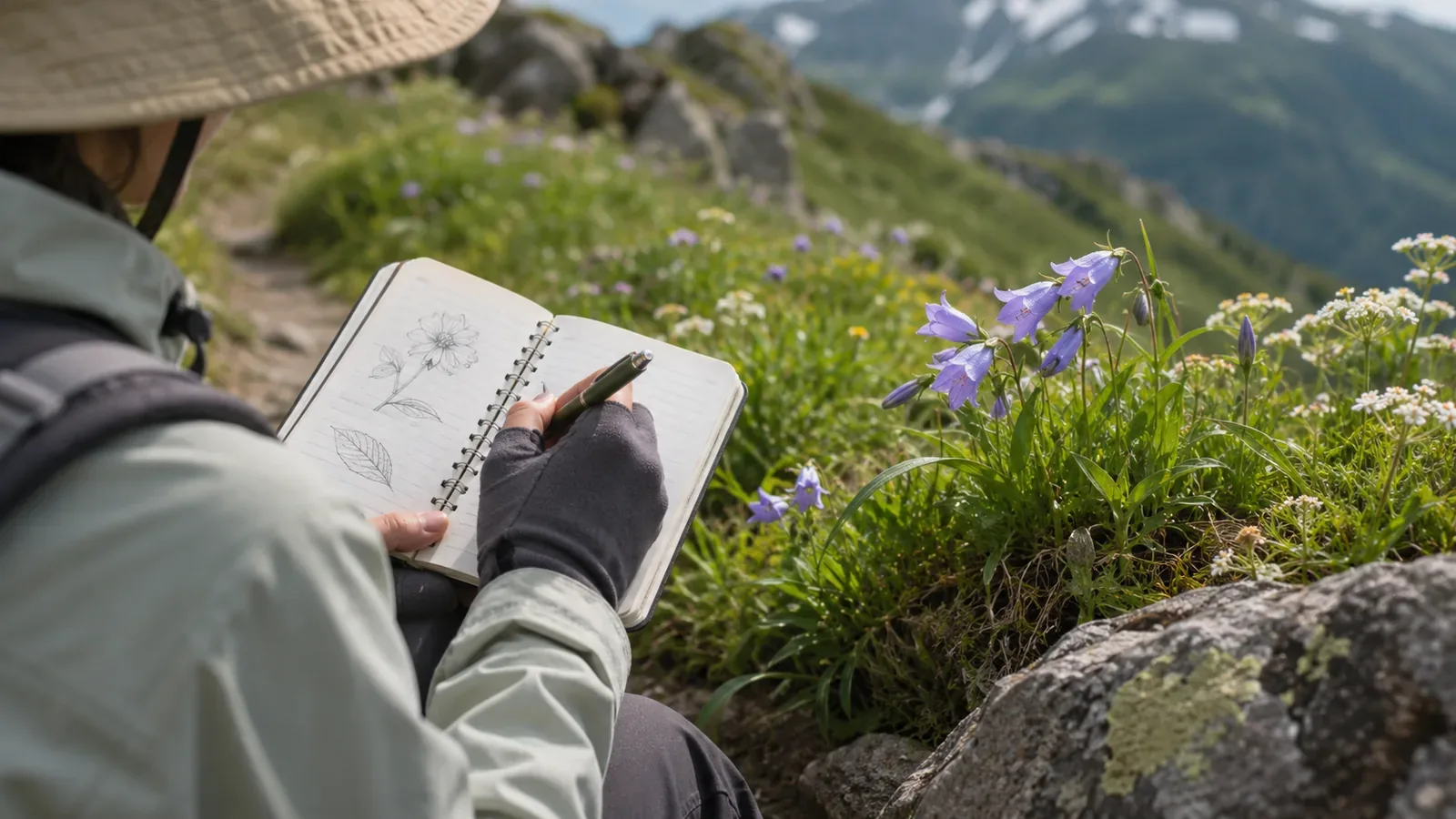
You might see flowers on a hike and think you’ve caught them at their best. One visit shows how they looked in that place on that day. It gives little information about the mountain’s peak flowering period or what happens in a typical year. Seasonal monitoring follows the same subjects to account for differences between individuals and growing conditions. Use that idea to compare visits to a fixed spot, and leave gaps for times you weren’t there.
What one visit can show
The Japan Meteorological Agency uses common criteria at its weather stations to track the flowering of Japanese apricots and cherries and color changes in maple and ginkgo leaves. It observes selected trees. The Phenology Observation Manual on Japan’s Climate Change Adaptation Platform explains that flowering and leaf color vary by plant and growing conditions. Since local weather can also affect them, it recommends comparatively open sites.
If you see a different plant on a different date, individual and local differences can make it look like the season has come early. The manual also notes that a cherry tree’s flowering can change between morning and afternoon. Record the time, date and place along with what you saw. Observe when your route allows, and leave times you didn’t see open.
Choose a fixed viewpoint and area
If individual plants are hard to recognize reliably, choose a viewpoint and an area to observe. Label the entry as an area observation so it’s clear what you followed. Use durable landmarks like a sign at a junction, a bridge or a large rock. Give the spot a name, such as “slope toward the summit from the junction sign,” and look from the same direction each time. When observers replace a selected tree, the manual records the change and selection year because the surroundings can differ. If you change viewpoints, note the date so you can interpret earlier entries correctly.
The manual recommends marking selected trees on managed grounds so new observers can recognize them. For a hiking journal, use a viewpoint you can reach safely from the trail and leave the surroundings as you found them. Put the landmark and, if available, the location in your notes. Choose a spot where stopping leaves the path clear.
What to write on each page
Adapt the manual’s reporting fields, such as date, place and photos. Try six entries: date and time of day, viewpoint name, weather, the flowers you watched, their condition and photos. A line on recent rain, fog or wind may help when comparing years. Add a species name if you know it. If you don’t, write “species unconfirmed” and record flower color, leaf shape and approximate height. Describe what you checked, such as “buds and open flowers,” “most visible flowers open” or “some petals have fallen.” Mark “might be starting to bloom” as an inference. The manual asks for pictures of the whole tree and its flowers. From the trail, try a view of the whole patch and a detail of the flowers if you can. Add the order of the shots and a short description.
For planted observation trees that are hard to identify, the manual suggests asking the site manager for planting information or contacting a local museum through the project office. Check an institution’s terms before making your own inquiry. Good notes on features help if you want to look a flower up later. The manual also suggests multiple days of reports if an observer is unsure when maple leaves changed color. On a single hike, mark uncertainties as “species unconfirmed” or “judgment pending.” When taking photos, keep other hikers out of the frame.
Plan return visits and stop safely
If you can revisit the spot, put the observations from the same area in date order. You might see many buds on one visit and fallen petals on the next. You can write “many flowers may have opened between visits” as an inference, and leave the peak date or period open. If you saw many open flowers on several visits, list each date you observed them and leave gaps between dates.
Japan’s Natural Parks Act regulates collection and damage to alpine and other plants designated by the environment minister in special zones of national and quasi-national parks. The ministry lists the designated plants by park, with its published list dated July 22, 2025. Check the list for the park you’ll visit. Leave flowers in place and take home your notes and photos.
Nagano Prefecture’s guidance, updated May 25, 2026, asks people to stay on trails and keep out of vegetated and roped-off areas. Leaving the path for a photo can damage the trail or expose you to a fall, and trampling can leave bare ground. On narrow paths, wait in a safe place on the uphill side, away from the exposed edge. If you can see a flower but can’t photograph it from the trail, write “seen, no photo.”
Japan’s National Police Agency’s 2025 overview recommends checking current weather, identifying hazards and early descent routes in advance, and sharing and filing your hiking plan. Allow time for observations in the schedule and cut them short if you’re running late. Choose a return date that suits the weather and how you feel. If the route or your location becomes uncertain, pause the observation and check your position and direction first.
In brief: Compare the visits you made and leave gaps for the rest
Repeated visits from one viewpoint show conditions on those dates. Note the time, weather and what you could see. Leave the peak and first flowering dates open where the observations are missing. Stay on the path, leave flowers in place and allow time for observation. Before your next hike, note a landmark and set up the journal, then check the park guidance and weather. Make room to record unanswered questions.
References and sources
- Japan Meteorological Agency: Phenological observations
- Climate Change Adaptation Platform: Phenology Observation Manual, version 3
- Japan Ministry of the Environment: Designated plants in national and quasi-national parks
- Nagano Prefecture: Guidance for park visitors and hikers
- National Police Agency of Japan: Overview of mountain incidents in 2025