
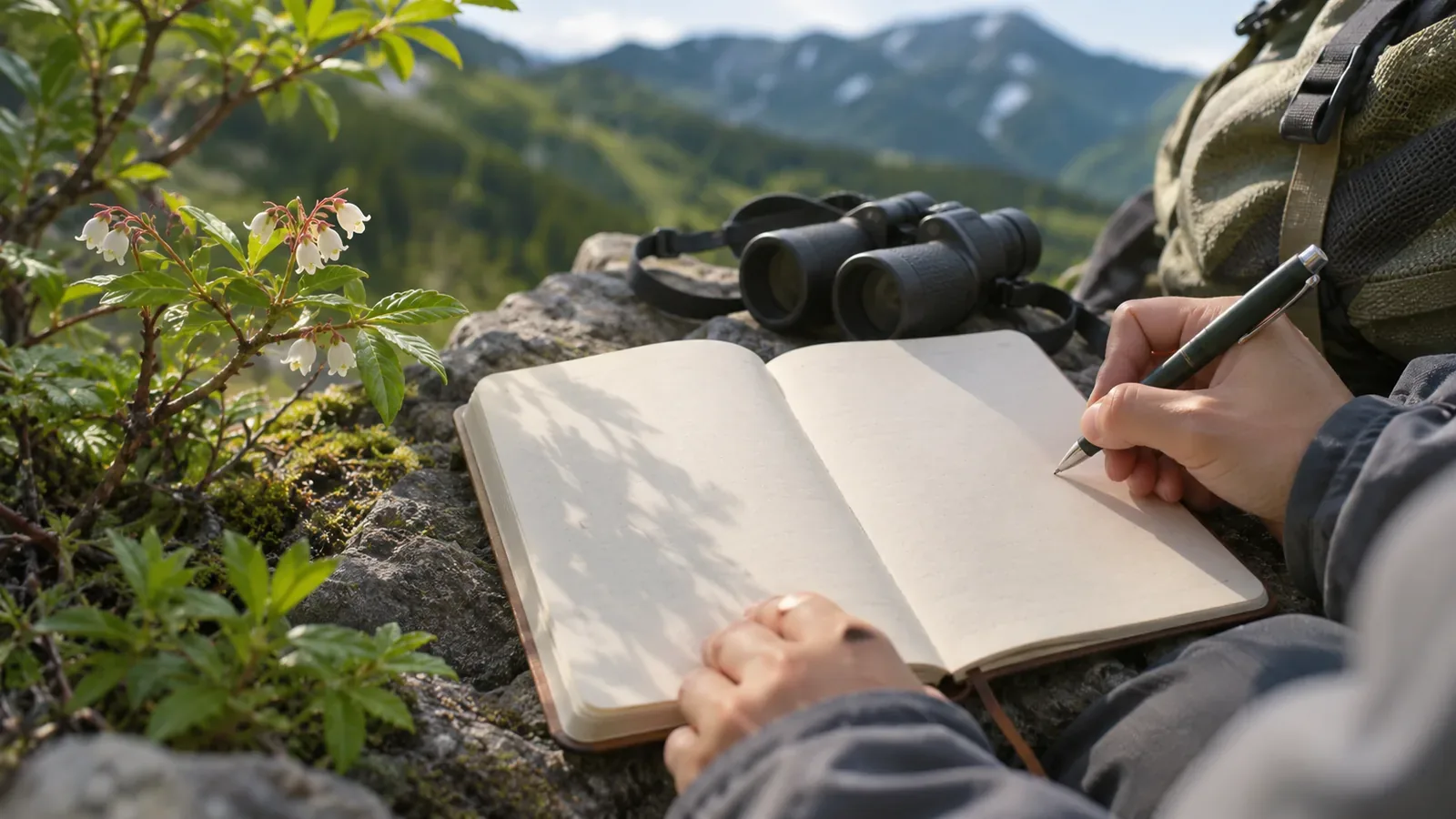
Give your nature journal three fields: observed, inferred and to check. It’s easier to tell what you saw from what you thought about it later. On the trail, start with one short line in the observation field, written where you can safely stop. Sort out guesses and follow-up questions at a rest stop or after the hike. Seasonal monitoring offers some ideas for filling in the three fields.
A flowering date takes both a definition and repeated observations
The Japan Meteorological Agency uses common criteria at its stations to observe events such as plum and cherry flowering and color changes in maple and ginkgo leaves. Observers follow selected trees. The records help track how early or late seasonal events occur and how climate differs from place to place or changes over time.
A flowering date is a classification made by applying a defined rule. The Phenology Observation Manual published on the Climate Change Adaptation Platform (version 3, November 13, 2023) defines the date for a monitored Somei-yoshino cherry as the day five or six blossoms have opened. It excludes blossoms emerging from the trunk or roots. The rule applies to those trees. Use the criteria for the plant you are observing. The manual calls for monitoring the same tree over time because individual trees and growing conditions differ.
Japan’s National Institute for Environmental Studies recommends a survey site you can visit three or four times a week. Daily visits are ideal, and at least once a week is the minimum. Volunteers can focus on the categories they recognize, even a single favorite species. One hiking visit can’t pinpoint when the first flower opened. Write what you saw that day. Treat “just started flowering” and “nearly at its peak” as guesses. That distinction adapts the project’s approach to a hiking journal.
How to set up and use the three fields
In “observed,” record what you checked at the time: date, a landmark, the part of the plant, any counts you made, colors, conditions and photo numbers. In “inferred,” write what you think those observations suggest and why. In “to check,” note how you could test the inference.
For example, observed: “A few minutes past the junction sign, several white flowers on a shrub on the uphill side. Buds visible, not counted. Photo 12.” Inferred: “May be early flowering because I saw open flowers and buds. I don’t know how it looked yesterday.” To check: “Compare the same shrub next time I pass. Look up the plant from the photo at home.” Put “almost at its peak” or “probably species X” under inferred. Keep a count distinguishable from an impression that there were many.
Use the same approach when the classification is hard. The manual recommends reporting for several days and comparing photos from different regions if it’s unclear when maple leaves have changed color. If you can’t return for several days, keep your inference pending and add “next time I see this tree” under to check. You can leave a question open until the evidence is better.
On the trail, write one line at a safe stop
Nagano Prefecture asks hikers on narrow trails to wait at a safe place on the uphill side and stay away from the exposed edge. Going off trail for a photo can damage the path and expose you to a fall. Stay out of vegetated and roped-off areas as well.
Stop before taking notes, photographing or using a screen. Find firm footing and leave room to pass, then write one line under observed. Skip the entry if you can’t stop safely. Leave it marked “no record” to preserve the integrity of the observation field. If you add something you remember later, label it “recalled after the hike.”
Allow time for observation when you plan the route and cut back on note-taking if you’re running late. Japan’s Ministry of the Environment recommends a Mt. Fuji plan with time and energy to spare. On other hikes too, prioritize the route and how you feel before adding notes. If you need to skip a section or turn back, go ahead with that decision.
Add inferences afterward and review what you could observe in place
Fill out the inference field at a rest spot or after the hike. If you change your mind, keep the original thought and add the date and result of your check. The manual tracks when a monitored tree changes and when its replacement was selected. In the same spirit, keep a record of how your identification changes. If a tree is hard to identify from photos, the manual suggests contacting its project office to request help from a regional museum. Ask the institution what kinds of inquiries it accepts before sending your own.
For observations, write what you can see without taking a specimen. The Ministry of the Environment and Nagano Prefecture ask visitors to leave plants in place, and Nagano extends the guidance to animals too. In special zones of national and quasi-national parks, Article 20, paragraph 3, item 11 of the Natural Parks Act regulates the collection of and damage to alpine and other plants designated by the environment minister. See the list for the park you’ll visit.
In brief: Observe on the trail, infer later and leave questions open
At a safe stop, write one line about what you saw. Add your inference and its basis after the hike. Keep unresolved points in the field for later checks. A single hike gives you the conditions you saw at that time and place. Skip the record when you can’t stop safely, leave room in the plan and turn back when needed. Draw three columns on a blank page before your next hike to have the journal ready.
References and sources
- National Institute for Environmental Studies: Citizen monitoring of seasonal changes in plants and animals
- Japan Meteorological Agency: Phenological observations
- Climate Change Adaptation Platform: Phenology Observation Manual, version 3
- Nagano Prefecture: Guidance for park visitors and hikers
- Japan Ministry of the Environment: Visitor etiquette in Fuji-Hakone-Izu National Park
- Japan Ministry of the Environment: Designated plants in national and quasi-national parks