
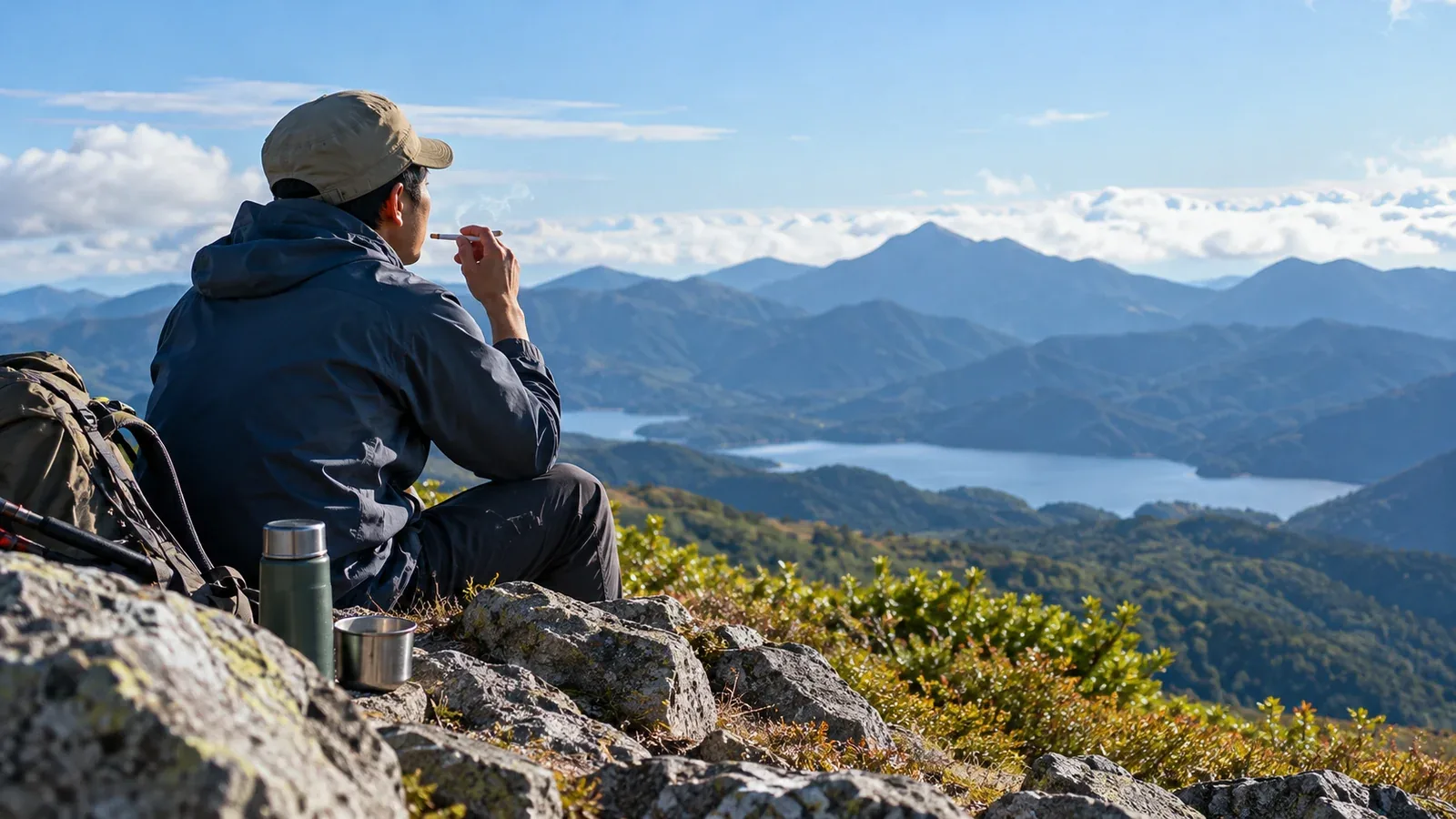
Before a hike, find out where you can smoke and how to dispose of cigarette butts. The answer depends on the area, facilities and fire notices for the day.
Japan’s Ministry of the Environment asks national park visitors to smoke in designated places and take their ash and butts home. Find out whether there’s a designated smoking area on your route or at the facilities you’ll use.
This guide covers where to check the rules, wildfire prevention, disposal and consideration for other hikers.
Where the rules come from
Smoking rules come from three main sources.
Laws and ordinances. A wildfire warning issued under a municipal fire prevention ordinance can restrict smoking in designated areas. Check municipal or fire department notices for the exact area and activities covered.
Local managers and authorities. Some areas bar smoking on paths and in car parks. At the Shiretoko Five Lakes, the entire site is smoke-free, including the ground-level trails, raised boardwalk and car park.
Huts and visitor centres. Each facility sets its own conditions. Yokoo Sanso, for example, bars smoking throughout the building. Ask each facility whether outdoor smoking is allowed and where.
Rules can change. When planning, check the latest official information or ask the park office or hut directly.
Wildfire and ignition risk
An ember that reaches dry grass or leaf litter can start a wildfire.
Stepping on a butt can leave an ember burning. At a designated spot, put it out completely and collect it. Keep it off the ground.
On ridges and other windy places, embers and ash can blow away. Avoid smoking outdoors when it’s dry or windy, even if there’s a designated area.
Skip smoking in these conditions.
- When there’s a wildfire advisory or warning
- Where there’s plenty of dry grass or leaf litter
- In or along the edge of a forest without a designated smoking area
- In strong wind that can carry ash or embers
Put out cigarette butts and carry them away
Taking your rubbish home is a basic part of hiking etiquette. That includes cigarette butts.
Some filters contain cellulose acetate, which breaks down slowly. Research also shows that discarded butts can release substances into water that are harmful to aquatic life.
Bring a portable ashtray. Where smoking is allowed, extinguish the butt completely and let it cool before putting it in the ashtray. Use a designated disposal container if the site provides one. Otherwise, take it home and follow local sorting rules.
If there’s no designated smoking area or no safe way to collect the butt, skip smoking there. Keep anything still burning out of your pack and clothing pockets.
Consideration for other hikers
Even outside, smoke can reach people on narrow trails and in rest areas. Pay attention to wind direction and how close other people are.
Avoid smoking in places like these unless a designated area is provided.
- On a trail with people ahead of or behind you
- At summits, viewpoints and other busy rest spots
- In hut dining rooms, sleeping quarters and shared campsite areas
- Where other people are already resting
If you’re hiking in a group, agree on likely rest stops and timing before you set out. It makes it easier to check with one another on the trail.
How to check rules before you go
Work through these steps before departure.
- Find out who manages the route. The hiking map or visitor centre’s website may identify the environment ministry, prefecture or municipality responsible.
- Look for smoking rules. Check the manager’s official information or ask about no-smoking areas and designated smoking spots.
- Check the hut’s rules. When booking, ask whether smoking is permitted and where.
- Pack a portable ashtray. Plan to take your butts away even where smoking is allowed.
- Check fire and weather notices. Look up municipal or fire department wildfire notices and Japan Meteorological Agency information on dry conditions and strong winds.
Check before your hike
Check smoking rules for your route and hut, whether there’s a designated area, and the day’s fire notices. If you plan to use a designated area, bring a way to collect and carry away the butts safely.
Further reading
- Environment ministry national park etiquette and visitor rules for the Shiretoko Five Lakes and Yokoo Sanso
- Fire and Disaster Management Agency wildfire information and Forestry Agency prevention guidance
- Research into cigarette butt decomposition and effects on aquatic life
References and sources
- Japan Ministry of the Environment — National park rules and etiquette
- Shiretoko Five Lakes Use Council — Visitor guidance for the Five Lakes
- Yokoo Sanso mountain hut — Visitor rules
- Japan Fire and Disaster Management Agency — Wildfire preparedness
- Japan Forestry Agency — How to prevent wildfires
- Japan Meteorological Agency — Local disaster and weather information
- Environmental Pollution — Long-term study of cigarette butt decomposition
- International Journal of Environmental Research and Public Health — Study of aquatic toxicity from cigarette butt leachate