
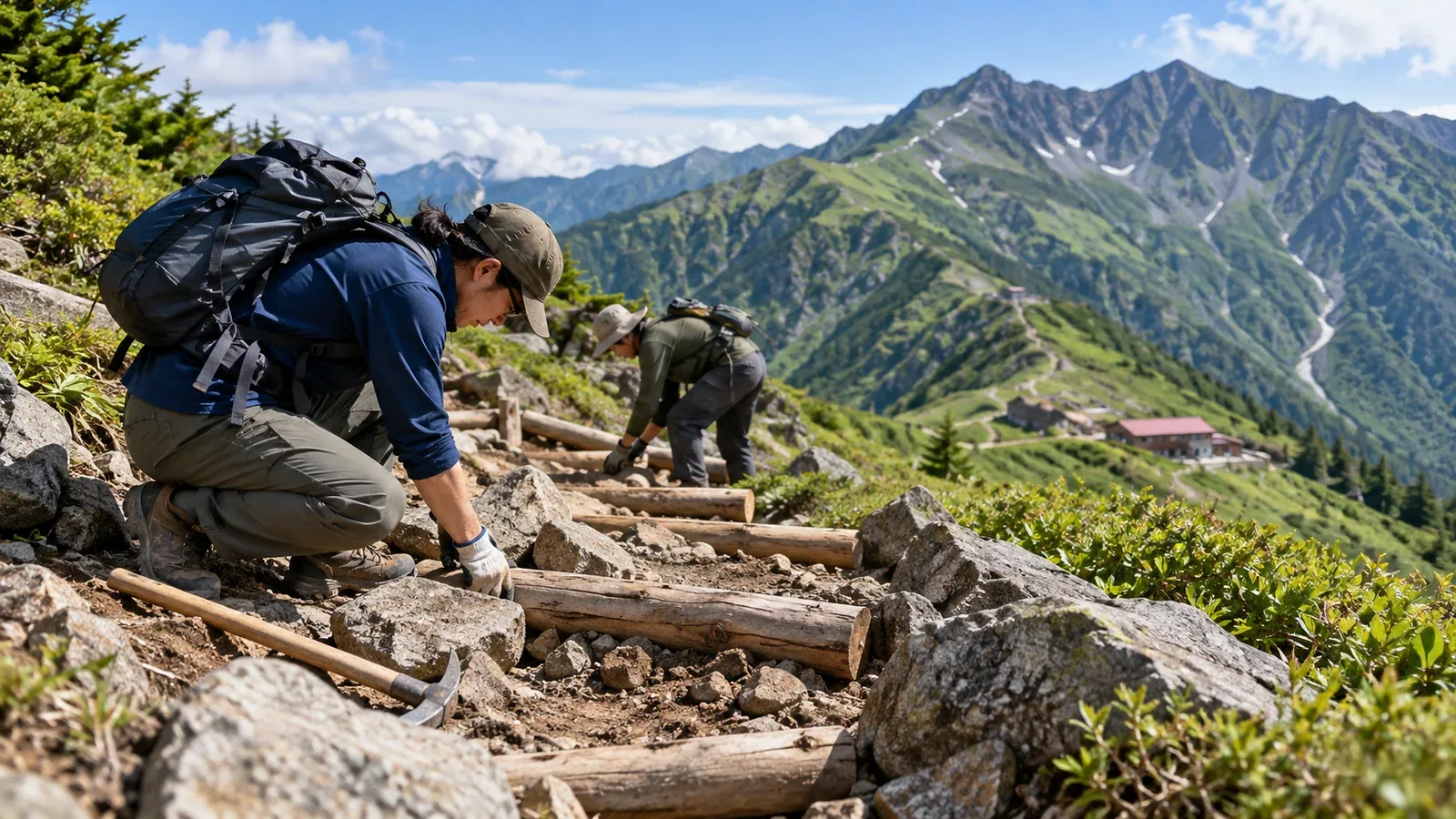
If you love the mountains and want to live and work nearby, one option in Japan is the rural revitalization program, known as Chiiki Okoshi Kyoryokutai. The Ministry of Internal Affairs and Communications designed the program, and local governments recruit participants around the country. For hikers, it can be a practical way to get established in a mountain community. A love of the mountains will get you interested. Understanding the work before you move can save you from a gap between your expectations and daily life.
This article focuses on hiking and mountain tourism assignments. It explains how the program works, what can be difficult once you start, and what to check before applying.
How the rural revitalization program works
Participants move their registered residence from an eligible urban or other area to a rural community. The local authority appoints them to work on projects that benefit the community. Assignments usually run for roughly one to three years. Ask the recruiting authority about employment status, pay and coverage of project expenses, as terms vary by listing.
The program aims to encourage people to settle in rural areas and to bring more people into the work that sustains those communities. The local authority hopes participants will stay after their term, start a business or take a local job. For a hiker, the term is a chance to live near the mountains while building experience and local relationships.
What kinds of assignments are available in mountain areas?
In some listings the local authority defines the assignment in advance. Hiking and mountain tourism roles can include the following.
Trail maintenance
The work can include cutting back vegetation, removing fallen trees and repairing trails after landslides. Physical fitness, a knack for outdoor work and the ability to coordinate with local hiking clubs, forestry workers and officials often matter more than technical mountaineering skills.
Supporting and training mountain guides and nature interpreters
You might plan and help run hikes with certified guides, or help visitors understand the natural landscape through interpretation. Some local authorities support participants in earning mountain or nature guide credentials during their term. Check whether the listing requires a qualification before you apply.
Mountain tourism and overseas visitors
The work may include producing hiking maps in other languages, sharing information on social media and making it easier for international hikers to visit. Some listings call for language or digital skills.
Supporting mountain huts and visitor centers
Work at a mountain hut or a visitor center near a trailhead may include welcoming visitors, answering questions and sharing weather information. Customer service and communication are central to this kind of assignment.
Five things to check before applying
If the program appeals to you, work through these five points before you apply.
1. Find out what the assignment involvesA listing that says only “promote mountain tourism” or “develop tourism” can leave you with duties quite different from what you pictured. Ask the department by phone or email what a typical week would look like.
2. Plan for the end of the termThree years can pass quickly. If you want to stay, work out what could support you afterward. Before you start, consider whether you might work as an independent guide, take a job at a hut or move into another field.
3. Look into winters and living costsIn snowy mountain villages, trails may close in winter and the main assignment may stop. Ask what work you’ll do then, what snow clearing and other chores involve, and how you’ll get around. Some listings require a driver’s license or a car.
4. Understand how you’ll work with the communityYou’ll arrive as a newcomer and work within established relationships and local customs. Your hiking contacts can help, and you may also need to coordinate with existing groups such as mountain clubs, hunting associations and forestry workers.
5. Compare pay and project expenses with living costsPay and project funding vary by listing. Ask whether housing is provided or rent is subsidized and work out your total living costs before deciding. Check the posting or ask the department for the details.
Challenges that can come up after you start
Participants can run into three issues in particular.
Progress can be hard to seeTrail maintenance and outreach may take time to affect visitor numbers. Chasing quick results can make it harder to sustain the work. Agree with the department on what you want the area to look like after three years and set milestones so you can check your progress together.
Responsibilities can become unclearWhen the official you work with changes roles, an incomplete handover can leave the project without a clear direction. Put agreed duties in writing and schedule regular check-ins.
Feeling isolatedIn a small mountain village you may have few neighbors your age. Keeping in touch online with program participants elsewhere and getting involved in hiking communities across Japan can help.
Skills and qualifications to prepare
If you’re interested in a mountain assignment, the following preparation can help your application.
Build the basics of assessing a route, reading maps and judging weather. They’ll help with trail work and assisting guides. If you’ll be leading visitors, check the listing for the scope of the work and required credentials. Some local authorities help participants get qualified during their term.
If you’re interested in nature interpretation or environmental education, look into relevant courses and credentials. Roles that serve international visitors may call for English, Chinese or other languages.
Check the issuing body’s official information for entry requirements, costs and how long any credential stays valid.
What to do next
Look for vacancies on local government websites or a specialist portal such as JOIN. Pick two or three places that interest you and ask the department what the assignment involves in practice. Meeting local hikers and getting to know the area’s hiking culture before arriving can help you build relationships once you start. Nordwand’s community is one place to talk to hikers who know the areas you’re considering.