
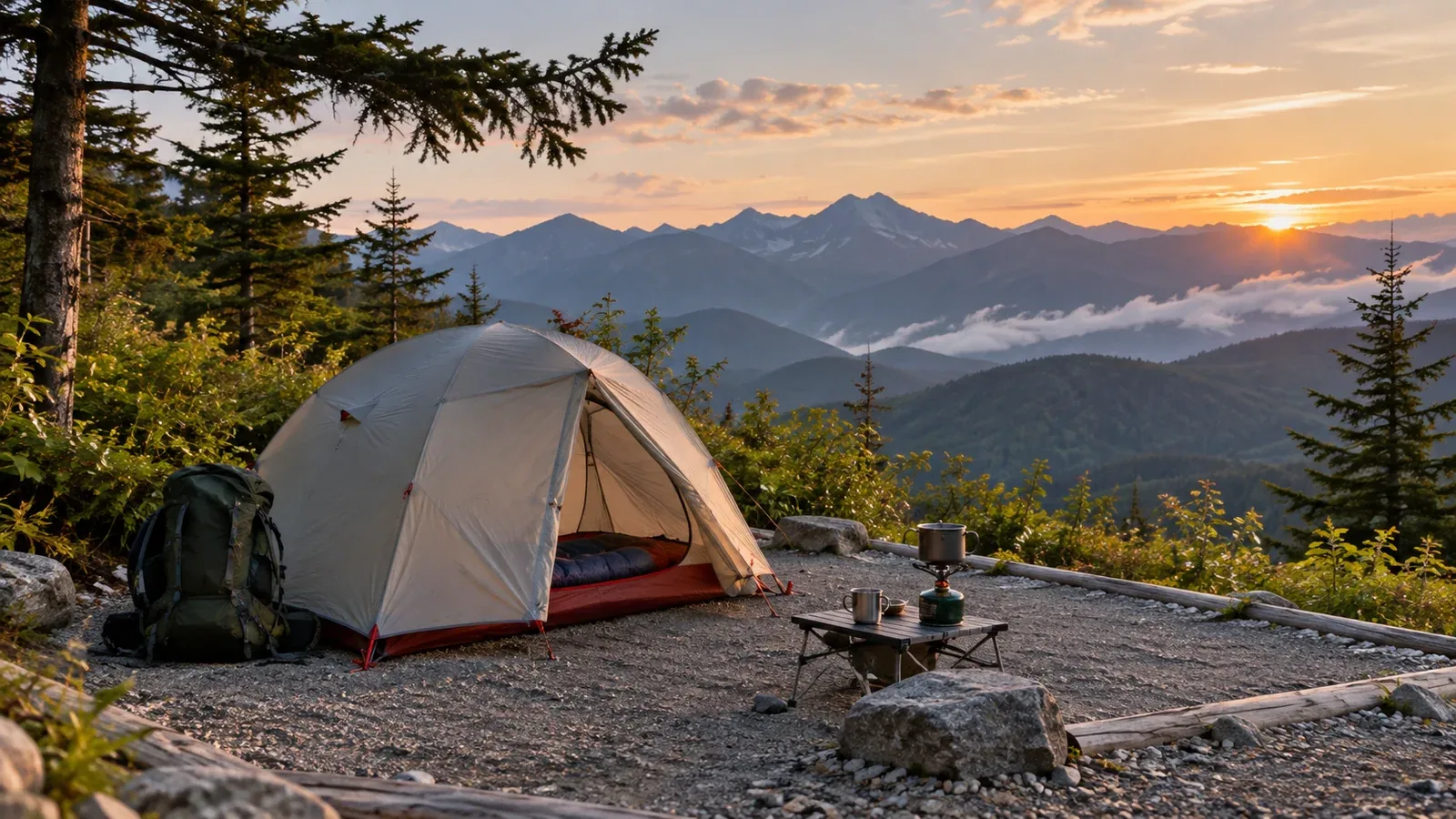
Before boiling water for coffee on a hike or lighting a campfire, check the rules for the site and the latest fire notices.
This guide explains how campfires and portable stoves are treated, what to check before setting out and how to use fire where it’s permitted.
Campfires and stoves can have different rules
Both use a flame, but a site may allow a stove and still restrict campfires.
Campfires can damage soil and vegetation with heat and sparks. Japan’s Ministry of the Environment asks visitors to have campfires only in designated areas in national parks.
Portable stoves, including gas and alcohol stoves, may have different rules from campfires. A ban on all use of fire also covers stoves. Ask the site manager which devices and places are allowed.
Which rules apply?
Several laws and local ordinances can apply in the same place. Knowing the main ones helps you find whom to ask.
Natural Parks Act: national and quasi-national parks
A permit is required for campfires or burning vegetation in special protection zones of national and quasi-national parks under Article 21(3)(6) of the Natural Parks Act. A permit is also required to collect fallen leaves or branches. Rules vary by zone and park, so check with the park office.
National forest rules
Check with the relevant district forest office. The Forestry Agency asks visitors to limit campfires to designated places in campsites.
Municipal fire prevention ordinances
A municipal ordinance may ask people to avoid outdoor fires during a wildfire advisory. A warning can bring restrictions in designated areas. Check the municipality or fire department for the area covered and the activities affected.
Hut and campsite rules
A campsite may allow fire only in a raised fire pit, allow only stoves or bar all use of fire. Before booking, ask the operator about both campfires and stoves.
How to check where you can use fire
Work through these checks before you go.
- Check the protection zone. Use the park or local authority’s official map to find the zone and its rules.
- Check whether it’s a national forest. Use the Forestry Agency or district forest office website to confirm the area and the rules.
- Check local ordinances. Consult the municipality or fire department for restrictions and any advisories or warnings in force that day.
- Ask the hut or campsite operator. Contact them or read their latest official updates. The site may temporarily restrict fire when it’s dry or windy.
If you can’t verify the rules, plan for a meal that doesn’t need a flame. Check the day’s notices and site guidance again before leaving.
Where fire is allowed, how to use it safely
Follow these practices at sites where campfires are permitted.
Use the designated fire pit or equipment. A fire directly on the ground can damage plants, soil and roots. Use the fire ring or raised pit specified by the operator and lay down a heat-resistant mat if required.
Use firewood approved at the site. Leave fallen branches and dead wood where they are. Bringing firewood from far away can spread pests and disease. Check whether the operator sells wood locally or specifies where to get it.
Stay with the fire and put it out completely. Have water ready before lighting it. Stay nearby the entire time. When you finish, soak the ashes and remaining wood, stir and add more water if any heat remains. Stay until everything is cold.
Dispose of cooled ashes and charcoal as directed. Use the designated ash bin if there is one. If you have to take ashes home, let them cool before putting them in a container. Keep them out of the ground and water sources.
Watch the wind and use your stove safely. Avoid outdoor use when it’s dry or windy, even where fire is normally permitted. Follow the manufacturer’s instructions and set the stove on level, stable ground. Keep windshields from enclosing the gas canister and keep stoves out of tents and other enclosed spaces.
Common assumptions to check
“People have always made fires here.” Rules can change with the season, wildfire risk and site policy. Check the latest guidance.
“Nobody’s here, so it’s fine.” Restrictions still apply in quiet or unoccupied areas.
“A stove isn’t a campfire.” Restrictions on all fire use include portable stoves. Check the rules for the device and its fuel.
“Camping is allowed, so fires are allowed.” Permission to pitch a tent may come with separate conditions for campfires and stoves. Check both.
Check before you go
Check the park, forest office, municipality and campsite guidance to find out where you can use a stove or light a campfire. If an advisory, warning or instruction rules it out that day, switch to a meal you can make without fire.
Further reading
- Environment ministry national park etiquette and permits in special protection zones
- Forestry Agency national forest guidance and wildfire prevention
- Fire and Disaster Management Agency wildfire notices and Japan Meteorological Agency disaster information
- U.S. Forest Service fire extinguishing instructions, National Park Service firewood advice and NITE gas stove safety
References and sources
- Japan Ministry of the Environment — National park rules and etiquette
- Japan Ministry of the Environment — Activities requiring permits or notification in national parks
- Kanto Regional Forest Office — Entering national forests
- Japan Forestry Agency — How to prevent wildfires
- Japan Fire and Disaster Management Agency — Wildfire advisories and warnings
- Japan Meteorological Agency — Local disaster and weather information
- U.S. Forest Service — How to put out a campfire completely
- U.S. National Park Service — How firewood can spread pests
- Japan National Institute of Technology and Evaluation — Risks of enclosing gas stoves in windshields
- Japan National Institute of Technology and Evaluation — Outdoor equipment safety