
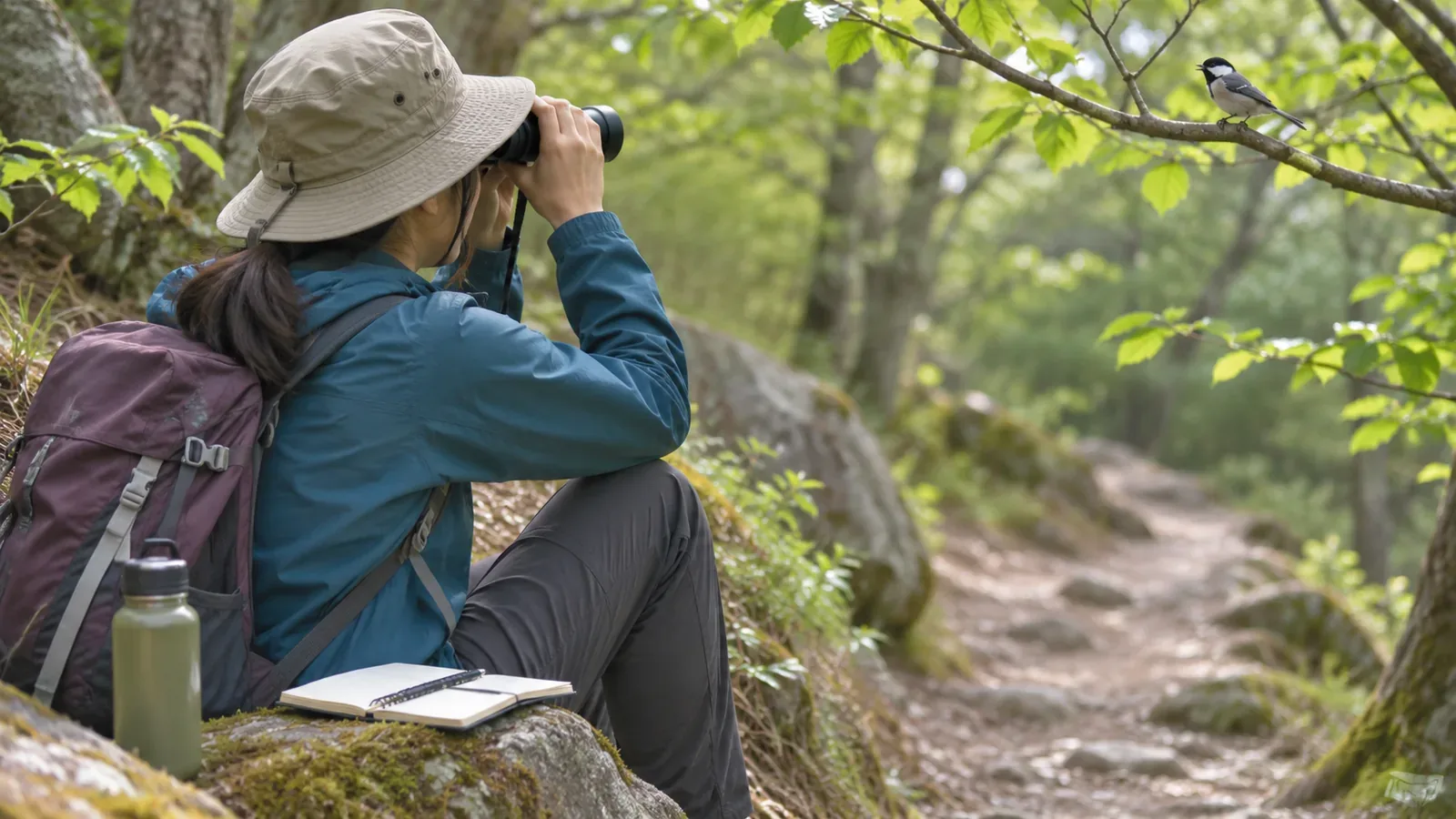
Set aside time in your itinerary to stop and watch birds. Work out what time you can spend after allowing for walking, breaks and delays. Move on when the allotted time is up, or stop watching sooner if the weather changes or someone feels unwell. The schedule here draws on summer hiking safety guidance and a group hiking manual.
What happens when birdwatching stops eat into walking time
Japan’s central council for mountain rescue noted in its July 2021 summer hiking safety notice that weather tends to worsen in the afternoon, so it advises starting and arriving early. It also says a generous schedule makes for a safer and more enjoyable hike. The Nagano Prefecture Mountain Center’s group hiking manual recommends walking slowly, finishing early and allowing more time than you expect to need. The documents address summer hiking and group hiking respectively.
Here is how we apply that advice. Taking just a few minutes at a time for birdwatching can use up your spare time without you noticing. Once you spot the delay, you might speed up to make it back. The summer notice warns that a simple trip or slip can lead to serious injuries such as fractures and urges hikers to take each step carefully. Rushing to catch up makes that harder. Allow time for birdwatching separately from the margin for walking.
Write birdwatching time into the plan
We suggest writing out four kinds of time: walking, rest and refuelling, birdwatching, and a contingency allowance. The summer notice presents the trip plan as a chance to check your preparations. It lists ways to share or submit it, such as with family, mountain guidance centres, boxes at trailheads, the police or online services. If the form has no space for a birdwatching allowance, keep the breakdown in your notes and include the actual route and expected times, stops included, in the submitted plan. Give your group and contact at home the same times.
Decide three things in your notes: how much time to set aside, where to use it, and when to turn back and finish, regardless of how many stops you make. An example might be four hours walking, one hour for breaks and food, half an hour birdwatching and half an hour in reserve, for a total of six hours. These figures illustrate how to write the plan. Set your own according to the route, season and people on the hike.
Try it on paper before you leave. Write the finish time after allowing for birdwatching. Decide what you will do when that time runs out, and let any unused minutes return to your margin for walking. If the result makes for too long a day, cut the birdwatching time or shorten the route.
Pick possible stopping places before you start
The group hiking manual recommends taking breaks at wide spots or viewpoints rather than relying only on fixed time intervals. It advises choosing a safe spot without rockfall from above or a risk of people or packs falling, putting packs on the uphill side and sitting with your back to the slope. Its advice for scouting includes viewpoints, places for observing nature, escape routes and places to decide whether someone who feels unwell should turn back. It does not specify how long to stop for birds.
We suggest using a map and your memory of the route to mark several possible birdwatching stops before you set off. Keep walking if you hear a bird on a narrow trail, steep slope or unstable ground. When you reach a planned spot, check the footing and whether it is crowded. The Wild Bird Society of Japan asks people to stay on the observation trail, leave the way clear, avoid crossing in front of others and avoid pursuing birds. Japan’s environment ministry also asks walkers to stay on boardwalks and paths. In our judgement, a wider spot makes it easier for others to get past.
Stop somewhere with solid footing and room for others to pass before taking notes, photographing or using your phone. Wait until later if you cannot find such a spot. Keep your rest and refuelling breaks. When you take a break, make time to check your kit, how you feel and whether you need food or water. If you are tired, you can use the remaining time to rest.
Agree on three signals to stop watching
Set three signals in advance: the clock, the bird’s reaction, and the condition of your group and the weather. Move on when the allotted time is up. According to the Wild Bird Society of Japan, flying away, fleeing, changing posture and giving an alarm call can be signs that you are too close. Some birds freeze when disturbed. Withdraw quietly if their behaviour changes. If you come across an active nest or newly fledged birds, move away promptly. Add any unused time to your walking margin.
Watch your group and the weather. The manual suggests checking on anyone who sits at a rest stop without opening their pack and setting the pace for the person who walks slowest. You could ask one person to keep an eye on the group during stops. If a gap opens, follow the manual’s advice and avoid running to catch up. The summer safety notice asks hikers to check mountain and weather information in advance. If conditions are likely to deteriorate, drop the birdwatching stops and consider shortening or cancelling the hike. Check whether you can safely keep the itinerary at all.
Set aside time for birdwatching when you plan the hike
Decide in advance how long to stop, where you could do it, and what would make you move on. Keep that time separate from your walking margin. Write down the total allowance, possible stops and the three signals. Check that your expected finish time still works. Stop safely before taking notes or using a device, or leave the task for later. Adjust these editorial suggestions to your route, using the latest mountain and weather information.
References and sources
- Japan’s central council for mountain rescue: summer hiking safety notice, July 2021
- Nagano Prefecture Mountain Center: group hiking manual
- Wild Bird Society of Japan: etiquette guidelines for new birdwatchers and bird photographers
- Wild Bird Society of Japan: bird photography etiquette
- Japan Ministry of the Environment: national park etiquette