
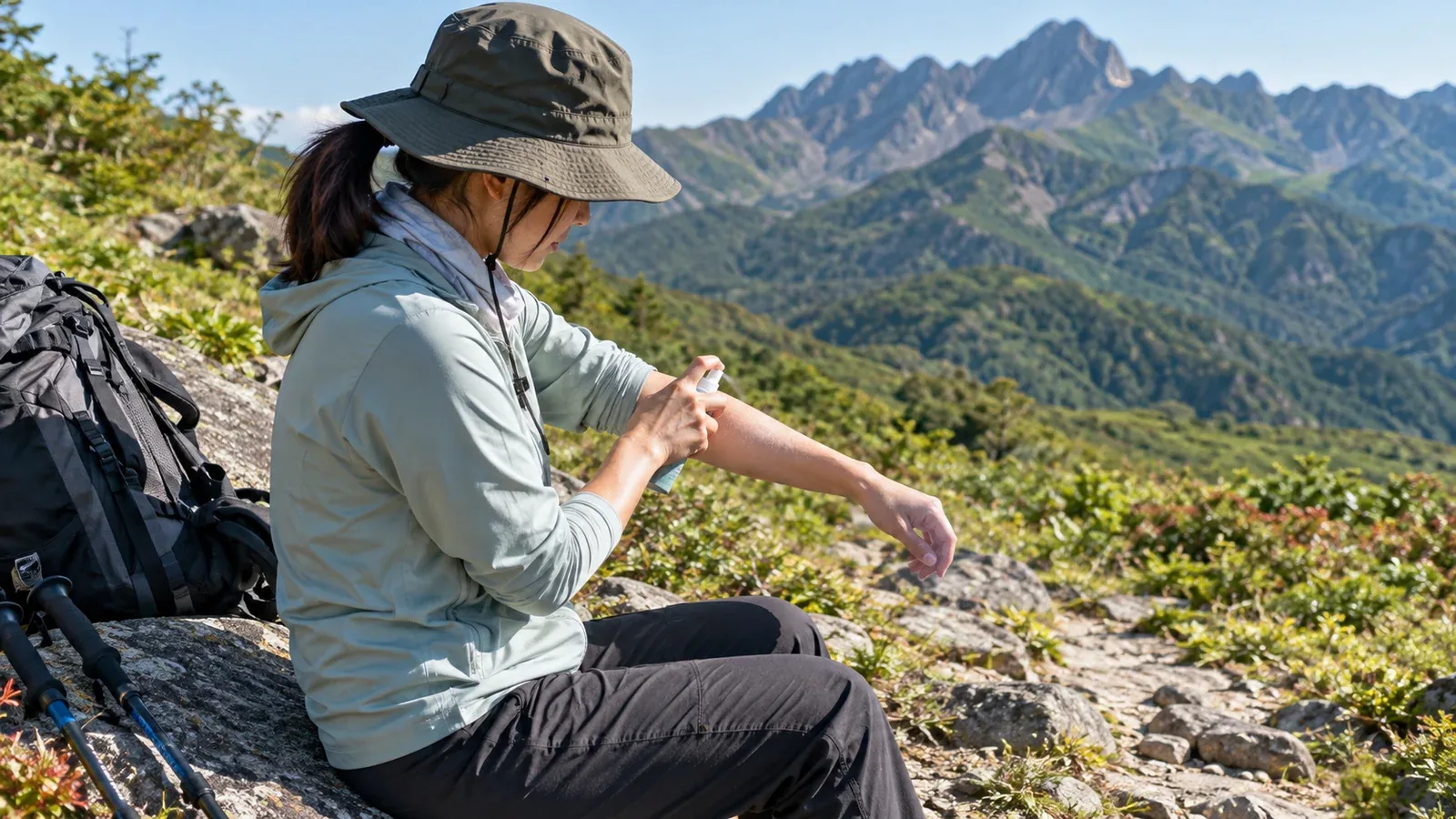
A black fly or horsefly bite can swell or itch later. Tick bites can go unnoticed, and ticks can spread infections. Check for them after hiking and get help early if you find one attached.
Use repellent suited to the insects, cover exposed skin and make checks part of the hike. A spray alone may leave gaps. Here’s how to prepare for each of these pests.
Black flies, horseflies and ticks
Black flies are small flies sometimes found along streams and near water. A bite from a blood-feeding species may hurt or bleed a little, followed later by redness, swelling or itching.
Horseflies include species that feed on people. Their bites can hurt and bleed. You can encounter them in or outside the woods. Where and when bites are likely depends on the species and conditions.
Ticks are related to spiders. They can attach to clothing or skin as you brush past grass or shrubs. You may not notice the bite. In Japan they can spread infections including Japanese spotted fever and severe fever with thrombocytopenia syndrome (SFTS). If you develop a fever, rash or other symptoms after a bite, seek medical care promptly and mention possible tick exposure while hiking.
How to choose a repellent
Read the product label for the target pests and where it can be used. Here’s what to look for beyond the active ingredient.
DEET is used in products whose labels may list black flies, horseflies and ticks. It can damage some plastics, synthetic fabrics and coated surfaces, so keep it off glasses, watches and gear as directed. Check age limits and permitted frequency before using it on a child.
Icaridin, also called picaridin, is another ingredient in some products labelled for black flies, horseflies and ticks. It generally has less effect on materials than DEET. Check the label for where to use it and which pests it covers.
Repellents with plant-derived ingredients vary in target pests and duration. Pure essential oils differ from formulations evaluated as repellents. If you need tick protection, check that ticks appear on the label.
Protection time varies by ingredient, formulation, sweat and rain. Follow the label for how often and how many times you can reapply.
Cover exposed skin
Clothing complements repellent, especially where you could brush against ticks.
Start with long sleeves and trousers and shoes that cover your feet. Tuck your shirt into your trousers and your trouser legs into your socks, or cover the cuffs with gaiters to reduce gaps.
If black flies or horseflies gather around your face, try a hat with a fine-mesh head net. Check that you can still see the trail and where you’re putting your feet.
Permethrin-treated clothes and clothing treatments are available in some places. Use a product labelled for the clothing or equipment you plan to treat and follow its directions. Keep permethrin off bare skin.
Checks during and after the hike
Even with suitable clothing and repellent, keep an eye out for ticks.
During the hike, pick a place to rest where you can avoid brushing against grass or shrubs. Look for ticks on your clothing and the outside of your pack. Cover exposed skin in areas with many biting flies.
Check for ticks as soon as you can after the hike. Inspect clothes and gear, then check your body, including armpits, behind the knees, ankles, scalp and behind the ears. Use a mirror or ask someone to check hard-to-see areas.
If you find a tick attached in Japan, the Ministry of Health, Labour and Welfare advises against pulling it out by force. Seek prompt removal and care at a clinic such as a dermatology practice. Watch for symptoms for several weeks after a bite. If you develop fever, rash or severe fatigue, get medical care promptly and report the bite and where you were outdoors.
What to bring and arrange
Use the conditions on your route to decide what to pack.
- Skin repellent: Check the target pests, age limits, application and reapplication on the label.
- Head net: Bring one to places such as streams with many black flies and keep it where you can get to it.
- Plan for bites: If you need something for itching, ask a pharmacist and follow the product directions. Difficulty breathing or altered consciousness calls for immediate emergency help. In Japan, dial 119.
- Plan for checks and care after the hike: A change of clothes and a mirror make checks easier. Know where you can get care if you find a tick attached.
When using both sunscreen and repellent, put the sunscreen on first and the repellent over it. Follow each product’s instructions for where to apply it and when to reapply.
Before setting off
Check the terrain and conditions, then choose clothing and a repellent that lists the pests you want to avoid. Check your clothes, gear and body after the hike. In Nordwand’s Base Camp or other communities, you can ask people who’ve walked the area recently what they encountered.
References
- Japan Ministry of Health, Labour and Welfare — tick-borne disease and prevention
- Yamanashi Prefecture — black flies, bites and prevention
- PMDA — DEET product indications and precautions
- PMDA — review of icaridin products
- U.S. CDC — preventing insect and tick bites
- Japan Fire and Disaster Management Agency — emergency response to signs of shock