
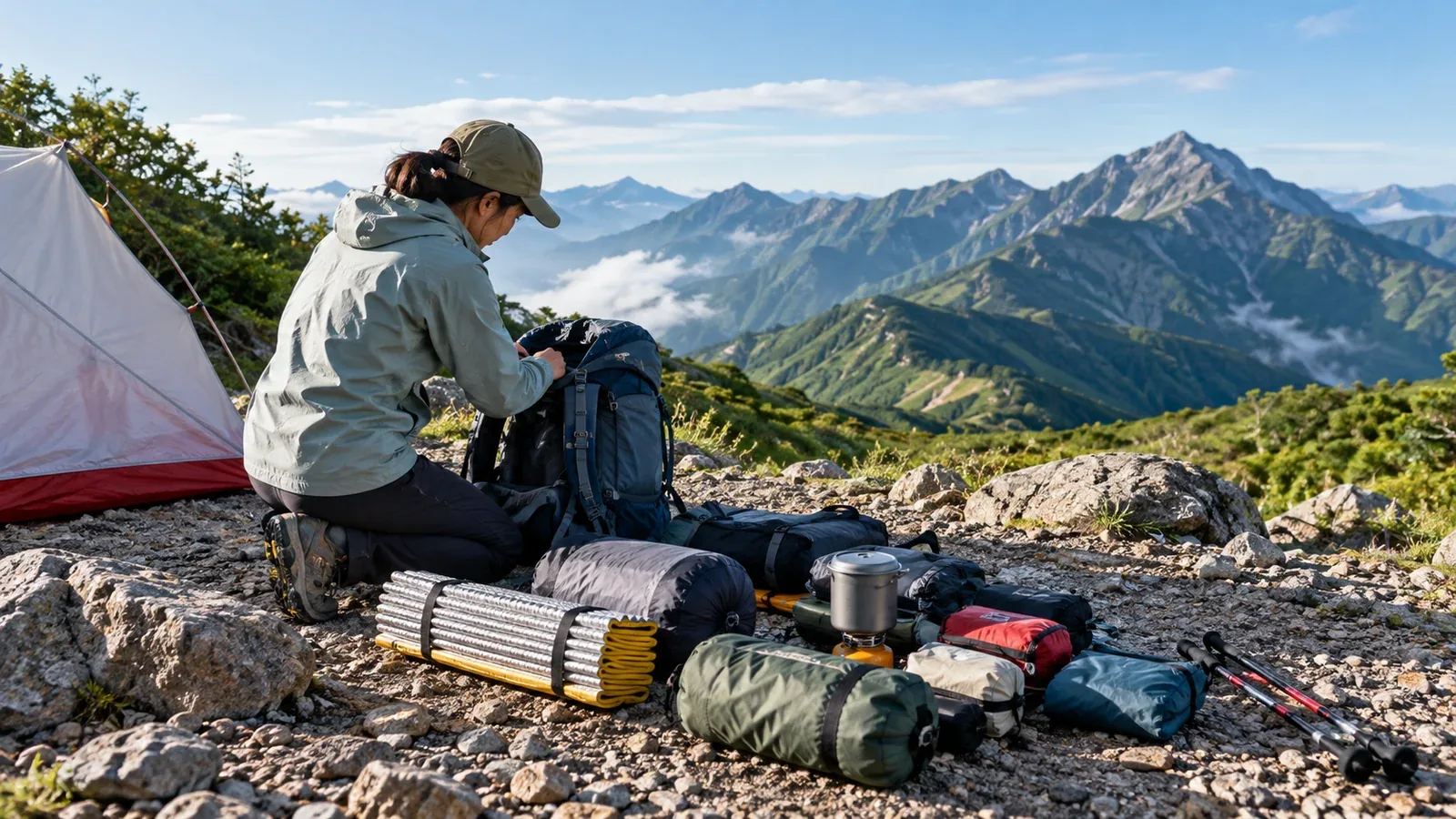
If your pack feels too heavy, start by looking at what the trip requires. Day hikes, hut stays and nights in a tent call for different amounts of food and water and different sleeping gear.
Compare three worked examples, then learn how to weigh your own pack and test whether you can carry it comfortably while keeping the gear you need for safety.
Why total pack weight matters
A heavier pack affects pace, fatigue and balance. When reducing weight, keep the rainwear, warm clothing, light and other gear you need for your route and expected weather.
Base weight is the weight of the pack and gear, excluding consumables such as water, food and fuel. Starting weight adds those consumables. It’s what you’ll actually carry at the start.
Worked examples for day hikes, hut stays and tent trips
Day hike example: about 6 kg
These figures are for illustration. Gear weight varies by product. The food and water you need depend on time, temperature and resupply options.
- Water: 1.5 kg (1.5 L) in this example. Plan your own amount for the route and conditions.
- Food: 600 g in this example, including lunch, snacks and any reserve.
- Rainwear: 600 g for jacket and trousers in this example.
- Warm layers: 400 g in this example.
- Pack, map, first aid, headlamp and other gear: 2.9 kg in this example.
The total here is 6 kg. Weigh your own loaded pack and look for unnecessary duplicates. Keep the rainwear, insulation and water you need even if your total is different.
Hut stay example: about 8 kg
At a hut that provides meals and bedding, you may be able to leave the tent, sleeping bag or cooking gear behind. At booking, confirm the facilities, required equipment, and whether food and water are available.
An overnight stay adds spare clothes and personal items. Pack according to the weather and where you can dry things, and keep a dry change available.
- Dry change of clothes: 600 g in this example.
- Extra insulation for the night or required bedding: 500 g in this example.
- Toiletries and personal items: 300 g in this example.
- Extra food, water and other items: 600 g in this example.
Add the extra 2 kg to the 6 kg day-hike example to get 8 kg. Check what your hut provides and weigh your own items.
Tent trip example: about 11 kg
Tent trips add shelter, a sleeping bag and a mat, plus cooking gear and fuel if needed. These sample weights are additions to the day-hike example.
- Tent: 1.5 kg in this example.
- Sleeping bag: 900 g in this example.
- Sleeping mat: 500 g in this example.
- Cookware, stove and fuel: 700 g in this example.
- Extra food and water: 1.4 kg in this example.
The extra 5 kg plus the starting 6 kg comes to 11 kg. In practice, you may change packs, share group equipment or adjust supplies for the number of nights. Weigh the whole load again whenever the plan changes.
Check what you can carry comfortably
You can record the load as a percentage of body weight. Fitness, experience, pack fit, distance and ascent or descent all affect how it feels. A percentage by itself cannot establish whether the load is safe for a given route.
Load the gear you’ll bring and try it briefly on an easy path near home. If your gait changes or you feel pain or numbness, adjust the load and the plan. If you have health concerns or pain, consult a healthcare professional.
What to reassess first
Review the following to find changes while preserving what you need for safety.
- The backpack itself: Compare packs that have the capacity and fit you need. Try them loaded as well as looking at the weight.
- Tent and sleeping bag: These can be among the heaviest items for tent trips. When looking for lighter options, keep the weather protection and warmth appropriate to the area and season.
- Clothing and layers: Start with items that serve the same purpose. Keep a dry change and enough warm layers.
- Water and resupply: Confirm opening times, water availability and whether it is potable with the relevant operator. Treat water appropriately unless you know it is safe to drink. Have a reserve plan if the source is unavailable.
- Convenience items: Look for duplicate small items and optional extras to remove. Keep essentials such as rainwear, a light, a map and emergency gear.
Weighing the pack before departure
Use these steps before you leave.
- List everything: Record the pack, clothing and safety gear separately from water, food and fuel.
- Weigh each item: Use a kitchen scale where practical. Listed and actual weights can differ.
- Record in a spreadsheet or a list: Total each category to see where the weight comes from.
- Calculate starting weight including water, food and fuel: Add consumables to base weight and weigh the packed bag to catch omissions.
- Walk with the loaded pack: If it feels too demanding, review the load, route or schedule while keeping essential safety equipment.
Once you’ve done this, you’ll have a better sense of what each item weighs on future trips.
Try it before your next hike
Lay out and weigh what you’ll take. Calculate the pack’s starting weight, then use the examples to organise your own route-specific kit and take it for a test walk. In Nordwand, hike logs and the community can show what others carried in the same area.