
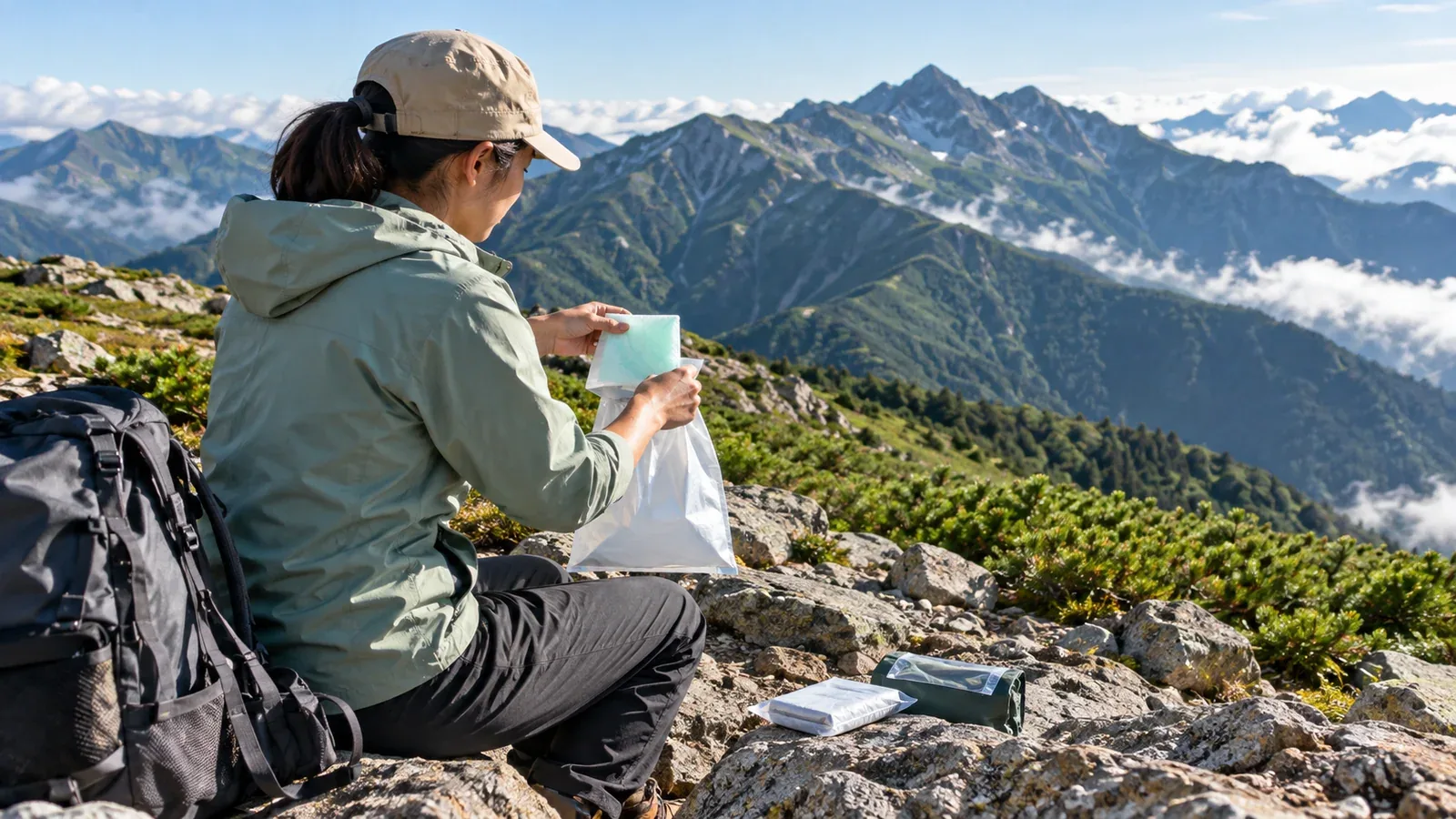
A portable toilet kit is useful on sections where you can’t use a hut toilet or other facilities. It collects human waste in a bag that you seal and carry out.
Japan’s Ministry of the Environment has guidance for places including Yakushima and Mount Rishiri, with information on using the kits, designated booths and collection bins. Locations and seasons vary. Check official information for your route before setting off.
Types of portable toilet kits
There are three broad types, with different designs for different trips.
Bags with a gelling agent or absorbent pad
These kits combine a waste bag with a gelling agent or absorbent material. It may come inside the bag or separately. Follow the directions, seal the used bag and carry it out.
Work out how many bags you need from your group size, trip length, usual toilet needs and available facilities. Carry some spares in case plans change or someone feels unwell.
Portable seat and compatible waste bags
These systems pair a folding or similar seat with compatible waste bags. They can be useful if you need to sit or if you’re staying in one place. Reuse the frame and replace the bags as directed. On routes with seats in designated booths, you may only need to bring a compatible bag.
Separate gelling agent
Gelling agent sold separately doesn’t include waste bags. Follow the directions and use compatible bags that seal securely for transport. If you’re unsure which bags work, a kit that includes them makes that easier to check.
How to use the kit
Read the instructions before opening the kit on the trail. These steps take a bag with gelling agent or absorbent material as an example.
Prepare before leaving
- Keep the waste bag, any required gelling agent or absorbent, outer bag, toilet paper and hand-cleaning supplies somewhere you can reach.
- If the kit has no outer bag, bring a sturdy closable bag for used kits. Choose a place to carry it away from food.
Using the kit
- If there’s a designated booth, follow its instructions. Elsewhere, follow local rules and choose a spot with stable footing away from water sources.
- Unfold the waste bag and fit it to the seat or stabilise it as directed.
- Follow the kit directions for when and how much gelling agent or absorbent to add.
- Collect used paper as well. Close the waste bag as instructed, keep the seal clean and check for leaks.
- Put the waste bag in the outer bag, close it and carry it separately from food. Wash your hands afterwards. If you can’t wash them, use the hand-cleaning supplies you brought.
After using the kit
Use a designated collection bin if available and follow the signs. If there’s none, check in advance which disposal category your local authority accepts. Take the bags with you when you leave the booth, and keep them out of ordinary bins and toilets.
What to look for when choosing a kit
Check these points before buying a kit.
Seal and odour control: Check the strength of the bag, how it closes and whether it includes an outer carrying bag. Choose a kit that is practical to carry after sealing it.
Weight and bulk: Check the total for the number of times you expect to use the kit, including spare bags. Count the weight and space of a seat frame too if you bring one.
Ease of use: Check whether you can use it with gloves or in low light. Read the instructions and practise opening and closing the bags.
Disposal options: Keep used bags and gelling agent out of toilets and drains. Follow the product label and local disposal instructions.
Common problems and how to avoid them
The bag blows away: Use a sheltered spot such as a booth. Where there’s a seat or frame, attach the bag as directed.
The bag doesn’t close properly: Keep the closure clean and follow the directions. Close the outer bag too, and keep sharp gear away from it.
You run out of bags: You may need more if someone feels unwell or the trip takes longer. Pack an allowance based on group size, days and planned access to toilets.
Paper or sanitary products are left behind: Bag and carry out used paper and sanitary products. The same applies to paper labelled as flushable.
Where to check the rules
Kit rules, collection points and opening dates vary by area. Look up information for your route before you leave.
- Local and regional authorities: Check trail rules and local waste disposal instructions.
- National park offices and visitor centres: Check the locations and use of toilets, designated booths and collection bins.
- Hut and trailhead notices: Read notices when you arrive. Before leaving, ask the operator if you can buy kits or leave used bags there.
On routes with few toilets or where hikers are asked to carry a kit, having one helps you carry your waste out even if plans change.
Before your next hike
Read the instructions and practise opening and sealing an unused bag at home. Then check official local information for toilets, booths, collection bins and disposal. If looking for a kit, find a shop through Nordwand’s partner-shop search and check whether it stocks one.