
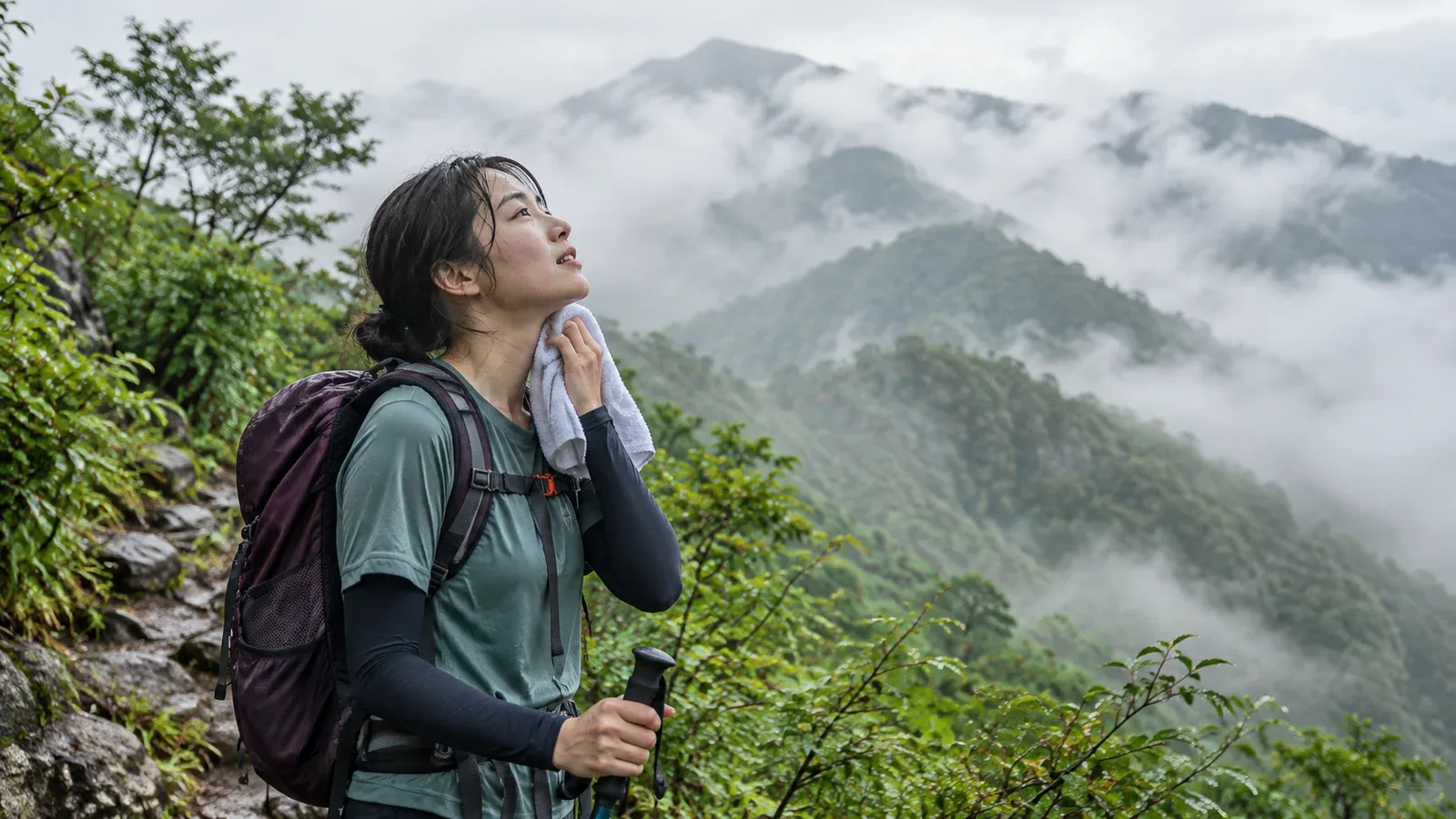
A hike can leave you exhausted even when the air is not especially hot. Humidity affects how well you cool down. Look at both temperature and humidity when you plan.
Here is how humidity contributes to fatigue, what to check before leaving and what to do if you feel unwell on the trail.
How sweat cools the body
When you are hot, sweat evaporates from your skin and removes heat. This is cooling by evaporation.
When air is hot and humid, sweat evaporates less readily and may stay on your skin or drip off. Air temperature, wind and clothing also affect evaporation. You can keep sweating and lose fluid and salt even when cooling cannot keep up.
Hiking keeps you active for a long time, so the strain can build. Humidity can be one reason you feel drained on a day that does not seem especially hot.
Temperature, humidity and heat stress
The temperature-humidity index, sometimes called a discomfort index, combines temperature and humidity. It does not account for sun exposure or the effort of climbing with a heavy pack.
Wet-bulb globe temperature (WBGT) reflects temperature, humidity and radiant heat from the sun and surroundings. Japan’s Ministry of the Environment uses it in its heat-illness prevention guidance for exercise.
- Below 21: Lower risk. Drink fluids as needed.
- 21 to below 25: Caution. Make a point of drinking.
- 25 to below 28: Warning. Take regular breaks. From 28 to below 31, use strict caution and stop strenuous exercise.
- 31 or above: In general, stop exercise.
Steep climbs and heavy loads increase effort. If WBGT is 28 or higher during your planned hike, cancel or change the strenuous sections. The ministry’s forecasts are estimates around reporting locations. The actual trail can differ.
When mountain trails can be humid
Moderate humidity in a lowland forecast can hide different conditions on the route.
In the forest, plants release water vapor and the air may move slowly. Sweat then evaporates less readily. In summer or early autumn, a forested climb on a low or mid-elevation mountain can feel harder than the summit.
The day or morning after rain, water can evaporate from wet ground and plants, making sheltered places muggy. A brighter sky may lead you to leave too little time or water for the conditions.
Pacific-facing ranges during the rainy season and summer can stay humid for long periods. At the same temperature, how hard a hike feels can differ between those ranges and the Sea of Japan side.
What to watch for on the trail
Check in with yourself and your group in humid weather. If you notice these changes, stop walking and consider heat stress.
- Heavy sweating.
- A rapid pulse after little effort that takes a long time to settle.
- A heavy head or mild headache.
- Thirst that persists after drinking.
Tell a companion. Rest in cool shade, loosen clothing and cool the skin with water and airflow. Take fluids if you are fully alert and can swallow safely. If someone is confused, faints, cannot drink on their own or does not improve with cooling, call for rescue right away and keep cooling them while waiting. Give nothing by mouth to anyone who is not fully alert or cannot swallow safely.
What to prepare
Think about clothing, fluids and the plan.
Clothing. Choose quick-drying fabric next to your skin. Cotton can hold sweat and cling to your skin. A shirt that leaves room for air to circulate can help.
Fluids and salt. You may sweat more than you realize. Carry water to suit the temperature and effort and drink to thirst. Forcing large amounts of plain water raises the risk of low blood sodium, or hyponatremia. Salty snacks can help replace some of the salt you lose. Ask a clinician if you have a condition that affects your fluid or salt intake.
Route plan. Allow extra time in humid conditions. Choose cool places for breaks, agree on a turnaround time and schedule the breaks. An early start may keep you off steep, sheltered climbs during the hottest and most humid part of the day.
Before you go
Check the weather and WBGT forecast the day before. On an unfamiliar trail in humid conditions, an experienced companion or certified guide can help you make decisions. You can contact certified guides through Nordwand.
Further reading
- Japan Ministry of the Environment, Heat Illness Prevention and WBGT
- Japan Meteorological Agency, weather forecasts and heat illness alerts
- Japanese Society of Mountain Medicine, mountain medicine resources
- Fire and Disaster Management Agency of Japan, heat illness guidance