
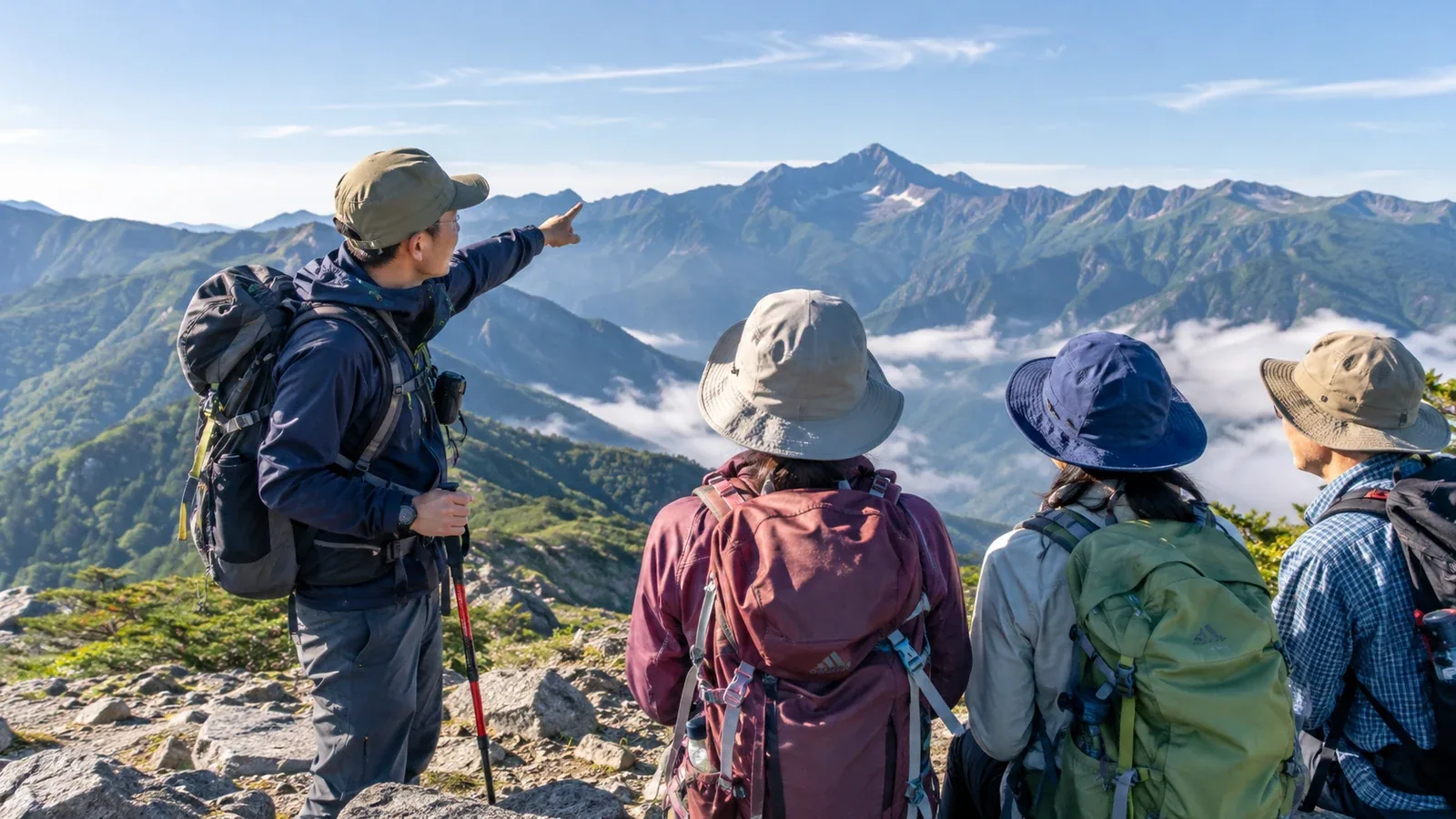
Working for a hiking tour company is one way to build a career in the mountains, alongside guiding or working at a hut. Planners and tour conductors both work closely with hiking trips, but their day-to-day tasks and skills differ. Start by finding out what each role actually involves.
This article covers the workflow, knowledge and common mistakes in two areas of hiking tour work: planning and tour conducting. It can help you decide where to start if you’re looking for a job or changing careers.
What tour planners do
Planning a tour means turning a route into a trip people can book and take. It takes knowledge of the mountains and commercial judgement.
The work falls into three stages: choosing the route and area, designing the schedule, price and conditions for running the trip, and checking and coordinating transport, lodging and other arrangements.
When choosing the route, match the participants’ expected fitness with the area’s seasonal risks. For a trip advertised for beginners, check total ascent, walking time and escape routes. Compare the map with conditions on the ground, including lingering snow, hut opening dates and trail condition, using information from land managers or municipalities.
When planning dates, look at transport, accommodation and how the group will reach the trailhead. Check when huts and other lodging take bookings, confirm bus or ropeway schedules directly with operators and consider a backup day when weather is less predictable. A tour may take several rounds of checking before it is ready.
When pricing a trip, include transport, lodging and guide costs and plan for the possibility of falling short of the minimum group size. Bad weather or too few bookings can force cancellation, so consider cancellation terms and insurance early.
A common planning mistake is using your own hiking pace as the standard. A strong hiker can underestimate the effort for beginners or older participants. Start with published walking times and add a margin that reflects the people the tour is designed for.
What tour conductors do
A tour conductor handles transport, accommodation, meeting times and communication with participants so the itinerary runs on the ground. On a hiking tour, check with the mountain guide or other staff who will lead on the trail and make safety decisions. One person may combine the two roles.
The work involves making decisions throughout the trip. When the weather, a participant’s health or the route changes, share information with the guide or person in charge and decide whether to continue, turn back or change course. Before departure, agree who makes those decisions and what would trigger cancellation or retreat.
Before departure, check Japan Meteorological Agency warnings and advisories, forecasts for the area, how participants are feeling and how to reach help. If you collect sensitive personal information such as medical history, as a rule explain why it is needed and obtain consent. Collect only what is needed for safety and follow your organization’s procedures. Learn basic first aid and leave medical decisions to healthcare professionals.
On the trail, agree with the guide who will lead and bring up the rear, and how to stay in touch. Keep track of the group’s pace, breaks and changes in how people are feeling. If someone falls behind or feels unwell, reconsider the schedule, adjust the pace or consider descending. Agree on responsibilities before departure and communicate changes on the trail.
A common mistake for tour conductors is putting the schedule ahead of the group’s pace. Getting to the summit at the planned time matters less than keeping a pace everyone can manage safely.
Qualifications and knowledge
For a package tour, the travel company appoints the lead tour conductor as a chief itinerary manager. The role requires training at a registered provider and specified practical experience, among other conditions. The training has domestic and general categories. The travel services manager who oversees operations at a travel agency office is a separate role based on a national exam.
The Japan Mountain Guides Association (JMGA) offers qualifications such as Hiking Guide Stages I to III and Mountain Guide Stages I and II. The guiding scope varies by qualification and stage. If the conductor is also expected to guide on the trail, check the employer’s hiring and assignment requirements.
Planners need an understanding of travel operations and Japan’s Travel Agency Act, and the ability to research each mountain area. Qualification requirements vary by company. Experience in the mountains and a habit of keeping local information current matter across roles.
First aid knowledge is useful for both planners and tour conductors. Courses such as Wilderness First Aid (WFA) and Wilderness First Responder (WFR) are available in Japan. Check the training provider’s information if you are considering a course.
Does planning or tour conducting suit you better?
Comparing the day-to-day work can help you see where your strengths fit.
You may enjoy planning if you can do the following.
- Cross-check information from several sources and make decisions.
- Work comfortably with costs, schedules and participant profiles.
- Take an interest in designing the tour before it goes out.
- Keep up with paperwork, negotiations and coordination.
You may enjoy conducting tours if the following sounds like you.
- You find it rewarding to make decisions and act on the ground.
- You naturally notice other people’s pace and how they are doing.
- You can stay calm when plans change.
- You enjoy spending time with the group over the course of a trip.
Some companies combine the two jobs. Before applying, ask how much time goes into planning and conducting and whether you would guide the hike yourself or work alongside a guide.
How to enter the industry and prepare
You can enter through graduate recruitment, mid-career hiring or seasonal work that leads to another role. A seasonal job can show you how tours operate before you pursue a permanent position.
These three kinds of preparation can help.
- Broaden your hiking experience. Experience in different mountain areas, seasons and weather gives you a basis for decisions in either role.
- Learn how travel operations and qualifications work. If you want to conduct tours, check itinerary management training and practical requirements. For agency office supervision, look at the travel services manager exam.
- Learn mountain weather, map reading and first aid. All three are useful on the ground and can help you demonstrate your readiness.
Hiking tours introduce people to the mountains and come with responsibility for their safety. Both are part of doing the work over time.
Where to start
For tour conducting, check the Japan Tourism Agency or Japan Association of Travel Agents for itinerary management training and experience requirements. For planning or supervising an agency office, look into the travel services manager exam. If you also want to guide hikes, check the JMGA’s scopes of practice and entry requirements. You can also exchange information with people who work in the mountains through the Nordwand community.
References
- Japan Tourism Agency: Travel Agency Act and itinerary management
- Japan Association of Travel Agents: Itinerary management training
- Japan Mountain Guides Association: Qualification system
- Japan Meteorological Agency: Local weather and disaster prevention information
References and sources
- Japan Tourism Agency: Travel Agency Act and chief itinerary managers
- Japan Tourism Agency: Travel services managers
- Japan Tourism Agency: Enjoying organized hiking tours safely
- Japan Association of Travel Agents: General and domestic itinerary management training
- Japan Mountain Guides Association: Qualifications and scopes of practice
- Personal Information Protection Commission: General guidelines on the protection of personal information
- Japan Meteorological Agency: Local weather and disaster prevention information
- Japan Outdoor Institute: Wilderness first aid courses