
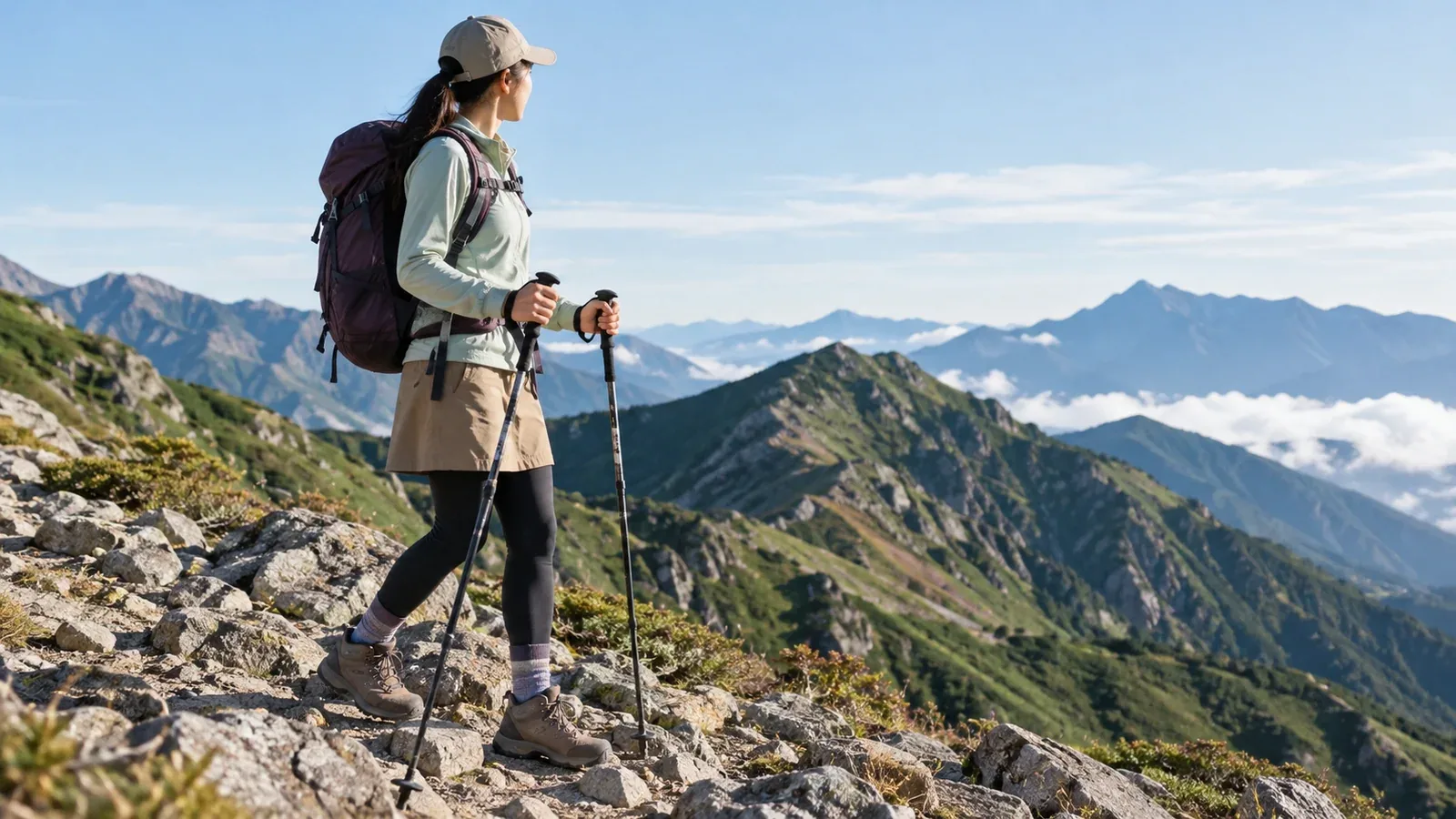
If you want to hike in a skirt or tights, consider wind, cold, and how much of your legs you want covered as well as ease of movement. Both can work when the fabric and cut suit the route and weather.
This guide covers the strengths and limits of skirts and tights and when a different layer may suit the route better. Use it to decide what to wear.
How skirts work on the trail and where they fall short
Some hiking skirts are designed for low-mountain walks or trail running. An open hem allows air to move through, and some cuts make it easy to move your legs.
Try lifting a knee as you would on a steep climb or stepping over a rock. Check whether the hem catches. Airflow can feel cooler in hot weather, but mobility and ventilation vary by cut and fabric.
Here are three things to consider if you wear a skirt on its own.
Wind exposure: wind on a ridge or summit can blow the hem around. Check that you can see your footing and stay warm. Bring wind-resistant pants if needed.
Brush and low branches: grass and branches can brush your legs or catch the hem. Long pants that cover your legs are an option when a route has thick brush or low branches.
Contact with rocks: on routes with chains, rocky ridges, or loose stones, check how much skin the fabric covers and how well you can see your footing. Clothing alone can't prevent a trip or fall.
Skirts can work well on maintained trails in calm wind. If wind, brush, or rocks increase, add a layer that covers your legs or choose different pants.
Wearing tights on their own or as a layer
Tights include close-fitting compression models and thermal models designed for cold.
Compression tights can appeal if you like a close fit. Check how easily you can move. Avoid counting on them to reduce fatigue or stabilize your knees. For wind and rain, check the specifications of the tights and the pants you would wear over them.
Thermal or fleece tights can be a warm layer on cold days. Wet clothing can still chill you, so use wind-resistant or waterproof pants over them as conditions call for.
If you wear tights alone, consider sun and insect bites too. UV protection in thin fabric varies. In strong sun, check the protection rating and cover or protect exposed skin. Where insects are common, consider long pants and repellent.
Deciding whether to combine a skirt and tights
A skirt and tights can complement each other for some walks.
Tights cover more skin, but how well they protect from the sun, insects, and rubbing against rock depends on the fabric and cut. Where wind can lift the skirt, consider wind-resistant pants.
This combination can work in these situations.
- Walking a maintained low-mountain trail in hot weather when you want light tights for coverage
- Walking on gentle slopes where you want freedom of movement
- On a calm autumn day when you want to adjust layers between moving and resting
On rocky ridges or loose stones, a skirt hem may obscure where you are putting your feet. For sustained technical sections, try pants that keep your view clear and are less likely to catch.
Choosing the fabric
When comparing fabrics, look at drying speed, wind protection, and ease of movement.
Cotton dries slowly when wet. Wind on clothing damp with sweat or rain can cool you. For long walks or colder places, bring quick-drying fabric and the wind protection and insulation you need.
Stretch fabrics based on polyester or nylon include models designed for movement or quick drying. Wool's warmth and moisture handling vary with thickness and construction. Check the label and intended use.
A durable water repellent finish (DWR) helps water bead and roll off the surface. For prolonged rain or wet snow, bring pants with waterproof construction and check details such as seams. Follow the care label for the finish.
Check the route and weather first
Before choosing clothes, look up trail conditions from local authorities, trailhead information, or mountain huts.
Here is what to check.
- Chains, rocky ridges, or loose stones: exposed skin may rub against rock.
- Distance and elevation of ridge sections: plan for wind and falling temperatures.
- How well the trail is maintained: see if brush or fallen trees narrow the trail.
- Weather forecast: check expected temperatures, wind, rain, or snow with the Japan Meteorological Agency or official local information.
If you expect cold wind or rain on a ridge, bring the windproof or waterproof pants you need even if you start in a skirt and tights.
What to do next
Check the fabric of the skirts and tights you already have, then choose for the forecast, chains, ridges, and brush on the next route. Along with official trail information, you can use Nordwand reports from people who took the same route to see what they wore and what temperatures they encountered.