
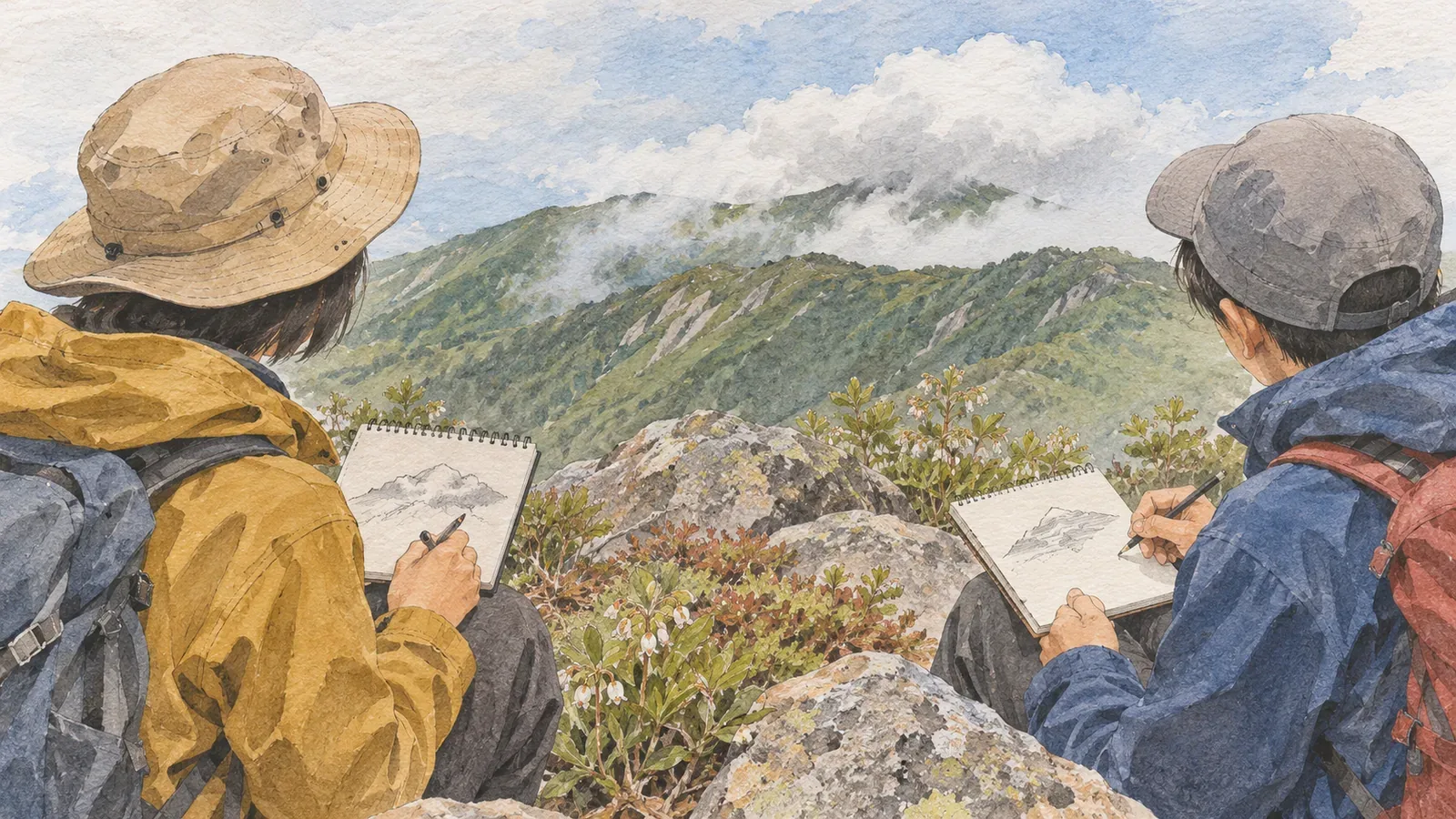
When you and your hiking companion notice different things, keep both descriptions and compare them later. If you can’t tell why they differ, leave the question open. Seasonal monitoring uses common criteria and selected subjects. Borrow that idea for a journal that records who looked, where they stood and what they saw. Stay on the trail and give plants space while checking any detail.
When accounts differ, check the subject and conditions
The Japan Meteorological Agency uses common criteria at weather stations to monitor when Japanese apricots and cherries flower and when maple and ginkgo leaves change color. It follows selected trees. The records help track shifts in seasonal timing and differences and changes in climate. The subject and the criteria are decided in advance.
The Phenology Observation Manual (version 3, November 13, 2023) shows how this works. For a monitored Somei-yoshino cherry, the flowering date is when five or six flowers have opened, excluding blossoms directly from the trunk or roots. This criterion applies to the monitored cultivar. It shows how the word “flowering” depends on how many flowers count and which flowers are included.
Hiking companions often bring different criteria. Even on the same path, the place you stopped, the plant you looked at, or what you call “flowering” or “changing color” can affect what you record. The light or time may differ too, and the records may leave the cause open. Keep the discrepancy as a clue about the conditions.
Make room for two accounts of one observation
Try six fields for each observation. For example, you might be looking at the leaf color of a tall tree beside the trail.
First describe the subject in one line. Second, record who looked and from where, such as “I stood on the trail before the junction” and “my companion was a little farther along the trail.” Third, record both accounts, using their own words when possible. If you summarize later, mark the summary and check it with the person. Fourth, set the difference side by side: “I saw more yellow. My companion saw more green.” Fifth, write possible causes, such as position, the individual plant, time or criteria. Leave it blank if you’re unsure. Sixth, write what you might check next time.
Keep the two observations in their own fields and put conclusions or guesses separately. You’ll be able to tell which account said what later. “I didn’t see it” is a useful entry. Japan’s National Institute for Environmental Studies lets volunteers report familiar categories or follow a single species. If you were looking at different things, record what you could see and what you didn’t see.
Stay on the trail and take notes at safe stops
Stop somewhere safe and write just one line in the field: who saw what and from where. Stop before writing or showing each other photos on a screen. Nagano Prefecture advises waiting on the safe uphill side of narrow trails, away from the exposed edge, and watching for loose stones and rockfall. If there is nowhere stable to stop with room for others to pass, leave it for later. If both of you stop, leave room for people coming behind and keep the note brief.
Stay on the trail even if you want to settle the difference. Nagano explains that stepping off for photos can damage the path or expose you to a fall. Avoid vegetation and roped-off areas. Trampling can leave bare ground so later visitors lose the plants and scenery. Check local guidance outside Nagano. If your companion’s position was off the trail or on poor footing, leave it alone and write “didn’t see it.”
Leave plants and animals in place, as Nagano asks. Japan’s Ministry of the Environment explains that the Natural Parks Act regulates collection of and damage to designated alpine and other plants in special zones of national and quasi-national parks. The ministry publishes lists by park dated July 22, 2025. Check your destination’s list before leaving. If you can’t check the detail from the trail, leave it open.
Compare after the hike and keep uncertain causes open
Review the notes together somewhere quiet. Compare positions first and check which plant each person saw. Then compare what you meant by the words you used. In a formal survey, for example, a count defines when a tree is in flower. Seeing whether you applied the same threshold may explain the difference. Classify the outcome as “explained,” “uncertain” or “check next time.”
When you can’t explain the difference, leave it as “check next time.” The manual suggests several days of reports and comparisons with other regions when maple color is hard to classify. For the next visit, plan to observe the same individual from the same permitted spot using the same criteria. Conditions can change between visits, so a later observation may leave the earlier difference unresolved. If you switch plants, note the change and the year, as the manual does for its monitored trees.
The NIES program, started in fiscal year 2021 with the meteorological agency and environment ministry, recommends a site that volunteers can visit three or four times a week. Daily is ideal and once a week is the minimum. If you hike a few times a year, write what you saw at that place and time. If the next visit looks different, place the dated entries together and look for what might explain it.
Practice at home by having both people look separately at a photo from a previous hike, fill out the six fields and compare. See which fields are easy to keep short. Leave unfinished details for later on the trail.
In brief: Keep both accounts of what you saw
A difference gives you a clue to compare where you stood, which plant you saw or how you judged it. Put both descriptions in the journal and set guesses aside for later checks. On the trail, keep to one line at a safe stop. Stay on the path and leave plants alone. If you can’t stop safely, leave the note for later. Even if the difference remains, the words and positions will help you compare on a later hike.
References and sources
- Japan Meteorological Agency: Phenological observations
- National Institute for Environmental Studies: Citizen monitoring of seasonal changes in plants and animals
- Climate Change Adaptation Platform: Phenology Observation Manual, version 3
- Nagano Prefecture: Guidance for park visitors and hikers
- Japan Ministry of the Environment: Designated plants in national and quasi-national parks