
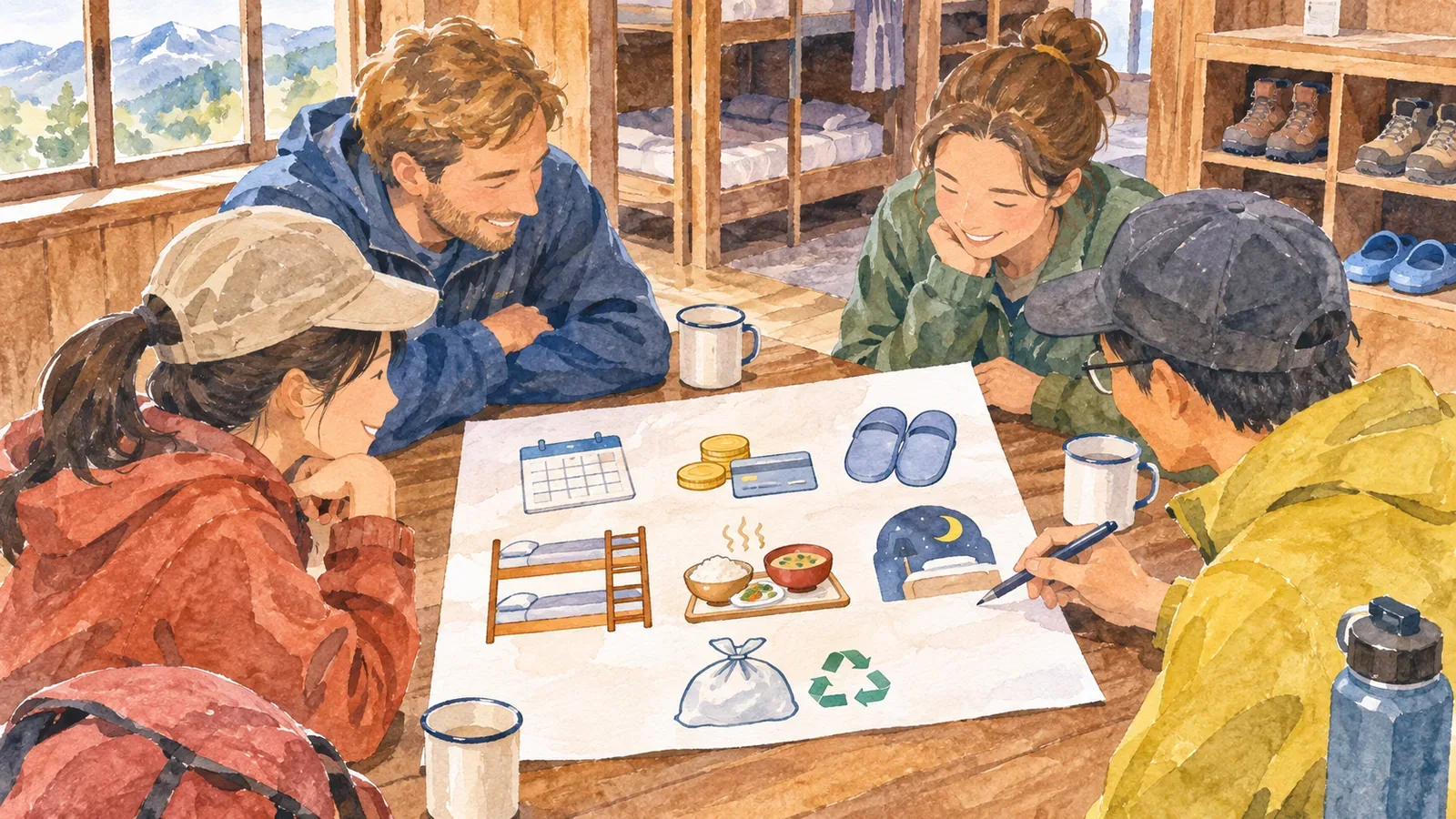
When staying in a Japanese mountain hut with friends from abroad, put the booking, footwear, shared-room arrangements, meals and rubbish in one note. Use the hut’s own guidance for arrival, lights-out and payment.
Check booking and arrival requirements
The Japan National Tourism Organization’s hut guide strongly recommends booking and says some huts require it. The Yarigatake Mountain Hut Group’s 2026 instructions say a provisional online booking is confirmed once you pay in advance by the deadline. Check the specific hut’s booking method, what confirms it and how to check in.
The tourism organisation suggests arriving around 15:00–16:00. Write the hut’s reception hours separately from your group’s expected arrival. Check what is paid in advance and what is due on site.
Make sure everyone has the number to call if you might miss check-in. Stop where the footing is stable and you won’t block the path before making the call. If your expected arrival changes, tell your companions what junction you’re at and how the plan will change.
The editors also suggest agreeing on five questions before contacting the hut: room only or meals included, whether to order a packed lunch, dietary needs or restrictions, expected arrival and how to pay. These reflect the options and points in the JNTO guide. Keep the hut’s answers somewhere everyone can read so there’s less room for misunderstanding on the day.
Find out where shoes and bedding go
The tourism organisation says many huts ask hikers to remove boots before entering main indoor areas and provide slippers. At the entrance, check where to remove and leave your shoes. Ask reception where wet clothes can dry and how to use the drying room.
At check-in, find your bed and ask how much space you have for belongings in the shared room. Take out your light and what you’ll need in the morning ahead of time so you know what to bring when leaving the room.
Yarigatake Mountain Hut’s facility guide says shared dormitories are standard and private rooms are also available. If you book a dormitory, explain in advance that you’ll share with other guests. The tourism organisation also suggests earplugs for shared rooms, which people can bring if they want them.
Coordinate meals, lights-out and morning preparations
The Yarigatake Mountain Hut Group’s terms say meal times are posted or given at check-in, and each hut sets its own lights-out time. Update the note you made after booking with the times you’re given on arrival.
In a shared room, get ready for bed and pack for the morning before lights-out. If you’re leaving early, keep your headlamp, jacket and morning water within reach so you won’t have to keep opening bags at your bed.
Agree with your companions on when to check in for meals and when to pack. Ask at reception when breakfast is served. If it doesn’t fit your departure, ask what other meal options the hut offers and when you can collect them.
You can divide the note into “check on arrival,” “before dinner,” “before lights-out” and “next morning.” Put the times given by the hut alongside your own so you know when you’ll be out of the room and in what order to prepare.
Check dietary needs and how to handle rubbish
The Kumano Kodo tourism guide advises telling accommodation providers when you book if you need vegetarian or other meals, and specifying if you also need to avoid bonito stock. When contacting a hut, say whether you mean dinner, breakfast or a packed lunch and share the reply with your companions.
Even at the same hut, dinner and packed lunches may differ in ingredients or how they are served. If someone can’t eat certain ingredients, check before booking what the hut can provide and what you may bring. Let the person see the reply before deciding on the stay.
Bring a rubbish bag and ask at reception how to deal with rubbish from your stay. Carry rubbish out of the mountains. The Kumano Kodo guidance, for example, asks hikers to take all rubbish with them and leave residents’ bins along the route alone.
Recap: put the hut’s instructions on one page
Put the hut name, booking details, expected arrival and number to call if you’re late on the note. Separate what’s already paid from what you’ll pay at the hut.
On arrival, check shoe storage, beds, meal times, lights-out and departure times and update the itinerary. Keep your rubbish bag and light within reach so you can get them without disturbing your roommates.
Before lights-out, agree who will wait where and at what time in the morning. People who wake up first can avoid packing for a long time in the dormitory, and everyone knows what to do next.