
When the people on a hike change, tell the group and make sure the filed plan, the copy left with family and the day-of roster name the same people before you leave. Even when the number stays the same, a change in fitness, experience or roles can affect the plan. Decide who updates it, who needs to hear and how everyone will confirm the latest version.
Where a missed update can leave records out of step
Nagano Prefecture's guidance says the hiking plan should contain the mountain name, hikers' names and contact details, itinerary and equipment. The prefecture describes filing as a way to help responders act quickly in an emergency, and asks hikers to carry the completed plan on the day. The plan is also the record of who will be on the mountain.
Nagano Prefectural Police asks hikers to leave the plan with family or someone at work so officers can use it to help guide a search after a report. The US National Park Service Trip Planning Guide also advises telling a contact who is staying behind where you are going and when you expect to return, and notifying them if plans change. Check the submission procedure and the update for your contact separately.
If the family copy still lists someone who is no longer going or omits a new participant, it no longer describes who is actually on the mountain. An update to the group can still leave the paperwork outdated. Tell the person who withdrew how the change will be handled, and check whether their family also needs to know.
Update the paperwork using Nagano's resubmission guidance
With the Nagano electronic application service, submit the plan again if the contents change. The service treats the submission with the latest timestamp as the updated plan. Its guidance says there is no separate form to complete if you cancel, and no descent report is required. Other ways to file include services run by organizations authorized to receive plans, fax, mail, in-person delivery and trailhead submission boxes. Check the amendment procedure for the method you used.
This system applies to designated trails in Nagano Prefecture. Procedures and recipients may differ in other mountain areas, so check the local authority or police guidance. If you filed by another method, follow the recipient's instructions for changes.
After resubmitting, give the new plan to family or the other contact and make it clear which version is current. Resending the entire plan with an update time makes it easier to compare than sending only the corrections. Even if the filing service does not require a cancellation notice, tell your family so they do not expect you to be on the mountain. Ask your contact to reply and confirm who holds the latest version.
Put the group update in one message
Use one message to give the group enough to check the update. Include five things: who is leaving or joining, the full list of participants, whether the meeting time, place or transport will change, whether the plan has been resubmitted, and who will give family or another contact a new copy and when. Ask everyone to reply after checking the roster so you know they have seen it.
Get a new participant's permission before sending their contact details to others. The related article on who needs emergency contacts explains how to decide who should receive them. Work back from the time needed to review and resubmit the plan, notify family and adjust gear or transport. Allow time for first-time participants to ask questions.
Send the update before leaving while you can communicate. The Nagano Prefecture Mountain Center's group hiking manual lists mobile phones as an emergency option, notes their limits and advises checking reception when scouting the route. It was written for leaders, including those leading school hikes. Small groups can still use the principle to share the latest plan before losing reception.
Tabletop exercise: compare the roster in four places
The same manual says to check people against a roster prepared in advance, as well as counting them. It also describes attaching a list of participants' addresses and emergency contacts to the plan. A small group can borrow the practice of checking names as well as numbers and adapt the rest to its situation.
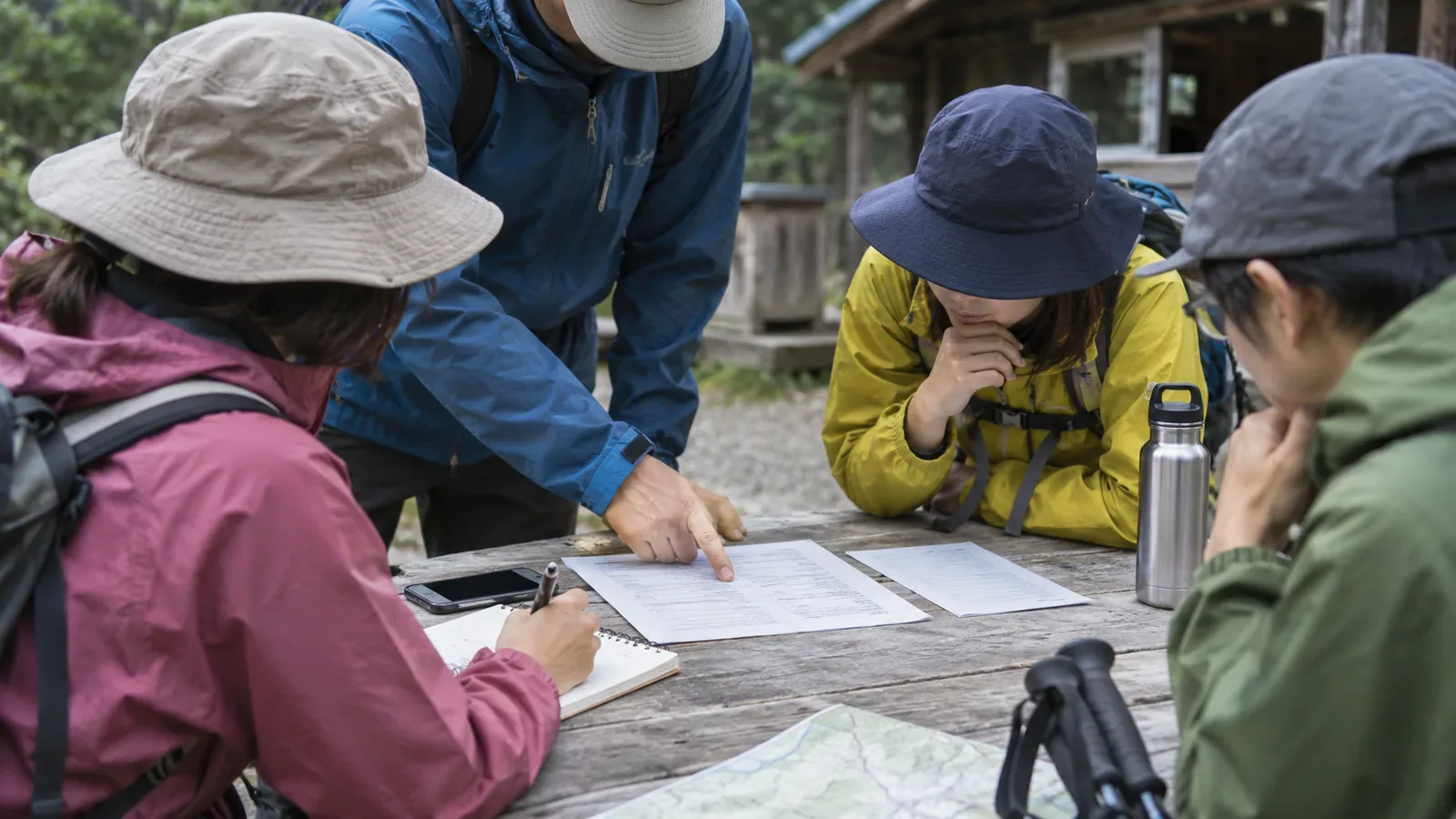
Try this at a table. Imagine one person drops out of a five-person hike and another joins. Put the names from four places side by side and mark the differences.
Compare the filed plan, the copy left with family or another contact, the list each participant thinks is current and the roster for the day. Any differences show what to fix before leaving.
If someone drops out or joins on the day, stop on stable ground where you will not obstruct others before checking or contacting anyone. Keep the phone away while walking. If you cannot update the plan and family copy on the spot, take the time to reach everyone again or consider calling off the hike. Whether you can resubmit the plan in time is one factor in that decision.
Summary: finish the message, paperwork and roster before leaving
When the roster changes, tell everyone, update the plan, replace the family or contact copy and check the roster for the day as one task. Nagano's electronic service uses the most recent submission. For other methods, follow the recipient's instructions. Review the route and schedule in light of the new group's fitness, experience and roles, and confirm the rosters and plans agree before leaving.