
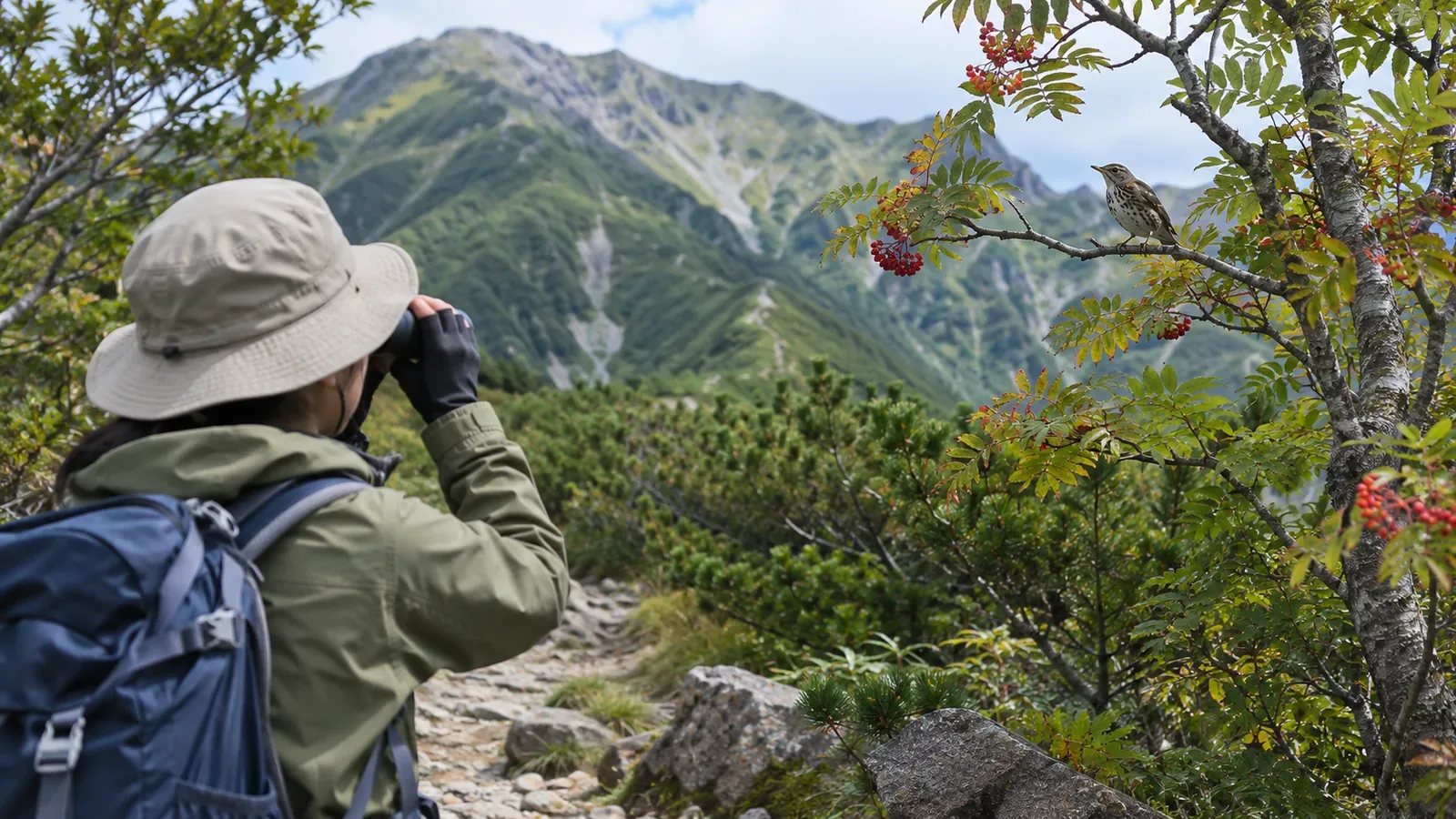
Let birds come and go on their own. Choose where you will stop, how you will keep your distance and what you will share about the location. This guide draws on the Wild Bird Society of Japan, Japan’s environment ministry and Nagano Prefecture to cover everything from handling trail snacks to checking a post. Rules vary by site, so look for current guidance from the park or land manager before you set out.
Food can attract birds even when you leave it by accident
Japan’s environment ministry asks national park visitors to avoid feeding wildlife and take rubbish home. Its guidance notes that the smell of waste can attract wild animals. Pack up food and leftovers after every stop. If a bird comes close, keep your food put away.
The society notes that feeding birds to photograph them can cause them to miss the window for migration. Its guidelines for beginners also ask visitors to avoid using food to attract birds in public places and on sites such as temples and shrines. To see their natural behaviour, watch from a distance and let them move freely. Check posted instructions on feeding or viewing birds where you are.
Before you end a break, look around your feet for crumbs and wrappers. Close your snack bag and put it away when you finish. If you are with a group, each person can check the place where they were sitting. These are practical ways to follow the advice to leave wildlife unfed and take rubbish away. Keep food with you even when a bird comes close.
Keep your distance and avoid testing the bird’s reaction
Watch from a distance without drawing the bird in with food. Give it space even if it stays still, and respect any distance posted on site. According to the society, taking flight, fleeing, changing posture and giving an alarm call can all be signs that you are too close. Some birds freeze. An adult craning its neck to look, raising its feathers or calling near the nest may also be alarmed. Never approach a nest. Withdraw quietly if you notice a change.
Move away promptly if you see an active nest or recently fledged young. If an adult leaves the nest, eggs or chicks can be exposed to predators or cold. Avoid playback and bird callers, which can simulate an intrusion and cause a bird to leave its nest. Avoid chasing or deliberately flushing birds so tired migrants can rest and feed.
We suggest agreeing with your group that if the bird’s behaviour changes, you will stop watching, look where you are going and move away. It is easier to act on that decision when everyone has become absorbed. You can have one person watch the bird and another keep an eye on the trail behind you. The signs of stress come from the guidelines, while the division of roles is our suggestion.
Choose a stopping place and check where your gear is pointing
Make room for other visitors and respect the people who live nearby. The society asks visitors to avoid crossing in front of other observers, blocking the path, entering private or restricted areas or leaving footpaths and observation trails. Japan’s environment ministry asks visitors to stay on paths and boardwalks and to use protective caps on trekking poles to reduce trail erosion. The society also advises against altering habitat by cutting trees or branches so a bird will be easier to see.
Keep tripods out of passageways, avoid occupying a spot for long, and keep binoculars, scopes and cameras pointed away from people and houses. The society also advises against flash and other bright lights. If it is too dark for a photo, you can write down the details you saw. Leave birds where they are even if the light is better elsewhere.
Look for room to pass and reliable footing. Nagano Prefecture advises waiting at a safe place on the uphill side of narrow paths and avoiding the drop. Stay back from the edge if a bird catches your eye. Walk on if there is nowhere safe to stop. Lower your binoculars and look where you are going before you move.
Protect the birds when you make and share your record
The way a sighting is shared can put pressure on birds. The Wild Bird Society of Japan explains that reports of rare or popular birds spread quickly on social media or by email, and that cases where hundreds of people show up the next day and disrupt the area are increasing. Even telling a few acquaintances can start a chain of messages. The society advises keeping these locations private.
There are three checks to make before posting. Keep photos of active nests or recently fledged birds off social media even after a delay. Keep any location as broad as the prefecture and remove GPS data. Structures and scenery in the image may reveal the location too. If you share a sighting of a rare bird or vagrant, wait until the bird has moved on and say it has left.
Make a short note of where on the tree the bird perched, whether it walked on the ground or what it sounded like. If you cannot name it, record its features. You can look back at what the bird did when left to move freely. A description can convey what it was like to see the bird while keeping the exact location private.
Leave the food packed, give birds space and keep exact locations private
Keep food to yourself and take crumbs and wrappers when you leave. Maintain distance without testing the bird’s reaction, keep the path clear and keep precise locations private. Share these four points with your group. Let birds move at their own pace, and leave them be if you cannot see them. Check the rules and trail conditions in advance, and put footing and weather first on the trail.