
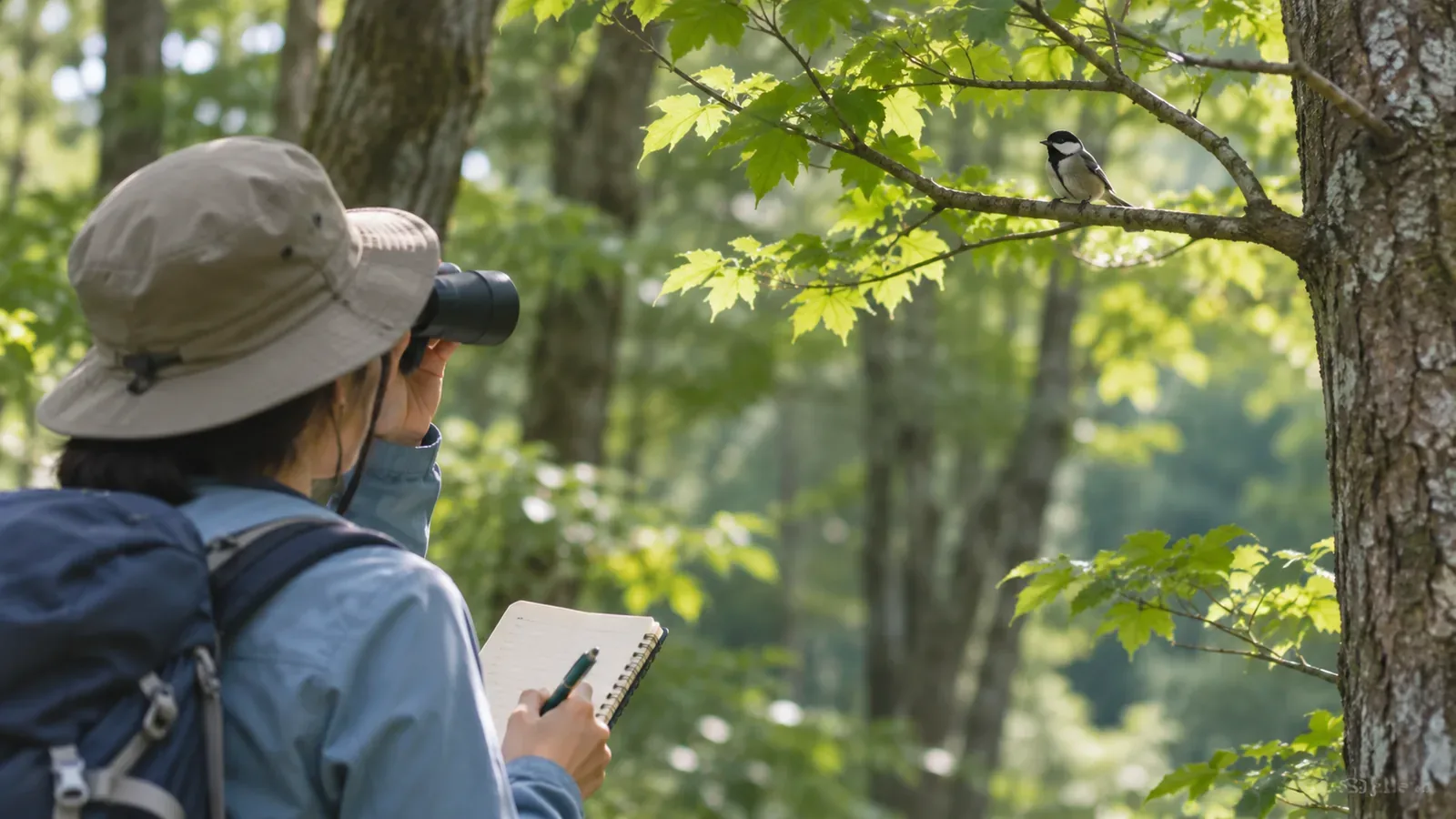
A note about the perch helps you remember what you saw and describe the scene to others. Use other evidence to work out which bird it was. Describe where it was in the tree, whether you looked up, across or down, and how the tree compared with those around it. You can do that without putting a number on the height. Write after stopping where you have firm footing and can leave the path clear, and leave the bird where it is. The examples here draw on eBird’s help and the Wild Bird Society of Japan’s guides.
What a perch note can tell you
eBird’s help says the best time to write observations is while you see or hear the bird. Noting elevation, the type of habitat, the main vegetation and nearby water can help someone interpret a record. An example describes a bird on a dead oak branch roughly 30 feet (9 m) from a waterfall and roughly 2 feet (0.6 m) above the ground.
eBird says details like these can help someone find a bird. A flagged record needs further evidence. A perch describes the scene. To identify the species, note the bird’s features. If the name is uncertain, describe the shape, markings and sounds and anything that helped distinguish it from similar birds. We suggest keeping identification and scene details in separate fields.
The eBird help page in English was updated on 28 March 2025. It is general advice for sightings. The numbers serve as examples rather than a standard for recording tree height. We take three ideas from the page: describe the perch specifically, include habitat, and gather other evidence to identify the bird.
Use three descriptions instead of guessing a tree’s height
If you did not measure the tree, describe how the bird’s position looked to you. On a slope, looking up tells you little about how high the bird was above the ground. Write where it was in the tree, where it appeared in your field of view and how the tree compared with those nearby. If you use a figure, say whether it was measured or estimated.
First, describe where it perched: high, halfway up or low, towards the trunk or at a branch tip, on a dead branch or among leaves. Second, note whether you were looking up, roughly level or down. On a slope that can change for the same branch, so add whether you were on the uphill or downhill side. Third, say whether it was a shrub, a tree about as tall as its neighbours or one that stood above them.
A fictional entry might read: “Woodland along the ridge. Dead branch high in a tree taller than the others. Looking up. No water visible. Species unconfirmed.” Name the tree only if you recognised it. For elevation, write down the source, such as a map or device, and the place name from a map or sign. That makes it easier to compare the note with your trip plan later. Label what you saw as an observation and what you inferred as an estimate. An impression of height usually belongs under estimates.
Stop to write, or take the note later
eBird recommends writing while observing. On a hike, stop walking before taking notes or using the screen. Choose a spot with reliable footing that leaves room for others to pass. The Wild Bird Society of Japan asks people to avoid stepping in front of other observers, keep the path clear and stay on paths and observation routes. Its photography guide also asks people to keep tripods out of passageways and avoid occupying a spot for a long time. Japan’s environment ministry asks national park visitors to stay on boardwalks and paths.
Use what you could see from a safe spot on the path. Wait until later if you cannot stop safely. When you find a suitable place, write down what you remember, mark the note “written later” and add the time you wrote it. The editorial team suggests doing this to distinguish a recollection from a note made while watching.
Japan’s environment ministry asks hikers to check the weather, access, trail conditions and volcanic information in advance to prevent accidents. A tight itinerary can leave little time to stop. Plan to skip the notes when you need to keep walking.
Give birds space and keep private notes separate from public posts
Avoid approaching the tree to check the perch or branch. The society lists an adult craning its neck to watch, raising its feathers or calling as possible warning signs and advises staying well away from nests. Flying off, fleeing, changing posture or giving an alarm call can mean a bird is stressed by someone nearby. Some stay motionless. Withdraw quietly if you see a change. Move away promptly if you come across an active nest or recently fledged young.
The photography guide asks visitors to leave trees and branches alone even when they obscure the bird. The society also asks you to point binoculars away from homes, passers-by and people working in fields.
As eBird notes, details about the perch and habitat can help others find the bird. Posting elevation, the nearest water and the exact branch can give away the site. The society advises keeping the exact site private, mentioning the prefecture at most, removing GPS data from photographs and keeping images of active nests or recently fledged birds off social media. Keep the precise perch in your own notes and write a simpler description to share.
Describe the scene and be careful with the species name and location
Set up the fields before you leave. Include time and place, habitat, position in the tree and how you saw it compared with the surroundings, and whether each detail was seen, estimated or written later. Keep a separate field for species and leave it blank if you are unsure. Write only in a safe stopping place, keep your distance and leave the exact site out of public posts. Those three habits make your notes useful on future hikes. The way of recording height is our suggestion. After each hike, see whether the note is clear when you read it back.