
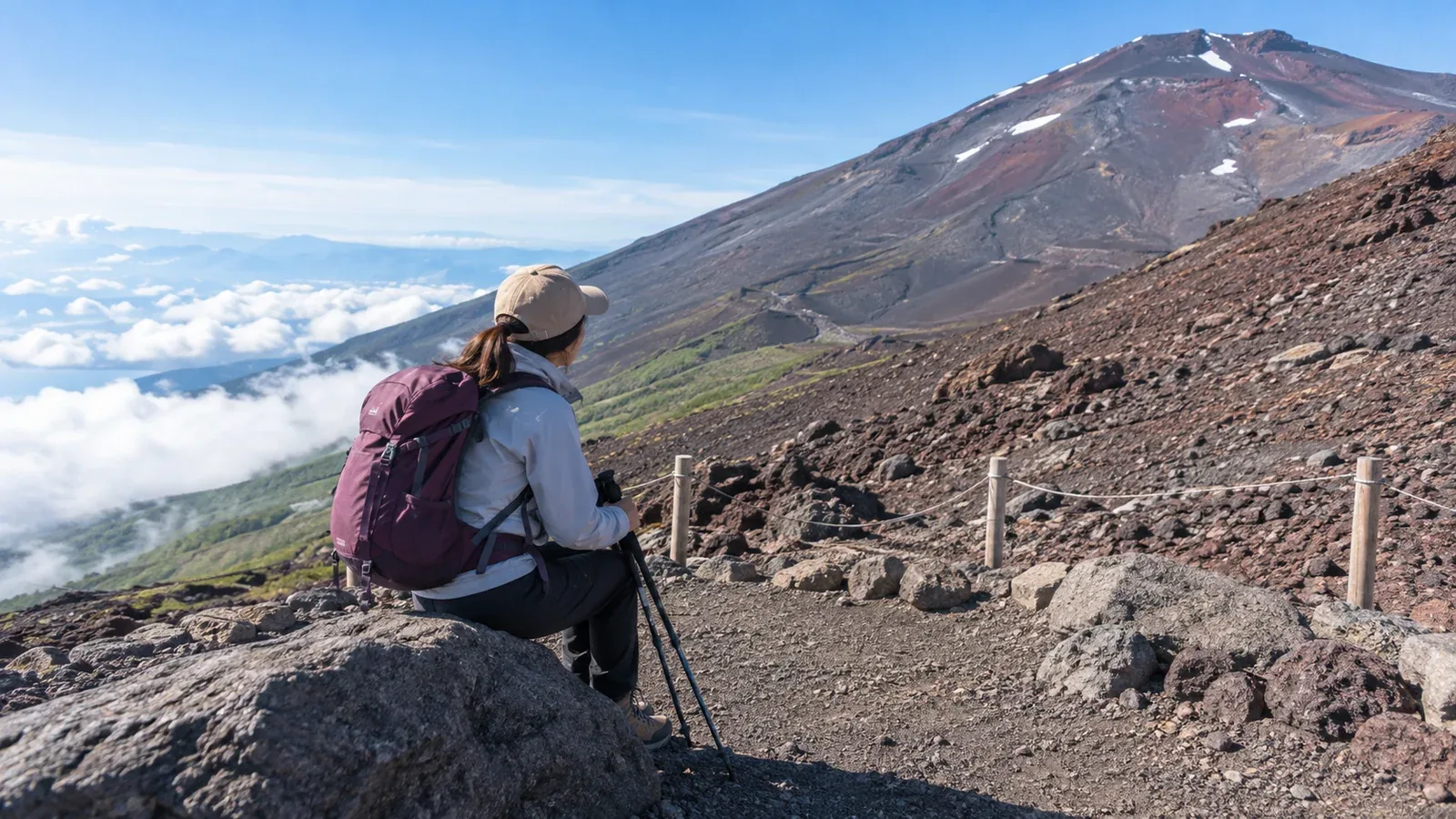
Arriving at a fifth station is a chance to decide whether to start the climb. You may already be between 1,440 m at Gotemba and 2,400 m at Fujinomiya. If someone is unwell or conditions have changed, the fifth station is a practical place to make a new plan.
Check three things before walking past the trailhead: how everyone feels, what conditions are like on the route and how much time remains to get down.
Why the fifth station is a decision point
Above the trailhead, lower air pressure means less oxygen is available per breath. The trail can also become steeper and more exposed. Going higher makes a return to road access take longer.
At the fifth station you can usually rest near road access and ask staff for information when facilities are open. Sort out any problem while these options are still close.
Three things to check at the fifth station
1. Headache, nausea or dizziness
If you develop a new headache, nausea, dizziness or unusual fatigue after gaining altitude, stop and assess how you feel. These can be signs of altitude illness or another problem. Symptoms can worsen if you continue uphill.
Skip the ascent if symptoms persist or worsen. Get to a lower elevation if it is safe to do so. Confusion, difficulty walking straight or shortness of breath at rest need urgent help. Alert staff and call 119 or 110 if symptoms are severe or you cannot get down safely.
2. Actual and forecast weather
Check regional warnings, recent observations and the forecast for the upper mountain during both ascent and descent. Heavy rain, high winds, lightning or dense fog on your route can justify postponing.
If you hear thunder or see a storm approaching, stay near or move to a substantial enclosed building if you can do so safely. A clear view from the fifth station only describes conditions where you are. Check the forecast for your whole route.
3. Time left to climb and get down
Count backward from the last transport, your hut’s check-in time if applicable and the weather window. Allow extra time for breaks, queues, slow footing and delays.
Official walking estimates for ascent plus descent run from about 7 hours 50 minutes on Fujinomiya to 12 hours 10 minutes on Gotemba, before stops or a crater rim walk. Check the estimate for your route and your own pace. If you cannot complete the descent with a margin, choose a shorter outing or return another day.
When you feel you have already come too far to stop
A long journey, paid tickets or a hut reservation can make it harder to change plans. Base the decision on what lies ahead: the forecast, the time available and how the group feels.
A change of plan can tell you what to arrange differently next time. Use the travel time and conditions you actually experienced when choosing a route and setting your departure time.
What to do after deciding to stop
Tell everyone in your party, then arrange a safe way to get lower or seek help.
- Keep anyone who is ill with a companion. If you cannot get everyone down safely, get staff or emergency responders involved.
- Tell staff at an open trailhead facility if you need help with a sick hiker or transport.
- From the fifth station, use available road transport or follow staff guidance. If you have started the hike, use the marked descent route for your location and check the signs at junctions.
- Seek medical assessment if symptoms persist after going lower. For severe or worsening symptoms, call for help immediately.
What to change before a future attempt
Note what led you to turn back. You may need a different departure time, better preparation for weather or a more gradual approach to altitude.
If altitude symptoms were a problem, discuss the itinerary with a clinician when appropriate. Gradual acclimatization generally takes days. Consider spending time at an intermediate elevation before going higher, and keep the first day’s effort manageable.
Openings, hut services and transport can change by route and date. Confirm them before booking again, and prepare a lower-elevation alternative.
Before leaving for Mount Fuji
Write down your route, turnaround time, last transport and the weather or symptoms that would make you postpone. Recheck the summit forecast and trail notices the night before and on the day, then use the same checks at the fifth station.
Sources
- Official Mount Fuji climbing site: weather, season and route comparison
- Official Mount Fuji climbing site: emergency procedures
- CDC Yellow Book: high-altitude travel and illness
References and sources
- Official Mount Fuji site: trailhead elevations and walking times
- Official Mount Fuji site: summit weather
- Official Mount Fuji site: emergency procedures
- Official Mount Fuji site: trail and facility opening dates
- CDC Yellow Book: altitude symptoms and acclimatization
- National Weather Service: lightning safety