
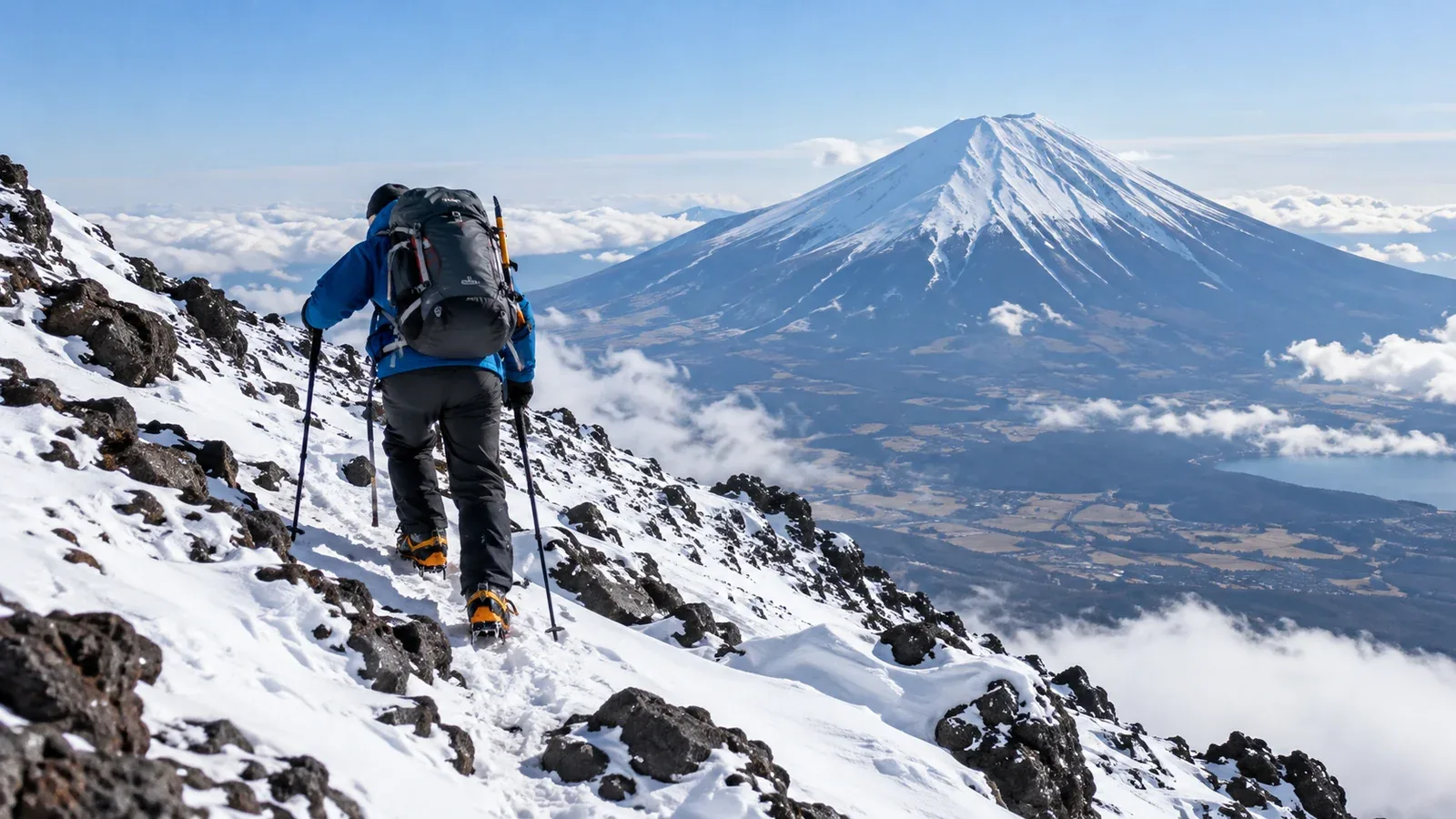
Mount Fuji’s summer climbing season generally runs from early July to early September, with different opening dates by trail. All four main summit trails are closed outside their official season. For your dates, check the exact sections and closure notices.
Autumn colors and a snow-covered Fuji are good reasons to visit the area. Plan a viewpoint or a walk on an open lower trail, and save a summit attempt for the official summer season.
What the closure means
The official climbing site says the closed summit sections are subject to a prohibition on passage under Article 46 of Japan’s Road Act. On Fujinomiya, the section between the fifth and sixth stations can have different dates. A lower section or access road being open does not open the route above it.
Check the latest trail notice and access road notice separately. In winter the first-aid stations, summit toilets and huts are generally closed. Temporary closures can also apply in summer when conditions are unsafe.
What changes outside the season
Conditions at the top can change quickly, including around the end of the summer season.
Cold and wind. At higher elevations, cold and strong gusts can combine to make walking and staying warm difficult. Exposure is particularly dangerous if you stop moving after an injury or get wet.
Snow and ice. Ice can persist in shaded sections after sunny weather. On a steep slope, a slip on firm snow or ice can lead to an uncontrolled fall. Follow closure notices even if the lower trail looks clear.
Facilities and rescue. First-aid posts and huts close, and summer signs, ropes and other equipment may be removed or secured for winter. Do not rely on shelter, staffed facilities or a rapid rescue. Bad weather can delay access by rescuers.
Rapid weather changes. Strong gusts, blowing snow and poor visibility can develop while you are out. If a storm is expected or visibility would make navigation uncertain, choose another plan.
What winter conditions demand on open routes
The skills and equipment below explain why winter terrain takes specific training. Choose a route that is officially open and appropriate for your group, and learn from an experienced instructor before attempting steep winter terrain.
Skills and experience
- Matching boots and traction to the terrain and using them correctly
- Training in ice axe use and movement on snow where applicable
- Experience with snow and ice on progressively more demanding terrain
- Navigating with a map, compass and offline backup when visibility is poor
Equipment
- Insulating layers and a waterproof, windproof shell
- Warm gloves and a dry spare pair
- Eye protection appropriate to blowing snow and wind
- Headlamp and backup power
- An emergency shelter and insulation suitable for the conditions
Planning
- Go with companions who have the skills for the planned terrain
- Compare official warnings, local notices and an elevation-specific forecast
- Decide in advance what conditions will make you cancel or turn back
To build these skills, start with a course or an open, lower route that matches your experience. Plan a Mount Fuji summit attempt for the official season.
Early autumn and midwinter
Soon after the summer season, some lower paths may still be dry. In midwinter, cold, wind and persistent snow and ice are much more likely in the area.
Conditions vary from year to year. A photo from last October tells you little about this week’s trail surface. Verify local notices and respect the closure on each section.
Winter weather on Fuji is severe even for experienced mountaineers. A climbing plan required for a designated area, where applicable, is a separate safety requirement and does not authorize passage on a closed trail.
For a view of snowy Fuji, consider viewpoints in the foothills or open trails near the Fuji Five Lakes. Check the route, road conditions and weather for your specific outing.
Where to check
Use the latest official information for both the walking route and your transport.
- Official Mount Fuji climbing site and the prefectures. Check trail closures, road restrictions and the opening dates of individual sections.
- Trail managers or local visitor centers. Ask about access and conditions on your intended open route.
- Japan Meteorological Agency and mountain forecasts. Check warnings, radar and forecasts for the relevant elevation.
- Summit observations. Check the time of the latest reading and use it to understand current conditions alongside the forecast.
Verify notices again before leaving. One open road or facility does not tell you which walking trails are open.
Before you plan your visit
If the summit trails are closed, choose an open outing at lower elevation or plan a summer climb. Use official opening notices, confirm the return transport and choose a route that matches the weather and your group.
Sources
- Official Mount Fuji climbing site: out-of-season trail closures
- Yamanashi Prefecture: regulations and rescue
- Official Mount Fuji climbing site: facility schedules and weather
References and sources
- Official Mount Fuji site: summit trail closures outside the season
- Yamanashi Prefecture: access restrictions and rescue
- Shizuoka Prefecture: current Fujinomiya and Skyline winter closure notice
- Official Mount Fuji site: trail sections and facility dates
- Official Mount Fuji site: summit weather and observations
- Yamanashi Police: designated winter areas and trip plans