
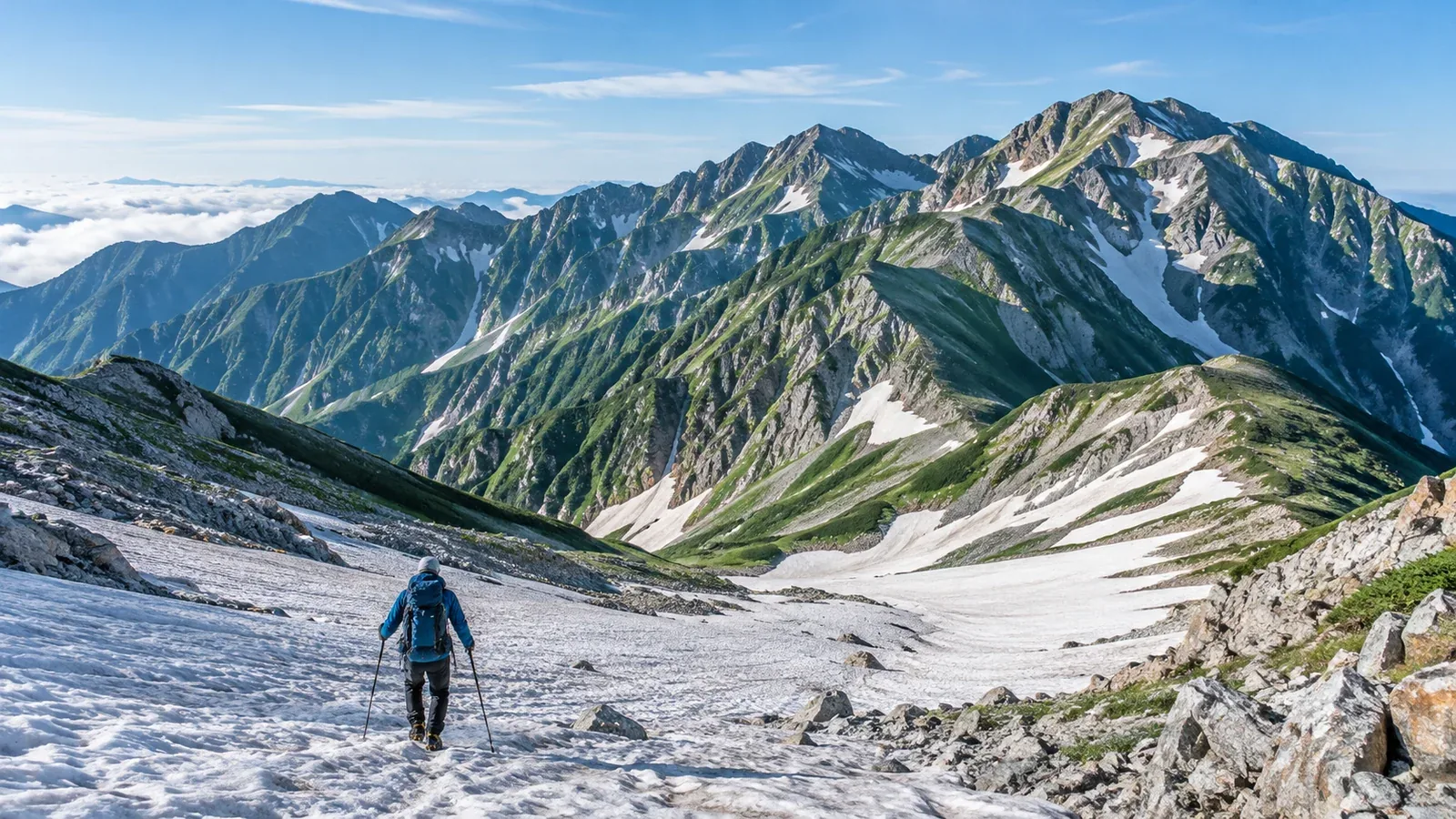
The Hakuba Three Peaks traverse links Mount Shirouma, Mount Shakushi and Mount Hakuba Yari along a ridge in the Northern Japan Alps. The loop via Daisekkei and Yari Onsen is well known, but snowmelt can close the snowfield route. First check which trails are open, then plan for snow, wind and long climbs and descents.
This guide explains the terrain and difficult sections and helps you decide what to check and when to set out. It’s a starting point for turning “I’d like to go someday” into a workable plan.
How the traverse fits together
From north to south, the peaks are Shirouma, Shakushi and Hakuba Yari. One Hakubakan itinerary goes up Daisekkei from Sarukura, crosses all three peaks and returns to Sarukura via Yari Onsen. Keep out when Daisekkei is closed. Consider entering via Tsugaike and Hakuba Oike or taking the Yari Onsen route out and back once you confirm each section is open.
Hakubakan’s sample Daisekkei–Yari Onsen loop covers around 17.6 km over three days and two nights. Starting from Tsugaike changes the starting point, transport and walking times. Check hut opening dates, availability and check-in times, and allow for breaks and delays on each stage.
Pay particular attention to snow sections, the ridge connecting the three peaks, and the rocky terrain above Yari Onsen Hut. They can require snow travel skills, judgment in strong wind or poor visibility, and the ability to descend steep rock.
Daisekkei: deciding whether to cross snow
Snow can remain in Hakuba Daisekkei through summer. Hakuba Village closed the route from late August 2026 and announced on September 16 that it would stay closed through the end of the season. For the next season, check the latest notices from the village and huts right before leaving instead of assuming it will be open.
Check what the snow calls for. Even when open, slope angle and snow hardness affect the crampons and ice axe you need. For steep lingering snow in June 2026, Hakubakan advised 12-point crampons, an ice axe and a helmet. Practise using your gear beforehand. Stay off the snowfield if you lack suitable equipment or skills for the conditions.
Watch for rockfall and snowmelt. Steep slopes flank the snowfield. Wear a helmet, watch for falling rocks, cracks in the snow and unstable footing, and follow local route guidance. Avoid lingering on the snow. Turn back if the route is unclear.
Assess the descent separately. Hard snow is more difficult to stop on when descending. If conditions change, a route you used going up may be unsuitable for coming down. Decide on the descent and turnaround criteria in advance.
Walking the ridge between the three peaks
The ridge from Mount Shirouma to Mount Shakushi and Mount Hakuba Yari has wide views of the Northern Japan Alps. It is also exposed to strong winds and rapid weather changes.
Mount Shakushi summit and bypass. One path goes over the summit and another traverses the slope. Check footing, rockfall and trail conditions on the bypass too. Reassess the plan at the junction if conditions are poor.
Rock above Yari Onsen Hut. Hakubakan identifies two short, slippery chained sections above the hut. Check wind, rain, visibility and the rock before continuing. Give others room and take one step at a time onto secure footholds.
Ridge weather can differ from the valley. A clear valley can hide wind or fog on the ridge. The day before and the morning of the trip, check Japan Meteorological Agency forecasts and alerts, local forecasts for wind, visibility and lightning, and updates from the huts.
What to prioritize in your plan
Think about equipment, fitness and weather together.
Gear checklist
- Crampons and ice axe that match the slope, snow hardness and local guidance. Practise using them.
- Trekking poles to help with walking. Stow them to free both hands on chained sections.
- Rain gear, with waterproof jacket and trousers for wind and rain.
- Helmet for snowfields and rocky terrain with rockfall risk.
- Warm layers for summer ridges and breaks.
- Map, compass and spare power. Save maps beforehand and take a headlamp and spare batteries.
Fitness and practice hikes
Walk a mountain with similar elevation gain and terrain using the load you’ll carry, and see how long it takes and when you tire. On a traverse, you walk again the next day and may descend rock while tired. Plan around the slowest walker and leave room for rests and delays.
Decide when to go and when to turn back
Decide where to turn around or which descent to use if wind, rain, visibility or someone’s condition deteriorates. Share this with your companions and someone at home. Review the plan before continuing in these situations.
- Wind on the ridge is strong enough to push you off balance.
- Rain leaves rock or snow too slippery to get reliable grip.
- A headache or nausea could be altitude sickness. Stop ascending and descend if symptoms worsen.
- Poor visibility makes it hard to find the route.
Depending on conditions, you can shorten the traverse or split the peaks across different days. Check where you can stay and what transport is available if you turn back.
Choosing a season and departure date
Even in summer, opening periods for Daisekkei and the Yari Onsen trail vary from year to year. Check trail status, huts, reservations, buses and lifts with the village and hut operators. The outdoor bath at Yari Onsen is closed outside its operating season.
Lingering or early snow can bring avalanche and fall hazards. If snow skills and equipment are required, postpone or consult a guide qualified for the conditions.
What to do next
First ask the village and huts about trail conditions and plan using open sections. Confirm reservations, transport and how to file your hiking plan with Nagano. You can also exchange information with potential companions and experienced hikers in Nordwand’s Base Camps.
References
- Japan Meteorological Agency: forecasts, warnings and advisories
- Nagano Prefecture: hiking plan filing and mountain information
- Hakuba Village and Hakubakan: closures, trails and huts
- Japan Ministry of the Environment: Chubusangaku National Park visitor rules
References and sources
- Hakuba Village | Daisekkei closure in 2026
- Hakubakan | Latest trail and hut updates
- Hakubakan | Hakuba Daisekkei route
- Hakubakan | Yari Onsen route
- Hakubakan | Hakuba Oike route
- Hakubakan | June 2026 snow conditions and gear
- Hakubakan | Yari Onsen outside the operating season
- Hakuba Village tourism website | Suggested hikes and trailhead access
- Nagano Prefecture | Mountain information
- Nagano Prefecture | Filing a hiking plan
- Japan Meteorological Agency | Weather warnings and advisories
- Japan Ministry of the Environment | Chubusangaku National Park visitor rules
- CDC | Travel to high altitudes