
A summit with a beautiful view is a lovely reason to try hiking. The weather will have a say in what you see at the top. If you also pick something you'd like to do on the trail, you'll have more routes to choose from and more ways to enjoy the day. Here's how to plan an outing you and your companions can comfortably finish.
Think about the time you'll spend getting there
Walking through the forest, listening to a stream, looking at trailside plants or having tea at a rest spot with a view can all give a hike a purpose. Think about how fast you'd like to walk and what kind of day you'd like to have with the people you're going with.
Someone looking for a quiet forest and someone after a wide view may enjoy different parts of the same mountain. Talk about what each person is looking forward to, and pick one thing you'd all like to do. You can still aim for the summit. If one person likes taking photos and another likes reading maps, stop somewhere with a view and take a picture, then look back at the route on the map together. That also makes it easier to decide where and when to rest as a group.
Keep the goal small. Visit a pass marked on the map, observe a tree you can see from the trail, or walk a new route with plenty of time in hand. If you can't identify the tree, note the shape of the leaves and where you saw it, then look it up at home.
Look for routes that match your goal and narrow them by conditions
Once you've picked a goal, use local government or trail manager information and maps to find a route that suits it. The U.S. National Park Service's Trip Planning Guide recommends looking up the activity first, then checking weather, time, difficulty, skills and equipment against your abilities. If you'd like a forest walk, check where the wooded stretches are and what the climbs and descents look like. A photo taken in another season may show a different landscape.
Compare round-trip transportation, walking time, distance, elevation gain, terrain and rest stops for each candidate. Yamanashi's mountain chart rates physical demand and technical difficulty to help people choose routes they can handle. Check that the listed start and finish match your plan.
It's easy to forget how much time observation and breaks take. Add up your summit lunch, photo stops, any exhibits you want to see and travel time. If it won't fit into the day, drop one activity or pick a different route. Allow time to get home comfortably. For each candidate, write one line about what you'd like to do and put it next to the travel and timing details. You may pick another route if the return bus doesn't work, even when the trail sounds wonderful. That gives you a clearer picture of the day than the summit height or photos alone.
Make plans for a day without the view
Cloud and fog sometimes obscure the view you've been looking forward to. A second goal, such as noting a tree in the forest and identifying it at home, gives you something to remember about the walk. Keep your decision to go based on the conditions.
Change or cancel the plan before or during the hike if the weather or trail conditions don't fit. Check local weather, closures, gear and the group's experience. Agree on what would make you change destinations, and check the trail manager's notices before leaving. If the planned route is closed, choose from alternatives you've researched in advance. Avoid looking for an unmarked path on the day.
Look up a local museum or exhibit in case you can't hike. The National Park Service guide also suggests museums and interpretive exhibits as indoor alternatives. Check opening days and transportation, and go only if travel is safe. If you pick another outdoor route, check its condition too, even if it is shorter.
Observe and take photos from the trail, within the time you have
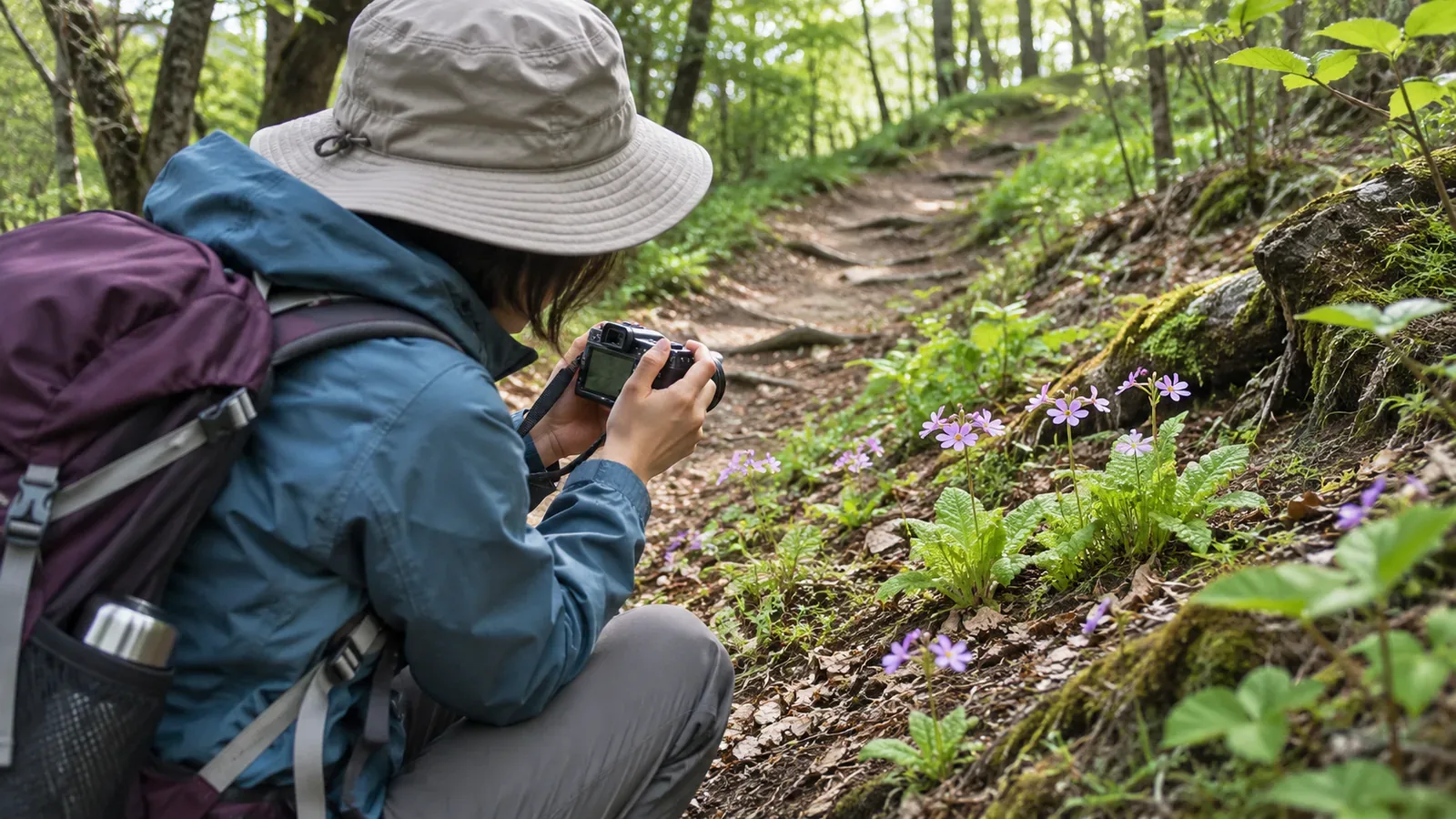
Look at plants and scenery from the trail or a designated area. Nagano's nature park guidance asks visitors to stay on the path for photos and keep out of vegetation and restricted areas. Stop walking and find steady footing before taking a picture. The U.S. National Park Service's photography advice also asks people to watch their footing and surroundings and keep trails clear.
Pick one thing to look for and plan a short stop. You could take a few minutes at a marked rest area to note a tree's shape. If you don't find it, keep to your break and descent times. The fact that you didn't see it can go in your notes for the day.
Once you're home, compare what you hoped to do with what stayed with you. Even if the view was hidden, you might remember a comfortable trail, a decision you worked through together or something you want to look up. Notes help you choose the next hike. Other visitors may have a different experience. Record the location and time alongside the map or photos to see how much time you spent observing. Before sharing photos of companions, ask whom they're comfortable sharing with.
Give the whole walk a purpose
Along with a summit view, choose something the group would like to do, such as walk through a forest, read the map or watch for a plant. Then look for a route that suits the group's stamina, the trail conditions, the transportation and the time you have.
Change the plan if the weather or closures make it unsuitable. Leave enough time for the trail, the descent and the journey home.