
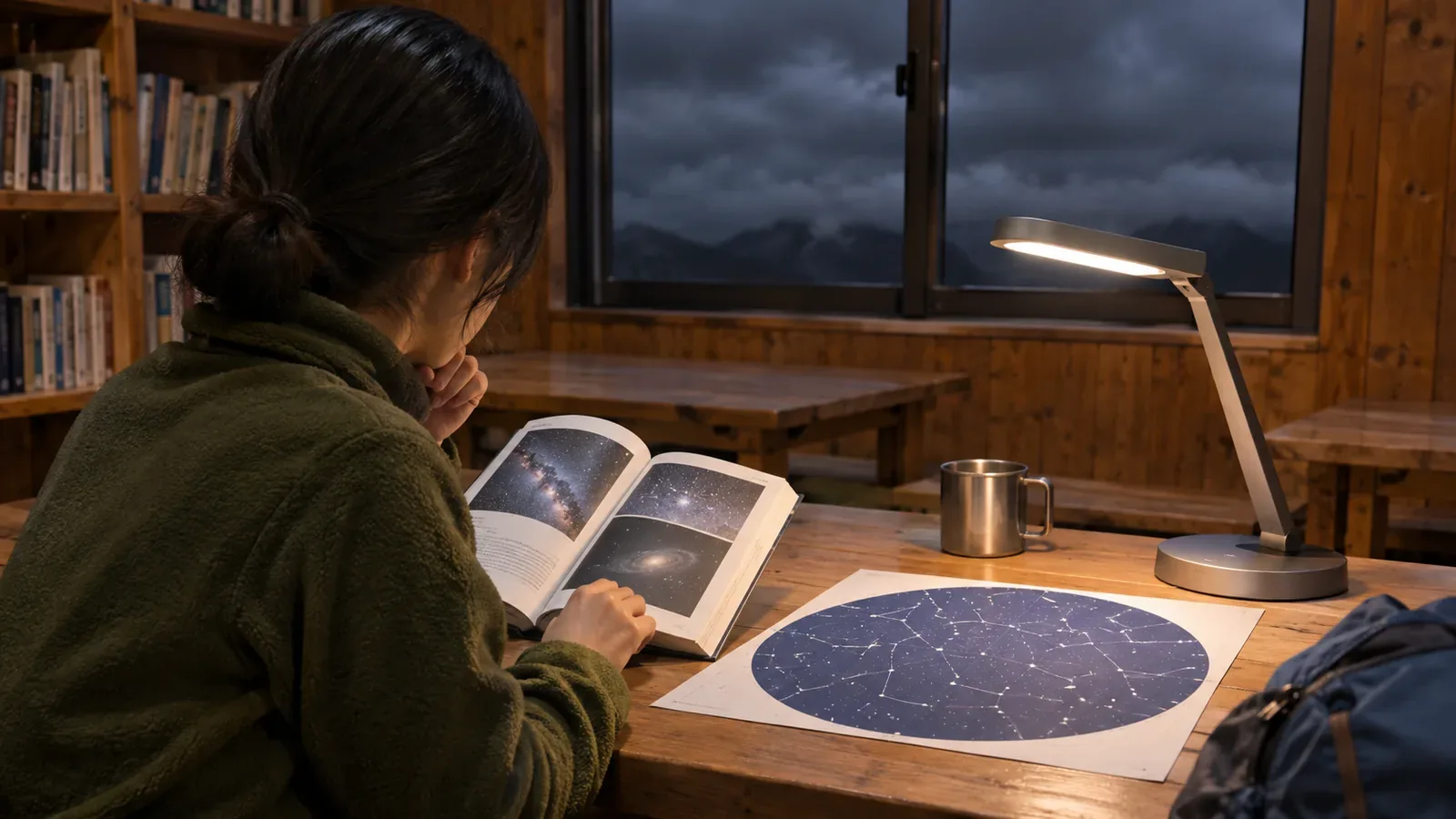
A night you’ve been looking forward to can end up completely overcast. The sky might clear if you wait a little, but keep your warmth and return plans in mind. Notice what the sky looks like, open a star chart indoors and find something to watch for next time. A change of plans can still be a chance to get to know the night sky.
Set a limit on how long you’ll wait
Before observing, decide when to leave the site and what weather or cold would make you head back early. If clouds roll in, limit the wait according to the journey back and how everyone is feeling. Follow facility closing times and nighttime access conditions.
Joshua Tree National Park recommends bringing extra warm clothing because temperatures can drop quickly in the evening. In the mountains, plan for how cold you may feel while standing still, and check where to warm up and how to get back safely.
An open spot or a different viewpoint might offer a better view, but only move to sites you know can be used at night. If you plan an alternative, check the operator’s guidance, parking and the return route in advance. Call it a night if you can’t verify those conditions.
Write down what you could see
Even when no stars are visible, the sky can look different from one direction to another. Where are the clouds spread out? Does moonlight illuminate them? Can you see the outline of the mountains? Jot down what you notice and the time, as conditions allow. Describe what you can see in your own words without guessing the cloud type or how the weather will change.
It can be fun to compare what each person noticed. If you record the place, time and look of the sky, you can compare that account with your next photos or notes. Treat it as a record of one evening. It takes more than one visit to see a pattern in the local weather.
At campsites and lodging, remember that people nearby may be resting. At Nasu Takahara Auto Campground, for example, talking in groups and using lanterns are prohibited after lights-out at 10 p.m. Follow local rules on conversation, lights and movement after dark. Keep paths clear and stay out of other sites when taking photos.
Look at star charts and Moon information indoors
Shenandoah National Park recommends using a star chart or app to learn the constellations. Indoors, open a chart for the date and time you wanted to observe and see what would have been in view and in which direction. Check the date, time and location settings on your screen.
The National Astronomical Observatory of Japan’s moonrise and moonset tables give the reference location and list times and bearings by date. Use the October 2026 Tokyo table as a reading example and look up your own destination and date for the next trip. Knowing when the Moon is above the horizon can help you pick a time. Read the table’s location and notes, and remember that a ridge can delay when the Moon actually comes into view.
You can also read up on an object you’d hoped to see in a book or an observatory’s guide. Record your reading and your own observations separately, so you can tell which is which. Save questions for your next outing.
Choose a manageable time and place for next time
When picking a date, consider weather, nighttime access, travel time, the Moon and everyone’s availability. If getting home from a dark site is uncertain, change the plan. A nearby viewing spot or a facility with confirmed evening access may be a good option.
At home, check any camera gear and other equipment you used, and get lights and warm clothing ready for next time. Think about whether you waited too long and whether you kept to the planned finish. Ask others how cold or tired they felt and use that feedback to plan the next trip.
The takeaway: a cloudy night can help you plan the next one
If clouds roll in, limit how long you wait and put the safe journey home first. Record what the sky looked like, then check charts and Moon information indoors. You can bring something home from an evening when you didn’t see any stars.