
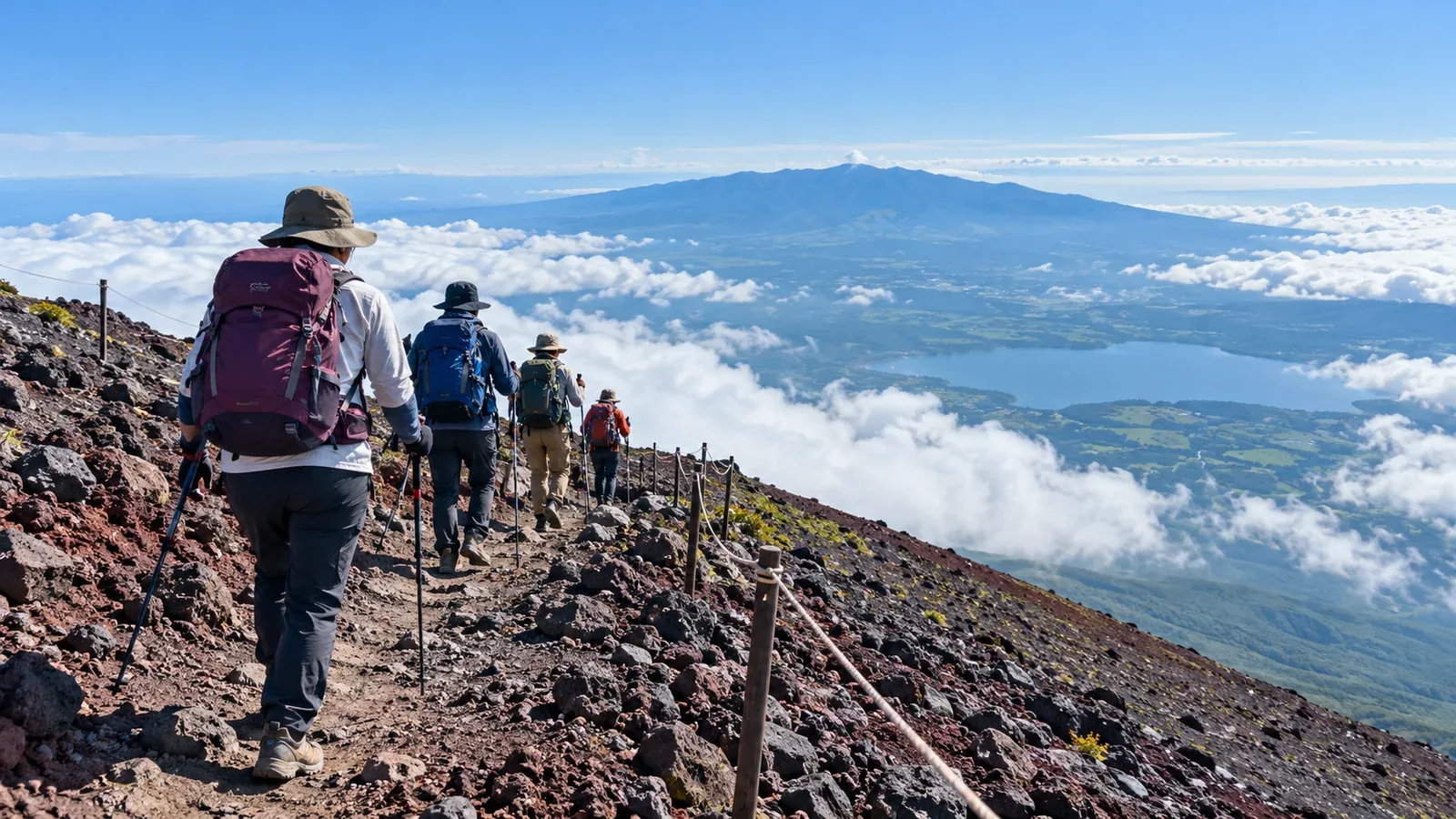
A tour can help with a first Mount Fuji climb, especially if you would rather have help with the logistics or someone experienced alongside you on the trail. Listings use terms such as bus tour, guided climb and mountain guide. The services behind those names can vary.
Start with your experience, fitness and reason for going. Check the operator’s current itinerary and written terms for the actual price, dates and services.
What a bus package and a guided climb cover
The useful distinction is which travel arrangements are included and who supports you on the mountain.
A bus package usually lists transport to a fifth station. It may also include a hut stay, meals or a guide. Ask whether staff accompany you on the trail and what help they provide during the ascent and descent.
A guided climb includes an on-trail guide for the stages specified in the itinerary. Ask about the guide’s qualifications, Fuji experience and responsibilities. Transport and lodging may be arranged separately.
A package can include both a bus and a qualified guide. Ask how many guides will actually be on the trail, the maximum group size and how the operator handles different walking paces.
Which option suits your experience
Choose for the support you and your companions will need on the actual trail.
When a logistics package may suit you
- You have completed hikes with sustained climbs and descents on rocky or loose ground.
- You and your companions can follow the marked route and make your own turnaround decisions.
- You know what the hut arrangements involve or are comfortable with shared accommodation.
- You have allowed for high-altitude symptoms and know how to get help if needed.
When to consider an on-trail guide
- You have limited experience of long, high-altitude hikes.
- You are travelling alone and would like someone experienced to help with route and turnaround decisions.
- You have concerns about altitude or a history of altitude illness and can discuss the plan with a clinician before booking.
- You want to learn about pacing, equipment and route choices while you walk.
At 3,776 m, even a fit person can develop altitude illness. A guide can help you notice symptoms and arrange an early descent. If you develop symptoms, stop ascending and tell the guide promptly.
Six questions to ask before booking
Compare the answers in writing across operators.
- What qualifications and experience do the guides have? Ask for the issuing organization and credential, such as one from the Japan Mountain Guides Association (JMGA), and whether it covers the planned terrain and season. Ask who will guide on the trail and who handles logistics.
- How many hikers does each guide look after? Ask about the maximum group size and who can accompany someone who needs to turn back while the others continue.
- What happens if the weather changes or a hiker becomes ill? Ask who decides to turn around, how descent or rescue is handled and which costs are refundable.
- Will the operator check equipment? Ask what you must bring, what is checked at departure and whether fitted hiking footwear, warm layers and waterproof jacket and trousers can be hired.
- How is the hut booked? Ask for its name, location, check-in time, room arrangement and whether meals are included. Check the hut’s own information as well.
- Which trails will you use up and down? Compare distance, elevation gain, surface, descent time and transport for the Yoshida, Subashiri, Gotemba and Fujinomiya trails.
What to check in a low-cost package
Compare the full trip cost and the safety arrangements alongside the advertised price.
Overnight ascents without a hut stay. The prefectures have restricted this style of climb. Check current entry hours and whether the tour allows time for a gradual ascent and rest. A departure from the city at night can be a different arrangement from hiking through the night.
Equipment rental. Check whether the quoted price includes properly fitted footwear, rain gear and insulation. Add any rental, hut, meal, entry and transport charges you will pay separately.
Cancellation terms. Read the deadlines and refund terms for an operator cancellation, a trail closure or a personal withdrawal. For a Japanese package tour, check the travel organizer’s registration details.
Choosing a route for a first climb
Ask what the itinerary demands on the busiest and most exposed sections, including after you start down.
Yoshida (Yamanashi) has many huts and may have long queues high on the route around sunrise. Check how the group handles the descent and which trail signs it follows at the split with Subashiri.
Fujinomiya (Shizuoka) starts at 2,400 m and is the shortest by distance. It still has steep rocky terrain, and ascending and descending hikers share the path.
Check the official trail opening, fee and entry notices for the season. Ask the operator which procedures it handles and which you must complete yourself.
Before you book
Write down your longest comparable hike, who is coming and the help you would need if you had to turn back. Compare a few itineraries, then ask the operator about anything missing from the written terms.
Sources
- Japan Mountain Guides Association: credential categories
- Japan Tourism Agency: safety checks for package hikes
- Official Mount Fuji climbing site: route comparison and prefectural access notices
- CDC Yellow Book: high-altitude travel and illness
References and sources
- Japan Mountain Guides Association: categories and scope of certification
- Japan Tourism Agency: choosing a package hiking tour
- Official Mount Fuji site: four trails and descent times
- Official Mount Fuji site: opening dates
- Yamanashi: Yoshida Trail entry notice
- Shizuoka: entry notices for the other three main trails
- CDC Yellow Book: altitude illness