
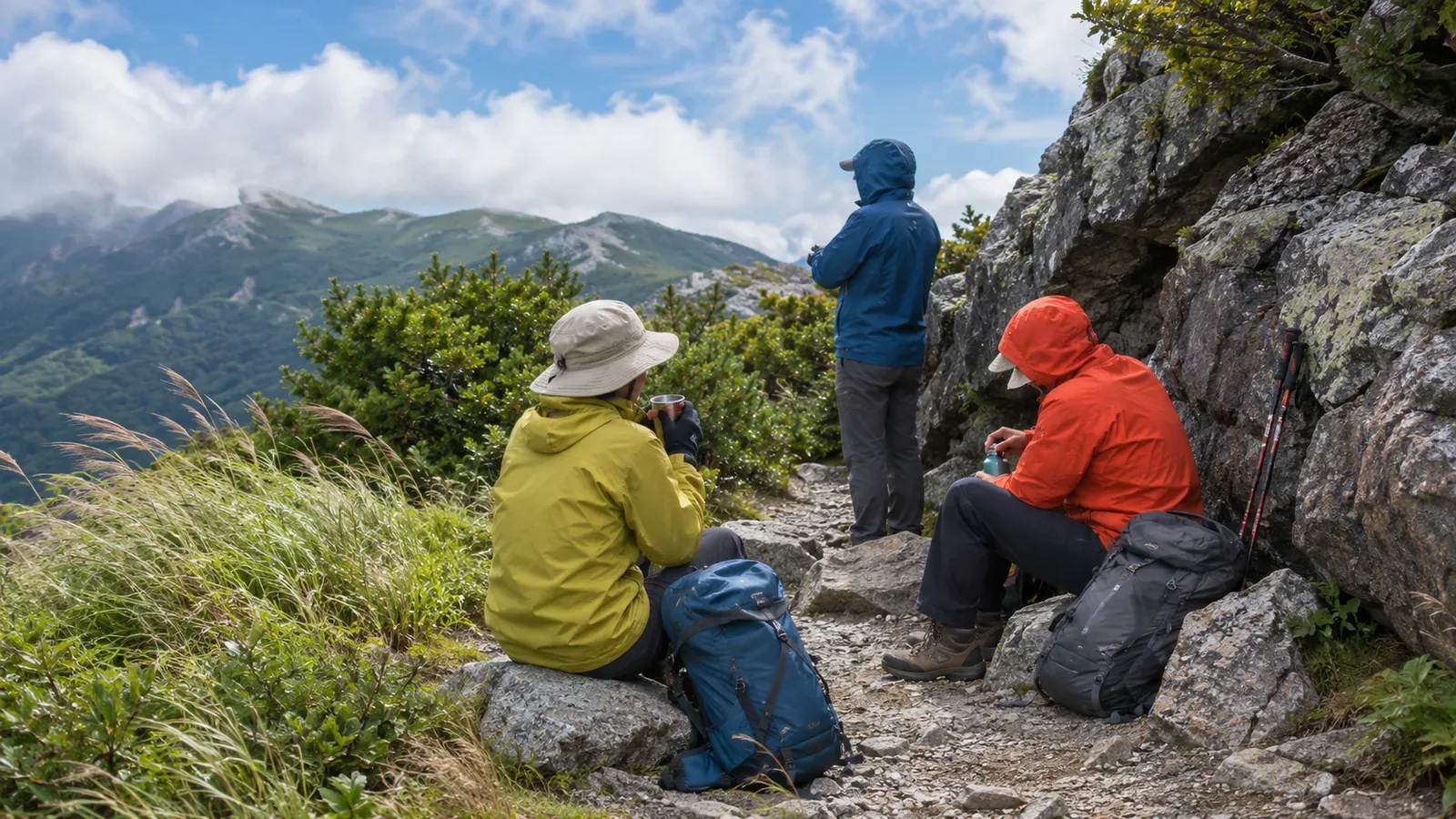
A small change of position can make a break more comfortable than staying in the wind on a ridge. A quieter spot still needs checking. Use wind direction as one clue and check your footing, rockfall risk and whether the group would block the path.
Wind direction tells you where it comes from
The Japan Meteorological Agency (JMA) defines wind direction as where the wind blows from. A north wind comes from the north. Read forecasts with that convention and consider how the direction relates to ridges and slopes on the map. Local terrain can change the wind direction from the forecast.
Wind varies by time and place. The JMA uses a 10-minute average and explains that gust speeds can be higher. Take brief bursts and terrain effects into account alongside the forecast mean.
From a safe place, notice which way the wind hits you and how strong it feels. There is no need to test it with a hat or lightweight wrapper. Tell the group where you feel the wind coming from and decide whether to stop or adjust gear before going on.
Check terrain hazards as well as wind
Avoid moving to the edge of a steep slope, a place exposed to rockfall or the vicinity of a snow cornice to escape the wind. Choose a place where everyone can stop and sit securely. On a trail or at a junction, keep the way clear for others.
Rock or terrain can reduce the wind. If it shifts, the same place may become uncomfortable. Check for rockfall from above, slippery ground and whether the way to the spot is manageable. Stay away from hazardous ground when looking for a break.
Pause briefly to check how the wind reaches you, then move within safe ground if needed. Identify possible stops and turnaround conditions before departure so no one gets worse while you are looking for a place.
Manage equipment and food during the break
Once stopped safely, secure packs and hats. Put removed gloves in a pocket you can close and close the rubbish bag after adding light food wrappers. Avoid reaching into hazardous places to hold gear or chasing anything that blows away.
If sweat-soaked or rain-wet clothing feels cold in the wind, check how everyone is doing and what equipment is available. Keep layers and rainwear easy to reach, and put them on or adjust them in a safe place. Tell companions if you feel cold rather than waiting out the break in silence.
If the wind makes cooking unsafe, switch to food you can eat cold. Keep outdoor gas stoves out of tents and vehicles, including when seeking wind protection. The Jetboil Flash manual, for example, requires a well-ventilated outdoor area and prohibits use in enclosed spaces such as tents and cars. Follow your product’s restrictions even if you can open a door or vent.
Reassess the rest stop and route as conditions change
Wind direction and strength can change during a break. If the wind starts to hit you directly, things are about to blow away or a companion reports cold or fatigue, check everyone’s condition and end the break or move if you can do so safely.
If it is difficult to stay upright or move safely, reconsider heading onto the ridge. Check shelter options and routes you can travel safely. If turning back, check the return route and avoid setting off when the wind prevents safe movement. The JMA table describes the risk of falls in strong wind. Decisions in the mountains depend on conditions at the site.
To keep a record, list the time, place, where the wind came from, what it felt like and features of the rest stop separately. Use the impression as a reference for next time and keep it separate from measured speed. Check the forecast and conditions afresh on the next hike.
Check wind direction and footing together
Choose a break spot using wind direction, footing, rockfall risk, the group’s safety and whether you would block the path. Check conditions during the break and revise the route if you cannot travel safely.