
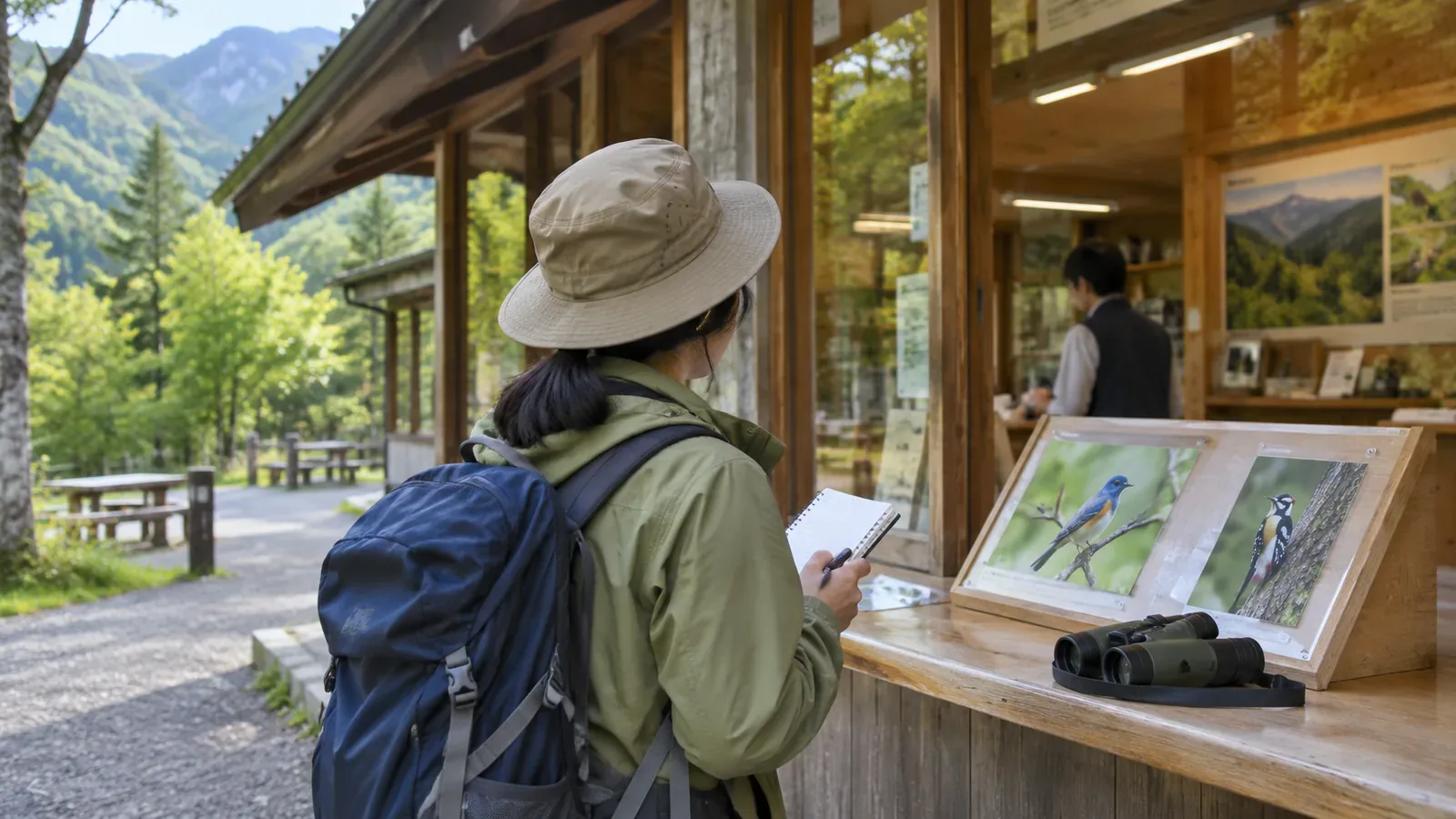
Before a birdwatching hike, look up what the local visitor centre can advise you on and when it is open, as well as which birds you might see. It can be one place to ask about weather and the trail and help you decide how much time to spend watching. We use regular hours and services checked on 4 November 2026 as examples. Check the latest notices before leaving, as opening dates and road access can change.
Include the visitor centre as a place to ask questions
Japan’s environment ministry asks hikers in national parks to check weather, access, trail conditions and volcanic information in advance. We suggest using a visitor centre as one source for that planning. Staff can advise you within what they know about the route. Seek up-to-date information from the people who manage it as well.
The ministry’s page for Jōdodaira Visitor Center in Bandai-Asahi National Park describes displays that use dioramas and photographs to cover the Azuma Mountains’ nature and history. The desk offers advice on hiking and wildlife watching, and the shop sells nature books and other items. The Jōdodaira Wetlands have a boardwalk accessible by wheelchair. Check which stretch you can use and the surface conditions before visiting.
Read the centre’s own site too. Jōdodaira says it runs nature walks and treks from time to time, and its field guide features birds including the spotted nutcracker and Asian house martin. A guide describes what may occur in the area. Check the current events or ask the desk whether a birdwatching activity is scheduled, whether booking is needed and whether they have recent observations.
Read opening times, closures and fees by season
The Jōdodaira site lists regular opening from late April to mid-November, 09:00 to 16:00, with free admission. It closes while the Bandai-Azuma Skyline is shut for winter. Check the centre’s notices and the road operator’s access information separately before choosing a date. Weather can limit road access during the season.
Nasu Kogen Visitor Center lists free admission and regular hours of 08:30 to 17:30 from April to November and 09:00 to 16:30 from December to March. It closes on Wednesdays, or on Thursday when Wednesday is a public holiday, and normally opens every day during Golden Week, Obon, the autumn foliage period from late October to early November, and the New Year period. It also closes for inspections. Check the calendar and notices for the exact day.
These schedules apply to the two example centres. Read the facility page and latest notices for the one you plan to visit. Check seasonal changes, special closures and event deadlines, and ask the desk about anything unclear. Check the road operator for driving conditions. Allow time to talk to staff and look around without pushing your hiking start back too far. Reconsider the route if you cannot get the safety information you need.
Write down three options: visit before the hike, visit afterwards or skip the centre. If it closes at 16:00, add travel time after the hike and leave enough time to speak to staff and see the exhibits. Check last entry and service deadlines separately from closing time. Decide in advance to keep your walking pace and turnaround time even if that means missing the centre. If you are likely to arrive late, switch to the plan without a visit.
Choose three questions before leaving
Time at the desk may be short. Write your questions at home. Here are three we suggest for a birdwatching hike.
First, ask how the planned trail is and where you can stop without leaving the path or boardwalk. The ministry asks visitors to stay on these routes. Second, ask what is easy to observe this season and what advice staff have for watching. Third, ask which places or weeks call for particular care.
The Wild Bird Society of Japan explains that many birds breed from spring to summer. An adult that senses danger or a change near the nest may stop caring for its young or abandon it. Ask whether there is a section to avoid to give nests space. Leave the precise nest location private.
Use the answers as advice and consider the weather and how you feel. If you cannot work out how to hike safely, skip the observation plan. Stop at a stable spot that leaves room for others, such as near the desk, to read your questions. Keep notes and screens out of use while walking.
Use what you learn without putting pressure on birds
Handle bird information from staff carefully. According to the Wild Bird Society of Japan, reports of rare or popular birds can spread quickly over social media and email. It notes an increase in cases where hundreds turn up the next day and disrupt the area. Even a tip shared with a few acquaintances can circulate. The society advises keeping exact photo locations private and naming the prefecture at most. We suggest taking the same care with information from a visitor centre.
Japan’s environment ministry asks visitors to leave wildlife unfed and take their rubbish away because the smell can draw animals in. Keep wrappers and leftovers from any food you buy at the centre in your pack.
Watch how the bird behaves even at a place someone recommended. The society says flying away, fleeing or giving an alarm call can indicate stress from being approached too closely. Withdraw quietly. Move away promptly if you see an active nest or recently fledged young.
Plan the visit and leave room to change it
Before leaving, confirm the centre’s hours and closures on its official site and write down three questions to ask. If it is closed or you cannot check the weather and trail, leave yourself the option to reduce the birdwatching plan or change the date.
Keep nests and exact sites private, leave wildlife unfed and withdraw if a bird’s behaviour changes. We suggest using visitor centre advice to decide how much space and time to allow for observation.
References and sources
- Japan Ministry of the Environment: national park etiquette
- Japan Ministry of the Environment: Jōdodaira Visitor Center
- Jōdodaira Visitor Center: visitor centre activities
- Jōdodaira Visitor Center: animals and plants of Jōdodaira
- Nasu Kogen Visitor Center: facilities and opening hours
- Wild Bird Society of Japan: etiquette guidelines for new birdwatchers and bird photographers
- Wild Bird Society of Japan: bird photography etiquette