
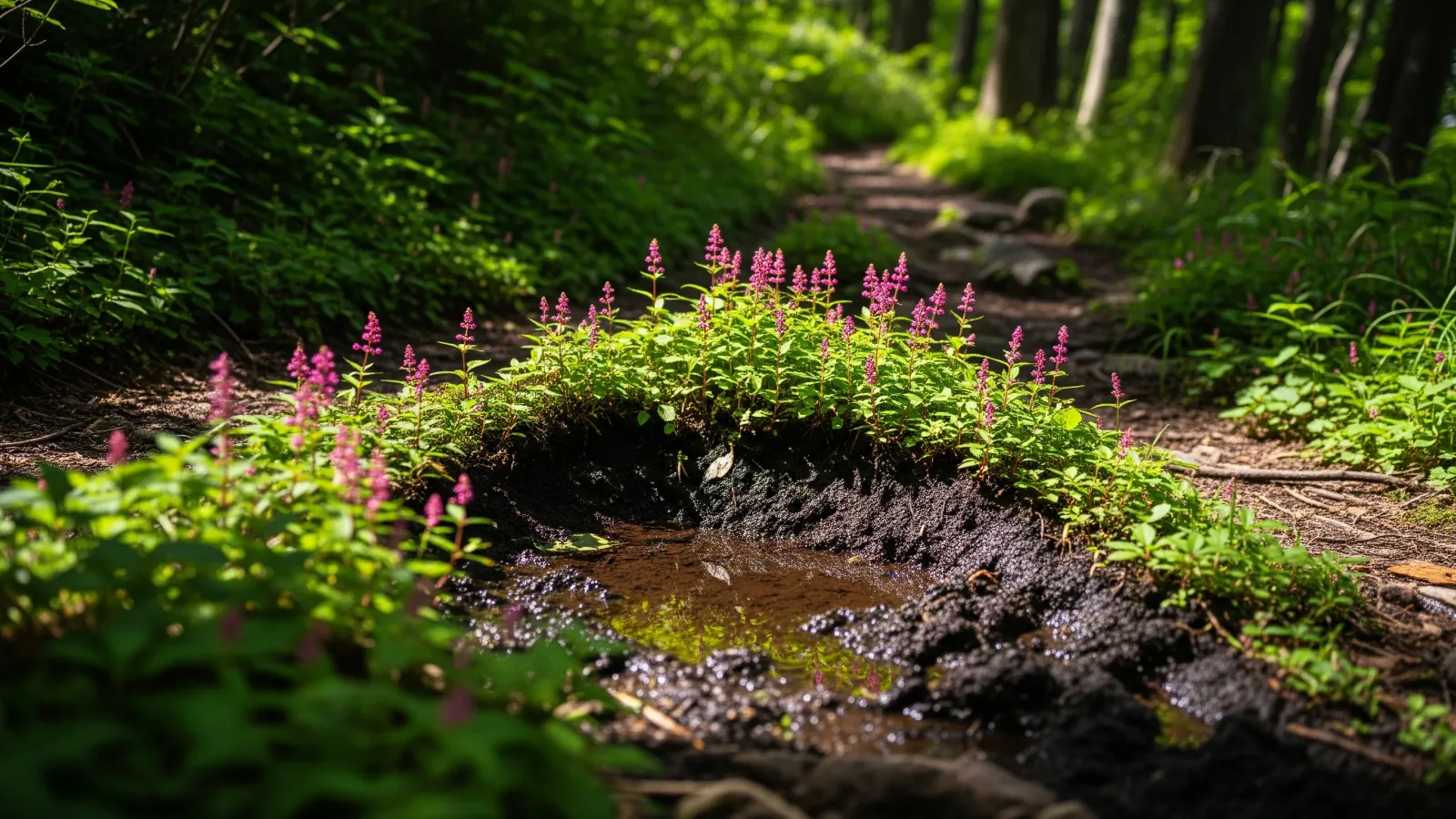
Is there still mud from your last hike in the grooves of your boots? A study at Tateyama by Tokyo University of Agriculture and Technology, the National Institute for Environmental Studies and the Forestry and Forest Products Research Institute found germinable seeds in about 8% of soil samples from visitors’ footwear. Here is how cleaning your soles helps protect the mountains.
Seeds can travel in the treads
Hikers can carry seeds without realizing it. Seeds can cling to soles or clothing and drop off in another mountain area, one way non-native plants reach natural areas.
At Tateyama Station in Toyama Prefecture, researchers sampled soil from visitors’ soles and tested it in a greenhouse. They had valid samples from 344 visitors. Germinable seeds were found in 27 samples (7.8%). Of the 44 plants that sprouted, all six species the researchers could identify were non-native to Tateyama.
After adjusting for other factors, the study estimated that soil from hiking boots or trekking shoes produced about 2.3 times as many sprouts as soil from other footwear, such as trainers. Deep lugs give you grip, and they also hold dirt and seeds, so brush them thoroughly.
To put the scale in perspective, the researchers noted about 930,000 visitors to Tateyama in 2017. Even a small share of samples can point to substantial numbers of seeds entering a busy mountain area.
Knowing about the problem and acting on it
You may already know about invasive species. Many visitors in the study did too.
In the same survey, 81.4% knew that human movement can carry seeds of non-native plants. 93.3% said they knew the effects of invasive species well or to some degree.
Only 3.8% said they had cleaned their shoes for conservation between the previous use and this visit. Including other reasons, such as keeping shoes in good condition, the figure was 43.9%.
The researchers identified lack of action as the main obstacle in this case, even though visitors knew about the problem.
Think back to your last hike. Did you brush the soles afterward? When I started hiking, I thought shoe care was mostly about waterproofing spray. It had not occurred to me that the dirt on my soles could affect another place.
A local plant can be out of place on another mountain
Mud from a mountain can carry seeds that do not naturally grow at your next destination. Even a plant native to Japan can be non-native in another part of the country.
At Mount Hakusan, the lowland Asian plantain (Plantago asiatica) has reached the subalpine zone. Researchers have found hybrids with the native Hakusan plantain (Plantago hakusanensis).
What to do before and after hiking
The steps are simple and fit into regular boot care.
Before the hike
- Brush out the treads. Scrub dirt from the grooves. In the Tateyama study, the adjusted estimate for the number of sprouts in samples from visitors who cleaned their footwear was about half (52.8%) of the estimate for those who did not.
- Soften dried mud with water. If the boot care instructions allow it, dampen the dirt a little and brush it out of the deeper grooves.
At the trailhead
Hakusan National Park has tested mats to remove seeds from soles. Mats for brushing off soil and seeds have been placed at some Mount Fuji trailheads. In the Ogasawara Islands, shoe cleaning is used when boarding or leaving boats, among other points.
Use the equipment when it is provided. A small brush in your pack helps you build a routine even where there is no cleaning station.
After the hike
- Clean the soles before you put your boots away. Follow the instructions for washing and drying them, and check the treads and sides again before your next trip.
- Choose where you clean. Follow instructions at any cleaning station. At home, keep the dirt out of the garden and waterways and check municipal guidance on disposal.
What to remember
Cleaning your boots is a way every hiker can help protect alpine plants.
At Tateyama, the estimated sprout count from hiking boots and trekking shoes was about 2.3 times that of other footwear. 3.8% of respondents reported cleaning for conservation. After adjustment, the sprout count in soil from visitors who cleaned their shoes was about half the count for those who did not.
Turn your boots over before your next hike. A little time with a brush can help keep seeds where they belong.
Invasive species rules and measures vary by area. Check current prefectural and site guidance or the Ministry of the Environment website.
References and sources
- National Institute for Environmental Studies and partners — Study of non-native plant seeds carried on footwear at Tateyama
- Study of the Hakusan plantain, Asian plantain and their hybrids in the subalpine zone of Mount Hakusan
- Japan’s Ministry of the Environment — Preventing accidental introductions in Special Protection Zones
- Japan’s Ministry of the Environment — Invasive species measures in Hakusan National Park
- Japan’s Ministry of the Environment — Non-native plant measures and trailhead mats on Mount Fuji
- Japan’s Ministry of the Environment — Invasive species measures in Ogasawara National Park