
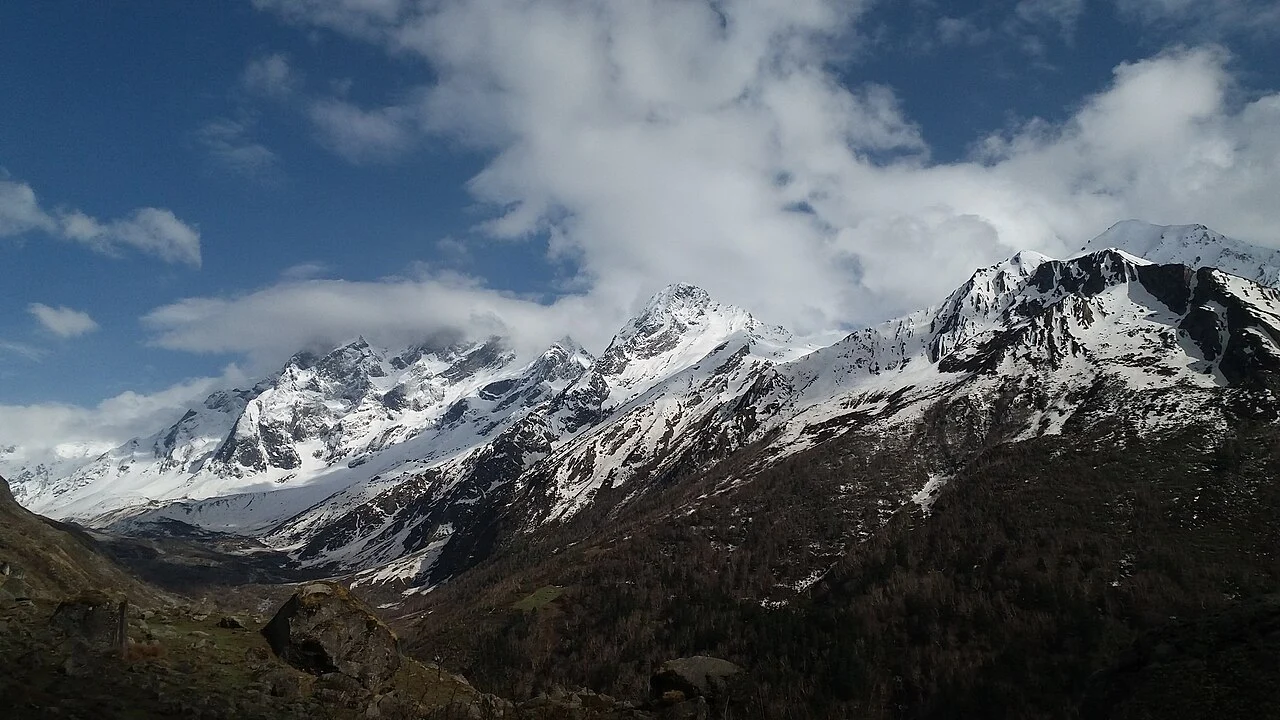
Name and Local Tradition
Jack Gibson documented a tradition in which Draupadi, the Pandava brothers, and their dog followed the route represented by this massif as a path toward heaven, a narrative from the Mahabharata preserved in local culture. Gibson's engagement with the peak's terrain and its cultural meaning during early visits established context for subsequent climbing parties.
Doon School Approaches and the 1990 Attempts
Gibson led Doon School parties toward Swargarohini in the 1950s. In 1990, a Nehru Institute of Mountaineering group reached a high point its members described as the summit; an Indian Mountaineering Foundation inquiry concluded the team had stopped approximately five metres below the true top. A separate IMF team that reported climbing summits I and II had reached summits II and III.
Swedish Ascent by the East-Southeast Ridge
A report published in 1994 by Åke Nilsson records that he, Ingela Nilsson, and Birger Andrén reached the summit on 7 June, ascending by the east-southeast ridge. Nilsson's account is the clearest documented record of a party on top, though conflicting coverage of earlier attempts leaves the question of a first ascent open in the climbing record.