
Two names, two borders
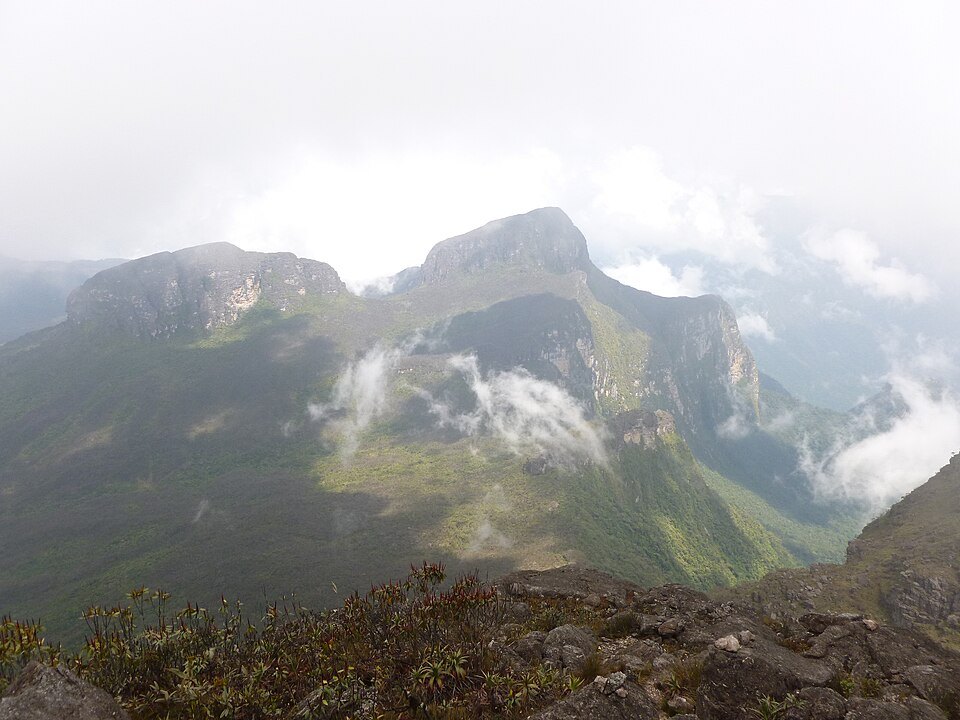
Pico 31 de Março carries a dual geographic identity: on the Brazilian side it belongs to the municipality of Santa Isabel do Rio Negro, in the state of Amazonas; on the Venezuelan side, the same summit is known as Pico Phelps. This double naming is a direct consequence of the massif's border position and the Venezuelan tradition of giving the region's peaks names of their own. The nearest town to the base is São Gabriel da Cachoeira, roughly 140 km away as the crow flies — a distance that underscores the site's extreme isolation.
Despite being the highest point in Venezuela outside the Andes, Pico Phelps receives little attention from Venezuelans, who tend to regard it as an extension or secondary summit of Pico da Neblina. This treatment as an appendage of its more famous neighbour contrasts with the position the peak holds in Brazilian lists, where it figures as the country's second-highest altitude.
Measurement and official record
The altitude of 2,974.18 metres was established following a satellite and GPS revision conducted by the Brazilian Institute of Geography and Statistics in 2016. This updated measurement replaced earlier figures and confirmed the peak's status as the second-highest point in Brazil — a position that separates it from Pico da Neblina by just 21 metres of vertical difference. The precision of GPS measurement is relevant in this context: the remote, forested terrain of the Serra do Imeri hampered reliable geodetic surveying of the region for decades.
IBGE maintains systematic records of the highest points in Brazil by state and by region, and Pico 31 de Março appears in that dataset both as the highest altitude in Amazonas and as second place in the national ranking — a dual reference that reflects the concentration of Brazil's greatest elevations in the far north of the country.
Morphology and relationship with Pico da Neblina
The shape of Pico 31 de Março contrasts visibly with that of its immediate neighbour. While Pico da Neblina has a sharp, pyramidal profile, Pico 31 de Março has a gentler form, lacking the pointed character that defines the main summit. The two are linked by a short mountain ridge just 687 metres long in horizontal extent, making both part of the same massif and explaining why the lower peak is often treated as a secondary summit of the formation.
This physical proximity and the mere 21-metre altitude difference between the two points make Pico 31 de Março a particular case of a secondary elevation: it lies so close to the higher peak that the distinction between an independent summit and a simple buttress depends on technical criteria of topographic prominence rather than any obvious geographic separation.