
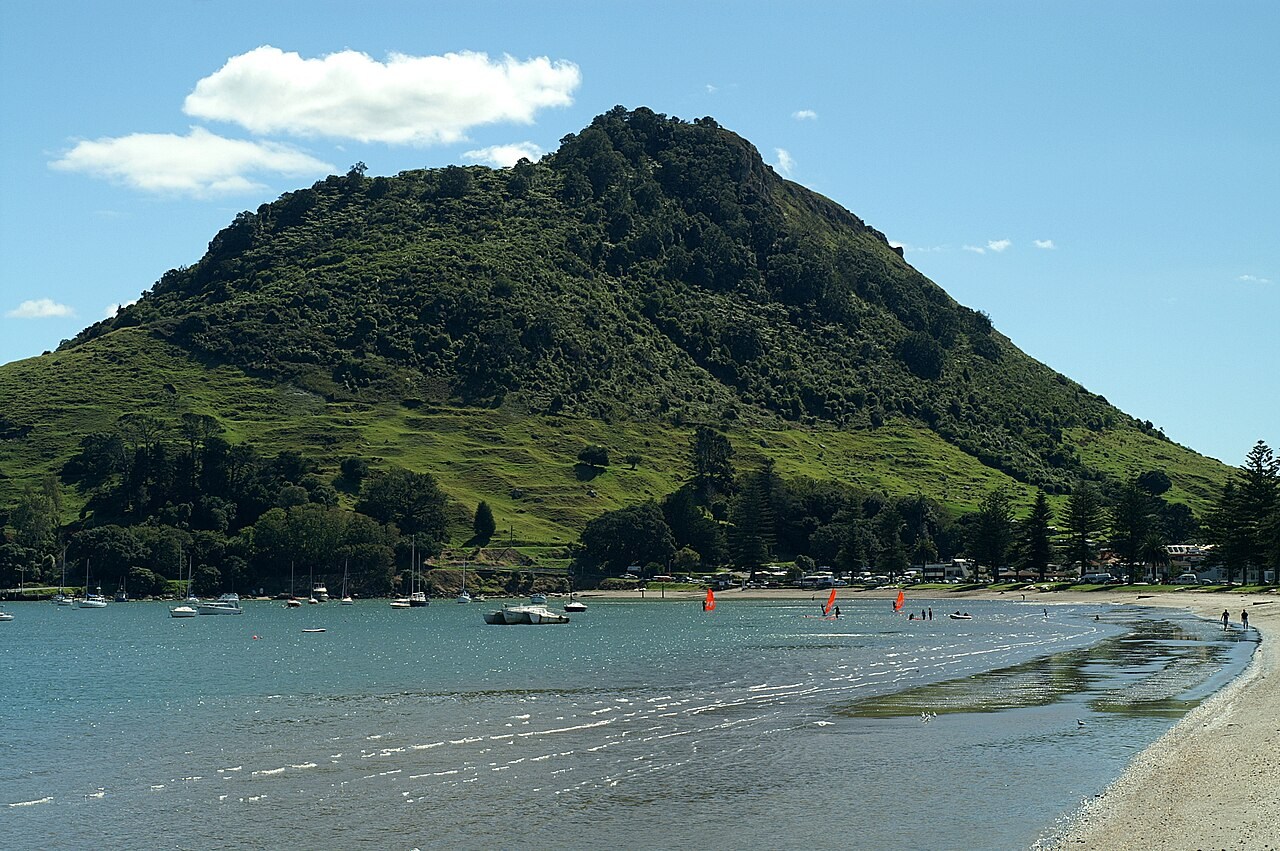
The Name and Its Meanings
Tauranga City Council translates Mauao as "caught by the dawn," consistent with Dowling and Reed's New Zealand Place Names, which gives the meaning as "caught in the light of day." The LINZ New Zealand Gazetteer records Mount Maunganui as an alternate name, deriving from maunga (mountain) and nui (tall or large), and notes it is frequently shortened to The Mount. Dowling and Reed record a traditional account in which Mauao, unrequited in his love for Pūwhenua — who favoured Ōtānewainuku — asked the patupaiarehe to carry him to the ocean; they reached only the coast before daylight caused them to flee, leaving Mauao at the harbour entrance.
Volcanic Geology
Tauranga City Libraries identify Mauao as an extinct volcanic cone composed of basaltic lava flows and pyroclastic deposits. The maunga sits at the tip of a peninsula separating Tauranga Harbour from the open coast, a position that places its volcanic profile between the harbour and the sea. At 231 m it is the defining vertical feature of the harbour entrance.
Governance and Iwi Connections
In 2007 the reserve land was returned under a settlement arrangement and is now held in trust for Ngāi Te Rangi, Ngāti Ranginui, and Ngāti Pūkenga, with joint administration also involving Waitaha and Tauranga City Council. The maunga holds ancestral significance for all four iwi with connections to the Tauranga region.