
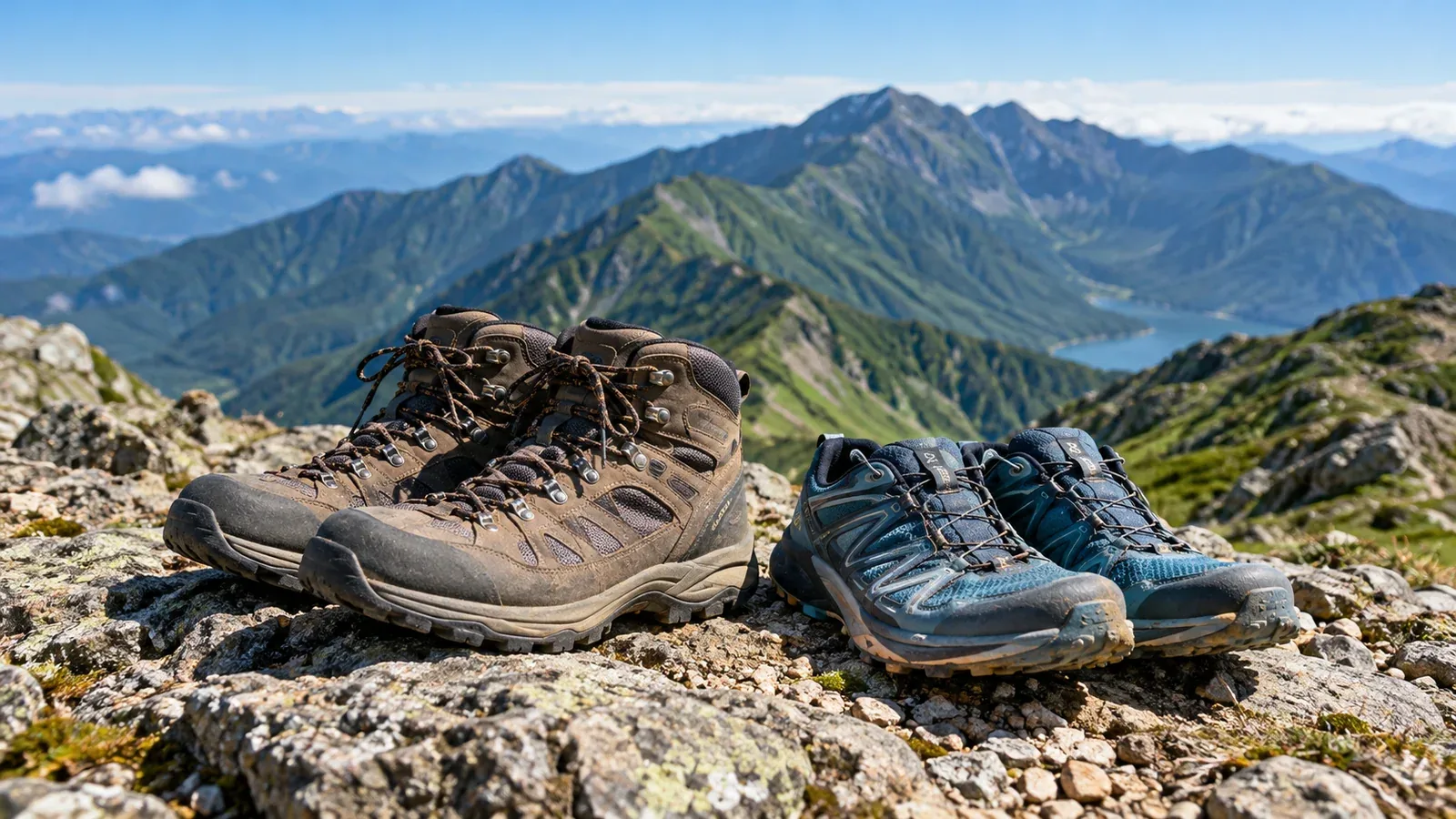
Trekking shoes and trail runners can look similar, but they are built for different uses. Both categories include models you can hike in. Matching the shoe to your route and pack can change how comfortably you walk and how tired you feel.
This guide helps you decide which to buy by looking at intended use, terrain, and how you move. It can also help you decide whether to add a second pair if you already own one.
What each type is designed for
Some trekking shoes prioritize sole stiffness and protection around the foot for long walks or hikes with a load. More flexible models suit maintained trails and light packs.
Trail runners are built for running, and many emphasize light weight and ease of movement. Some have thin soles and others have thick cushioning. Reinforced uppers and rock plates are also available to help protect the foot.
The intended activity is a starting point. Check the model's flex, fit, and tread against the terrain and how you plan to use it.
Terrain and pack weight
Three conditions matter most when choosing.
1. Pack weight
As your pack gets heavier, underfoot stiffness and lateral stability matter more. For a heavier load, such as an overnight camping trip, try trekking shoes designed to support the weight and compare how steady they feel when you walk.
2. Trail surface
On rocky paths or loose stones, check sole stiffness, protection underfoot and around the toes, and grip. On mud, also look at lug spacing so mud has room to clear. Light, flexible trail runners can work well on maintained dirt paths and forest roads.
3. Time on the trail and pace
On a long trip, shoe weight, underfoot protection, and fit all affect how tired you feel. If you plan to walk fast or run for much of the route, try trail runners that let your feet move easily. Compare them with the stability you'll need on the ground you plan to cover.
What to check if you hike in trail runners
A well-fitting trail runner suited to the terrain can work for light day hikes on low mountains or maintained trails. Check the following before buying or heading out.
- Sole wear: how soles wear depends on the material and surfaces you use them on. Before a hike, look for worn lugs, cracked rubber, and separation.
- Water protection: some models have a waterproof-breathable membrane. Others prioritize airflow or drainage. Water can enter over the collar even in a waterproof model, so consider how long you may be in rain and how wet the route will be.
- Foot stability: stability depends on more than cuff height. Check heel hold, lateral stability, and grip on the ground. Slow down on rocky sections you are unfamiliar with.
Can you run in trekking shoes?
You may sometimes jog a short stretch in trekking shoes. A heavier, stiffer shoe can make it harder to move or flex your feet quickly. If you plan to run for longer, try models designed for running on the ground you'll cover.
The more running you plan to do, the more running fit and sole flex matter. If you mostly walk, carry more gear, and tackle rocky ground, consider a trekking shoe with underfoot protection and enough stiffness for the load.
Which pair to buy first
If you own neither, use these points to decide what to try.
- Buying your first pair for hiking and looking for stability or protection for a load or rocky ground, try trekking shoes first.
- Day hikes on maintained low-mountain trails with a light pack and want to walk fast or mix in running, try trail runners too.
- Already own one type? Consider a second pair once you regularly take routes that expose the limitations of the first pair.
Bring the socks you'll actually hike in. Put both shoes on and try going up and down a test ramp if one is available. Check for heel lift, toes hitting the front, and pressure at the sides.
What to do next
When you have a shortlist, try both types at an outdoor store and see which suits your feet and route. You can look for a nearby outdoor store through Nordwand's partner shop search. You can also ask Nordwand community members who use the same trails how their shoes feel.