
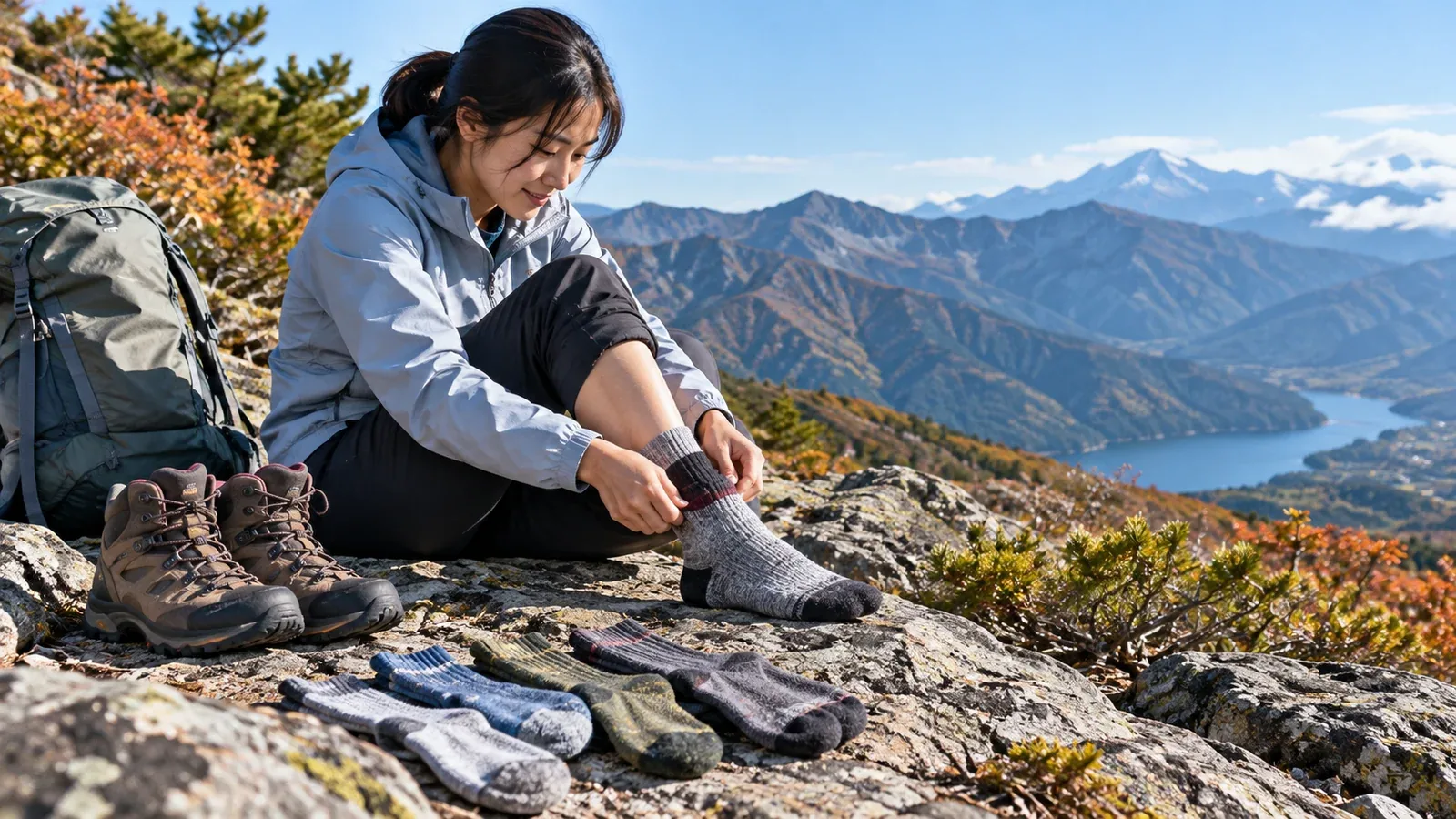
The thickness and material of hiking socks change how much your feet move inside your shoes and how the shoes feel when wet. Thicker socks or two layers can take up space and squeeze your feet.
This guide covers three decisions: material, thickness, and how many layers to wear. Use the terrain, season, and footwear to narrow your options and choose a pair that works with shoes you already own.
How socks affect shoe fit
With the same shoes, thin socks may leave room for your feet to move and thick socks may feel tight. Bring the socks you'll hike in when trying on footwear and check the two together.
Socks damp from sweat or rain can feel cold. Damp skin can soften and rub more easily. Alongside material, check whether the socks slip or bunch up.
The main materials: wool, synthetics, and blends
Hiking socks are broadly divided into wool, synthetics such as polyester or nylon, and blends. Knowing what each offers helps you choose for the trip.
Merino wool takes up moisture and is used in socks that prioritize warmth and odor control. Drying time and wear depend on the yarn and knit. Check whether the heel and toes are reinforced.
Synthetics such as polyester and nylon are used in socks designed to dry quickly or withstand wear. Drying speed and warmth also depend on thickness, knit, and the mix of materials.
Blends such as merino wool and nylon can combine the feel of wool with synthetic reinforcement. Compare the location of cushioning and heel and toe reinforcement as well as the fiber percentages.
Cotton dries slowly when wet. It can feel cold or rub when damp with sweat or rain. On a long hike or where temperatures drop, pack quick-drying socks and bring a spare pair if needed.
Choosing thickness for terrain, season, and footwear
Manufacturers use different names, but hiking socks can broadly be grouped into light, medium, and heavy thicknesses.
Light socks
Try lighter socks in hot weather or when your shoes have little room. Cushioning varies by model. Check how they feel underfoot and whether your feet slide.
Medium socks
Try medium-weight socks when you want both airflow and cushioning. Check whether the foot stays in place without squeezing the toes or instep. The height of the shoe collar is only one aspect of fit.
Heavy socks
In cold or snowy conditions, use the shoe and sock together to stay warm. If you choose thick socks, try them on with your shoes and make sure there is room around the toes and instep.
How to decide
- Check the season. Prioritize ventilation on hot days and warmth on cold days.
- Check the room inside the shoe. Compare the space around the foot and the cushioning under it when choosing thickness.
- Try the socks with the shoes. In a downhill motion, check that the toes don't hit the front, the heel doesn't repeatedly lift, and the sides and instep don't feel squeezed.
Wearing two pairs: what it can help with
A thin liner under an outer sock may reduce rubbing on the skin. In a study of military marches, blister rates differed depending on the sock combination. The number of layers alone does not tell you how it will work.
Here are a few things to check before layering socks.
Extra layers take up space. If the toes or instep feel squeezed, try a different combination or return to one pair. If you intend to wear two pairs, try the shoes with both.
One pair can provide targeted cushioning. Some socks cushion the heel and sole but stay thin across the instep. Try one pair with padding where you need it and check whether it holds the foot steady.
A liner is another option. If rubbing keeps returning in one spot, check the shoe fit. If there is enough space, try a thin liner with your socks on a short walk.
Start by checking the fit with one pair. If you try layering, check for folds and pressure. Stop and adjust if you feel pain or rubbing.
Two easy-to-miss checks: size and seams
Once you've picked material and thickness, check two more things.
Choose the right size. Oversized socks can bunch, while undersized socks can squeeze your toes. Follow the maker's size chart and check that the sock heel lines up and there is no extra fabric at the toes.
Check the toe seams. A seam that presses on your toes can rub on a long hike. Try a flat seam or a construction that feels smooth, and check how it feels when you flex your foot.
What to do next
Use your current hiking shoes and the season of your next trip to shortlist materials and thicknesses. Try the socks with your shoes and check for pressure or slipping at the toes, heels, and sides. You can also use Nordwand's partner shop search to find a nearby outdoor shop and ask for help choosing.