
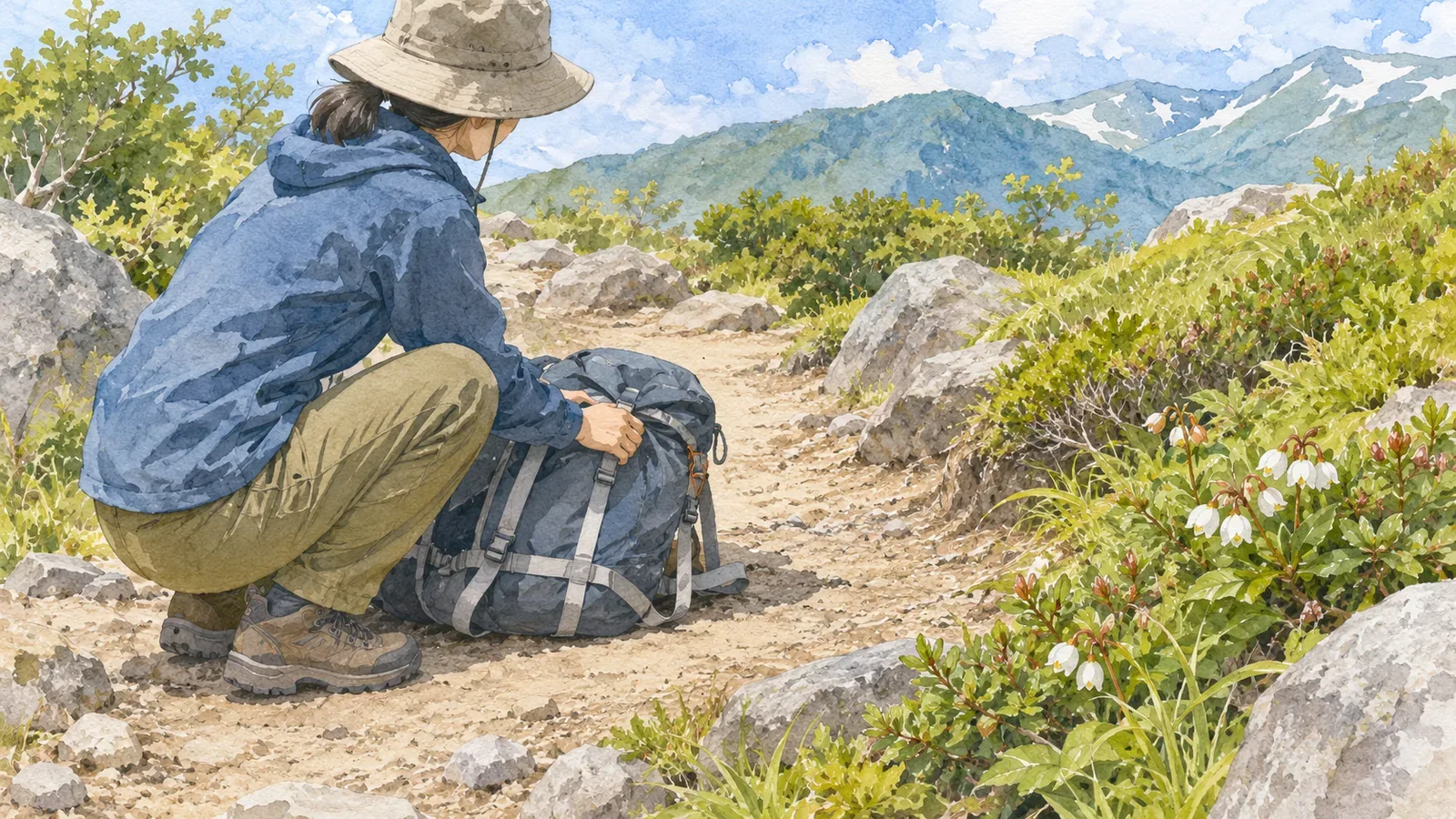
Before a break, look for a place to set your pack down within the trail or an approved rest area, with room for people to pass and away from fall or rockfall hazards. Check the ground and the width of the path before stopping, and make sure you and your pack stay clear of vegetation. Local guidance can help you choose a spot and decide what to do if it’s unavailable.
What Local Guides Say About Taking Breaks and Setting Down a Pack
Ina City’s Central Alps guide asks hikers to protect alpine plants when resting or setting down a pack. Stay out of vegetation off the trail and areas roped off to visitors, and look where you’re putting your feet as you unload.
The Daisetsuzan National Park Liaison Council asks hikers to stay on the trail or the designated route when snow remains, to avoid damaging vegetation and soil. It describes how stepping off the trail to relieve yourself, rest or take photos can trample plants and leave bare ground. Stay within the trail or designated route even when stopping to rest or take a photo.
In its 2008 etiquette guide, the Tokyo Mountaineering Federation’s Nature Conservation Committee also asks hikers to stay on the trail during breaks and keep out of wetlands and grassland.
Check the latest local guidance to see where you can rest. Keep your pack off plants even if you’re only setting it down for a moment.
Three Things to Check Before Setting Down a Pack
Komagane City advises choosing somewhere that keeps the way clear and is away from slipping, falling and rockfall hazards. The city suggests using breaks to drink, refuel, adjust clothing, check where you are and see how everyone is feeling. Alongside the guidance from Ina and Daisetsuzan, that gives you three checks for choosing where to put a pack.
First, check for hazards. Skip spots where you could slip, fall or be hit by falling rocks, however good the view. Second, keep the way clear. Check that people can still pass without stepping off the trail once your pack is down. Third, keep yourself and your pack within the path and off vegetation. Check the surface before you set it down.
Plan to rest safely before entering narrow or hazardous sections. Avoid stopping in a dangerous place or continuing to the next stop when you’re unwell just to find space for your pack. Keep the pack away from the very edge and leave enough room to lift or turn it without stepping off the trail.
The same checks apply to large groups. If several people put their packs down at once, they take up more room. Before leaving, agree to choose another spot if you can’t all fit without getting in the way.
When Gear Blocks the Trail, Hikers Step Around It
Gear can block a path even when it’s clear of vegetation. The Tokyo Mountaineering Federation warns that a tripod across the path can make others detour and trample the habitat at the edge. Japan’s Ministry of the Environment also notes that people passing each other in Chichibu-Tama-Kai National Park can widen trails or create parallel tracks and put vegetation at risk.
The March 2005 Daisetsuzan National Park trail maintenance guidelines (pp. 52–53) describe how passing and overtaking can lead to repeated use of trail edges, damaged plants, bare soil and a wider path.
When you put down packs or poles, leave enough room for hikers to stay on the trail. As with a tripod, gear that blocks the path pushes people to the edge. After gathering your gear in one place, check that it’s clear of plants and that others can still pass.
Mark Possible Rest Stops on Your Map
Before leaving, use a paper map and estimated walking times to list two or three possible rest stops in order. Note where a pack might fit, how much room others would have to pass, any hazards and where you’d go if the spot were unusable. Treat map-based choices as provisional. Use a spot only if it passes all three checks on the day.
If no spot meets the conditions, stop just long enough to drink where people can pass and save the longer break for your next planned stop. Check maps and phones only after stopping on stable ground out of the way. If a view can’t be photographed from within the trail, skip the photo.
If you feel unwell and there’s nowhere to put your pack, don’t assume you need to press on to the next stop. Decide while you still have the option to shorten the hike or turn back. A note such as “Turn back if I’m still unwell here” can help you decide on the trail.
Choose Where to Put Your Pack Before Stopping
When resting or setting down a pack, look where you’re stepping, stay within the trail and leave plants undisturbed. For each possible stop, note whether it’s away from hazards, leaves room for people to pass and keeps you within the trail. If you can’t find a suitable spot, change how you take the break or turn back if you need to. Check the latest guidance for the area before leaving.
References and sources
- Ina City: Guidance for Hikers in Japan’s Central Alps
- Komagane City: Read Before Hiking
- Daisetsuzan National Park Liaison Council: Conservation Rules
- Tokyo Mountaineering Federation Nature Conservation Committee: Conservation and Hiking Etiquette
- Japan’s Ministry of the Environment: Conservation Work in Chichibu-Tama-Kai National Park
- Japan’s Ministry of the Environment: Daisetsuzan National Park Trail Maintenance Guidelines, Chapter 3