
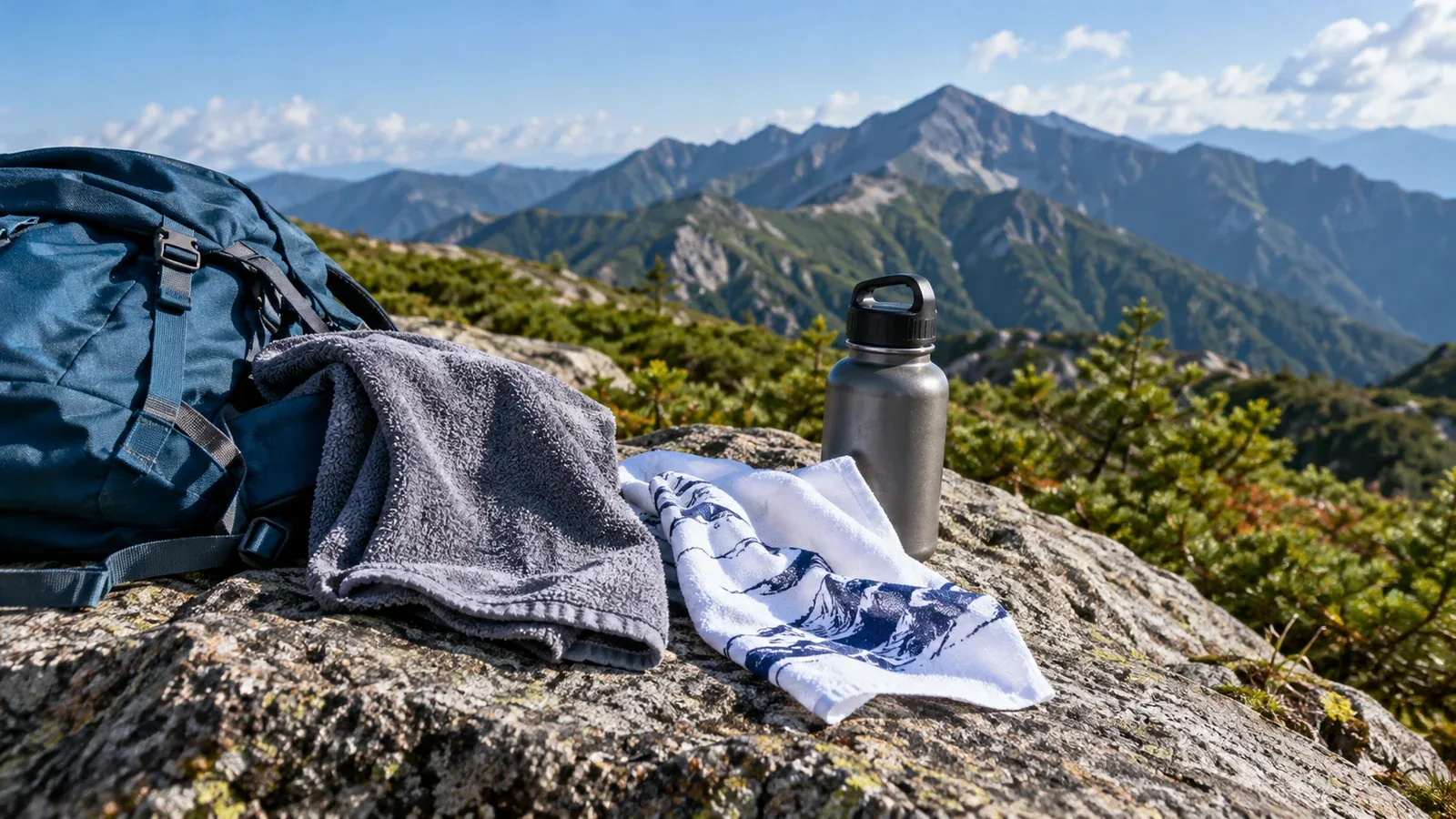
When packing for a hike or a hut stay, it is easy to overlook the towel. Will an ordinary towel do, or would a tenugui, a thin Japanese cloth, be enough?
Both can work on the trail. The material, construction and what you will use it for help you decide which to bring.
This comparison looks at material and construction. Drying time varies greatly with temperature, humidity, airflow and fabric thickness.
What affects how quickly a towel dries
Two main factors are how the material takes up and releases water and how the fabric is made, including its thickness and surface area.
The material matters. Cotton absorbs water, and thick cotton towels can hold a lot. Microfibre towels made of very fine polyester or nylon fibres are also designed to pick up water. Drying depends on more than the fibre. Thickness, weave and how much water remains after wringing matter too.
The fabric construction also makes a difference. Thick looped terry cloth can take up more water but also has more to lose as it dries. A thin, plain-weave tenugui is easy to spread out and dry where air can circulate.
Balance absorption against ease of drying. Thin microfibre packs small, while a cotton tenugui is handy for wiping small amounts of sweat or water.
Quick-drying hiking towels and where they work
Many towels sold as quick-drying in outdoor shops are thin microfibre.
Here are their main practical features.
- Absorption. Some thin products pick up water readily. Check whether the instructions allow wringing.
- Ease of drying. Spread the towel out where air can circulate. If you hang it outside the pack, secure it so it cannot fall off or catch on branches.
- Pack size. Once dry, it can go in its pouch. Avoid leaving it sealed while wet for a long time.
Read the care label. Some microfibre towel makers advise against fabric softener to preserve absorption. If you had to put it away damp, spread it out to dry as soon as you can.
A quick-drying towel can come in handy to dry off at a hut, wipe rain from your face or dry your hands after cooking at camp.
What a tenugui does well
A tenugui is a thin rectangular cloth, often made from cotton. How it dries compared with a quick-drying towel depends on the thickness of both cloths, how much water they hold and how you hang them.
Cloths with unhemmed ends have no thick fold at the ends and are easy to spread out for drying. Threads may fray. Check the maker's care instructions.
The cloth has several uses. Wipe sweat, keep dust off an item or wrap small belongings. If you use it to cover your head, also bring a hat or clothing designed to block UV. Bring sterile dressings for wounds and heat-resistant gear for handling hot cookware.
Drying yourself after a hut shower calls for enough fabric to absorb water and a place to dry it before morning. A small tenugui can get quite damp when drying your whole body. A thin quick-drying towel large enough to cover you is an option.
A cotton tenugui can be washed and reused. A dyed cloth may transfer colour the first times it gets wet, so wash and dry it separately from other items.
Using the two for different jobs
You can bring both and give each a different job.
- Hut stays and after a shower. Check the size for drying your body and how easily you can hang it when wet.
- Wiping sweat on the move. A thin quick-drying towel or tenugui works well when kept within reach.
- Covering your head. A tenugui is easy to tie. In strong sun, use UV-protective clothing or a hat too.
- Wrapping small items or using a dry cloth as a layer. A tenugui is easy to fold and tie and can be kept separate for different tasks.
- Weight and pack size. Compare wet weight as well as dry weight and folded size.
- Using it again. Both can be washed. Think about where you can spread them out to dry.
For wiping sweat on a day hike, one thin tenugui may be enough. When you stay in a hut or camp for several days, a quick-drying towel can be the main towel with a tenugui for smaller jobs.
Here are five checks when choosing.
- Material. Check whether it is polyester, nylon or another microfibre blend, or cotton.
- Size and weight. Around 34 × 80 cm is an example of a versatile hand-towel size. Consider a bath-size towel for drying your body.
- Packed size. Check the volume in the pouch or when folded against the space in your pack.
- Washing and care label. Check whether it can be washed by hand and how much room you need to hang it. Follow hut or campsite rules and avoid washing directly in streams or other water sources.
- Fabric softener. Follow the label if the maker advises against fabric softener or tumble drying.
Common choices that can disappoint
Choosing by the words “quick-drying” alone can give you a different result from what you expect. Look at the material and thickness. To compare with a cloth you have, wet and wring them the same way and hang them in the same place.
Choosing by thickness alone can leave you with the wrong balance of absorption and pack size. Decide if you need to wipe sweat or dry your whole body and how many days you will carry it. Compare size and drying.
Taking a tenugui as the main hut towel works best when you know where and how long you can dry it. All fabrics dry more slowly in humid places with little airflow.
Using it in ways that wear the fabric can leave your personal towel damaged or dirty. Avoid rubbing it over rocks or using it for dirty equipment. Pack a separate cloth if you need one.
Before your next hike
Check the material, dry weight and folded size of the towels and cloths you have. Think about whether you need one for sweat on a day hike or drying off on an overnight trip. Hang them in the same conditions to compare drying. Nordwand's partner shop finder can help you find a shop where you can compare thickness and material in person.