
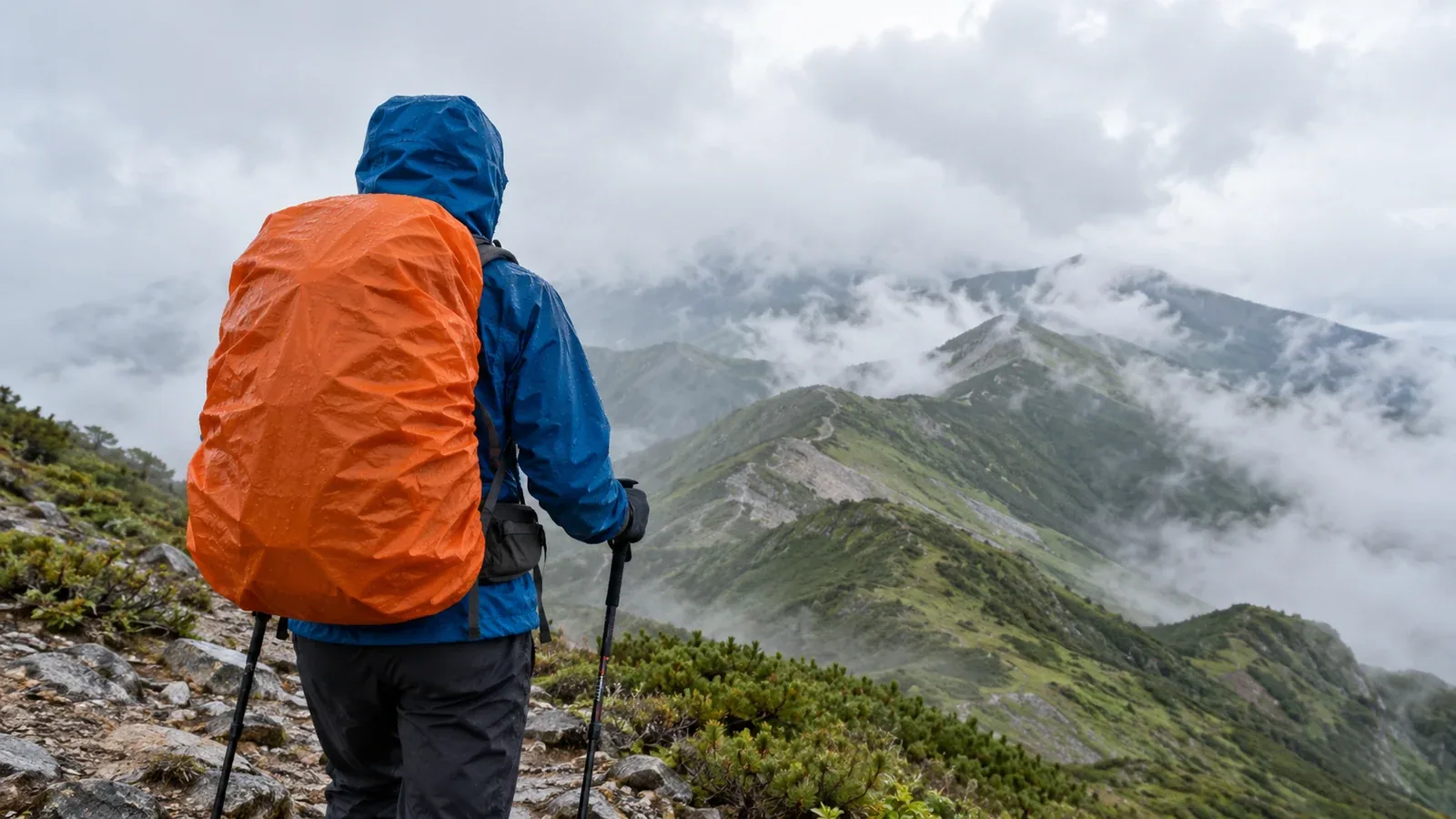
A sleeping bag can come out wet even after you used a rain cover. Think about the rain the cover intercepts and the water that can still enter around its edges or through pack openings.
This guide explains what a cover shields and what dry bags and pack liners do. Use your equipment and route conditions to decide how to combine them.
What a rain cover can shield
A rain cover shields part of the pack exterior and reduces direct rain. Back-panel coverage, attachment, and drainage vary by design.
Rain that falls directly on the covered surfaces is easier to keep off. The cover can reduce how much water soaks into the pack's outer fabric.
A cover alone has more trouble with the following.
- Wind-driven rain: wind can lift the edge of the cover and let rain in from an exposed side.
- Gaps on the side against your back: water can run along the back or edges and reach the pack.
- Strap attachments and openings: water may enter through uncovered parts, seams, or zips.
- Streamside brush: branches can catch the cover and pull it out of position.
- Dropping the pack in water or submersion: a cover alone cannot handle immersion. Near water, assess route safety first.
Use the cover to reduce how wet the outside gets, and protect items that need to stay dry inside the pack as well.
What dry bags and liners do
Inside a pack, dry bags can protect a sleeping bag, spare clothes, electronics, and maps separately. A waterproof liner for the main compartment is another option.
A bag that is intact and closed as directed adds protection if the cover shifts or water seeps through seams. Fabric, seams, and the closure all affect what it can keep out.
When choosing a bag, check the closure and intended conditions as well as the product name.
- Roll-top dry bags: roll the opening the number of times the maker specifies and fasten it. These can protect sleeping bags and clothes from rain, but some models aren't intended for submersion.
- Stuff sacks and cases for electronics: the stuff sack supplied with gear may not be waterproof. Use a pouch or case with protection suited to the conditions for maps and electronics.
Water repellency describes how water beads off a surface. For a dry bag, check seams and closure as well as fabric ratings. If there is an IP rating, check whether it covers splashes or submersion and read the test conditions and maker's instructions.
Why combine the two
An external cover and bags around the contents protect against water coming in by different routes.
A rain cover reduces direct rain on the fabric and outer pockets it covers. Opening a pocket or letting water run down the back requires separate protection.
Dry bags or a pack liner protect the contents if rain gets into the pack. Prioritize the following according to the consequences of getting them wet.
- Sleeping bag, which can lose warmth when wet. Keep it dry for use.
- Spare insulation and a change of clothes.
- Electronics such as a phone, camera, or headlamp.
- Paper materials such as topographic maps and guidebooks.
A water bottle or wrapped snacks can be a lower priority if moisture has little effect on the contents or how you use them.
When you can leave the rain cover behind
Another option is to use a waterproof liner or separate dry bags and leave the cover behind. Decide whether you can accept the outside getting wet.
Leaving the cover behind is easier when you use a pack designed to resist water or a closable waterproof liner, the route is short with little exposure to rain, and you don't keep essential dry items in outer pockets.
On the other hand, a cover can be worth adding if you expect prolonged rain or want to keep the outer fabric and pockets from getting wet. Check how it attaches if you expect strong wind.
Compare weight and packed size by model. If you skip the cover, still protect items that need to stay dry.
How to prepare
Use these steps when planning your hike.
- Separate the items you need to keep dry.
- Put sleeping gear, dry insulation, and similar items in a closable dry bag or liner.
- Check your pack and bags' specifications, then review rain, wind, and how long you'll be out.
- If you want to protect the exterior on long or consecutive wet days, take a cover you can secure.
- Even for a short trip, check how you'll keep essential items dry if the weather changes.
Use the maker's capacity range to choose a cover and test it on a loaded pack. Check that it covers the top and bottom without lifting or shifting, including if you carry items on the outside. Fasten it as instructed.
Next steps
Sort your equipment for the next hike by what happens if it gets wet. Check protection for your sleeping bag, spare clothes, and electronics, then decide whether to add a cover for the rain, wind, and route. You can also ask people who hike in the same area about their experience in Nordwand communities.
References
- Montbell: an example of pack cover attachment and drainage
- Sea to Summit: closing a roll-top dry bag
- Sea to Summit: dry bag water protection and submersion limits
- ORTLIEB: example specifications for a splash-resistant dry bag
- US National Park Service: rain covers and protecting sleeping bags and clothes