
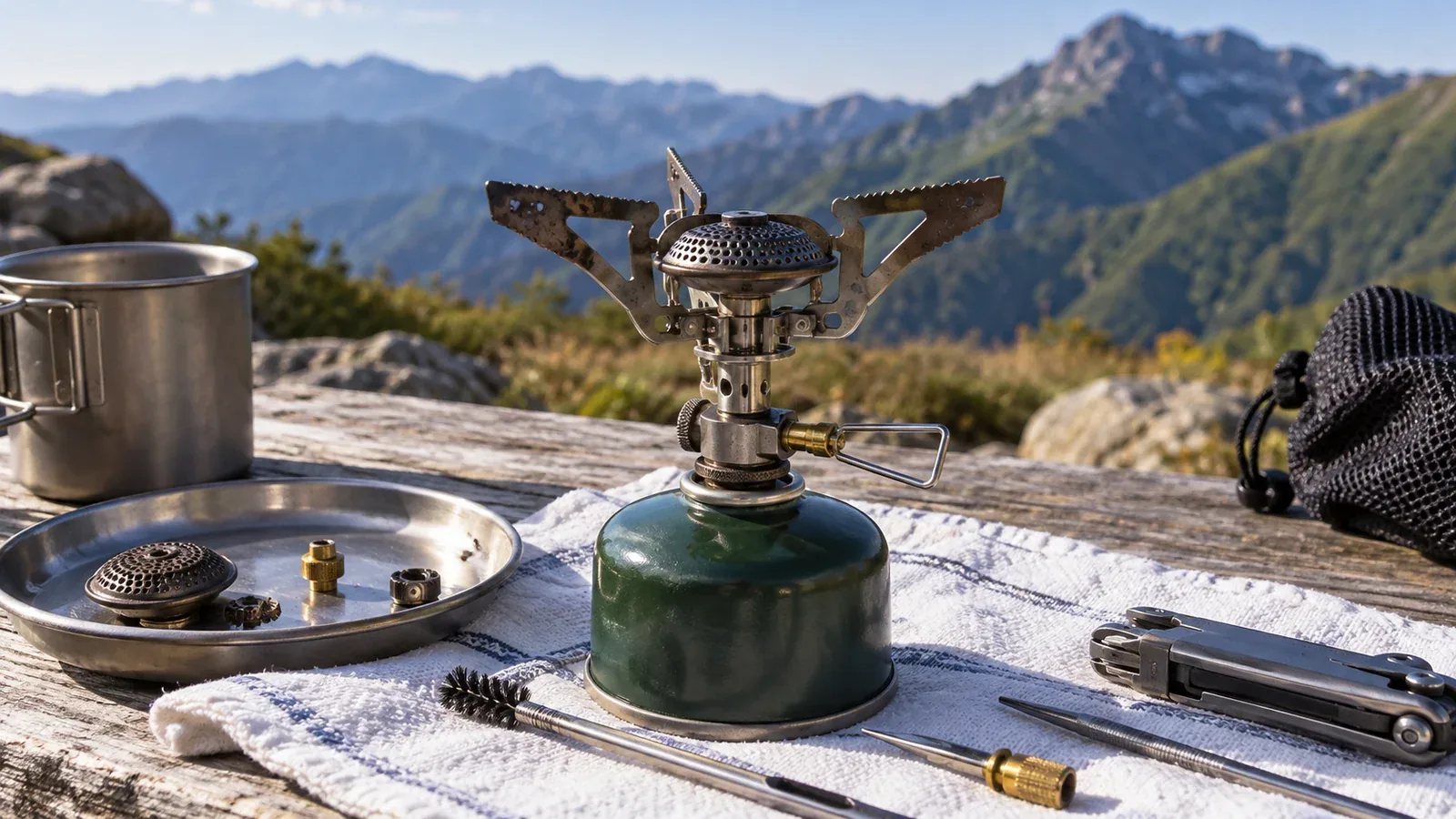
A gas stove may spark without lighting, or it may not spark at all. If it fails to light, close the control valve. If you smell gas or hear a leak, do not attempt to light the stove. Close the valve if you can do so safely, move away from ignition sources, and follow the product's gas leak instructions.
This guide covers outdoor-only hiking stoves. To prevent carbon monoxide poisoning and fire, do not light or use one in a tent, vehicle, or other enclosed space. Follow the manual for your model when cleaning it or replacing parts.
Three things to check when a stove will not light
Ignition needs a supply of fuel, fuel mixing with air at the burner head, and a spark or flame reaching that mixture in the correct sequence. Start with the fuel connection, burner head, and ignition system.
Fuel supply problems include a nearly empty canister, a bad connection, a faulty valve, or a blocked jet. Burner head problems include spill residue on the flame ports. Ignition problems may involve the electrode or igniter button. A spark or its absence cannot identify the cause on its own, so check the manual.
Jet blockages and safe inspection
The jet is the small opening that fuel flows through. Even if you suspect a blockage, probing into an area you cannot see can change the shape of the opening.
Some models let you clean the jet and others require professional service. Check that the manual for your model provides user-service instructions before you use any tool, even one made for cleaning jets.
- Extinguish the flame, close the valve, and let the stove cool completely. Before cleaning, disconnect the canister as instructed, outdoors and away from ignition sources.
- Inspect the areas you can see for dirt or damage.
- Clean the jet only if the manual provides a procedure for users, using the specified tool and method.
- Do not check the flow using a pin or thread, by blowing into the jet, or by venting gas.
- Clean the outside as permitted. Let it dry before storage, or follow the manual for further inspection.
If the manual does not describe user disassembly or jet cleaning, leave the fuel path closed and ask the manufacturer to inspect or repair it.
Checking the flame ports for dirt
Flame ports are the small holes or grooves along the burner head. Cooking spills can foul them, causing uneven flame or making some ports hard to light.
Once the burner head is completely cool and the fuel has been disconnected, clean accessible areas using the manufacturer's method. Rinse or remove the burner head only if the manual allows it, and dry it thoroughly before reassembly.
Unless the manual specifies it, do not try to widen the ports with a skewer or metal tool, or use solvents. If cleaning the outside does not fix the problem, stop using the stove and have it inspected.
Checking a piezo igniter
A piezo igniter uses an electrode to create a spark. If it struggles to spark and there is no gas leak, use the manual to check the following.
- Dirt around the electrode: Remove visible dirt using only the method specified by the manufacturer.
- Damage to the electrode or igniter parts: If a part is bent or cracked, have it inspected instead of bending it back.
- Moisture: If the igniter got wet from rain or condensation, dry it as directed.
If the manual allows ignition with a lighter or match, follow the model's lighting procedure only if there are no leaks or other faults. If you smell or hear leaking gas, do not try to light the stove by any method.
What to do if the stove will not light in the field
If the stove will not light on a hike, close the valve and make sure the situation is safe before doing anything else.
- Check the canister type and connection. Follow the manual for approved fuel, how to check the remaining fuel, and operating temperatures. Do not heat the canister with a flame, hot water, or another heat source.
- Check for gas smells or a hissing leak. If you suspect a leak, do not light the stove. Close the valve if you can do so safely, move away from ignition sources, and follow the manual's leak procedure. Never use a flame to check for a leak.
- Light the stove according to the manual. If it fails to light even when nothing appears wrong, close the valve and check that there is no sign of a leak or accumulated gas before proceeding.
- Do not use a stove that needs repair. In the field, avoid disassembling it, venting gas, or inserting thread or pins into the jet.
- Stop using the stove if the problem persists. Switch to a backup meal you can eat without cooking.
Cleaning and inspection before storage
Before putting the stove away, check that it is dry and that the control and connection are undamaged. Before the next use, check the seals and connection again.
Extinguish the flame, close the valve, and wait until the stove has cooled completely. Disconnect the canister outdoors away from ignition sources, following the manual. Clean and dry the stove as instructed. Store the stove and disconnected canister according to their respective instructions.
Whether the connection's O-ring needs grease depends on the model. Avoid unspecified grease and oil. If a seal is damaged, missing, or deformed, stop using the stove and ask the manufacturer about replacement or repair.
What to do next
Before your next hike, check the lighting and cleaning instructions for your model. Inspect the connection and flame ports, then practice the correct procedure outdoors where stove use is permitted. You can also use Nordwand's hiking logs and guide consultations to plan your route or equipment.