
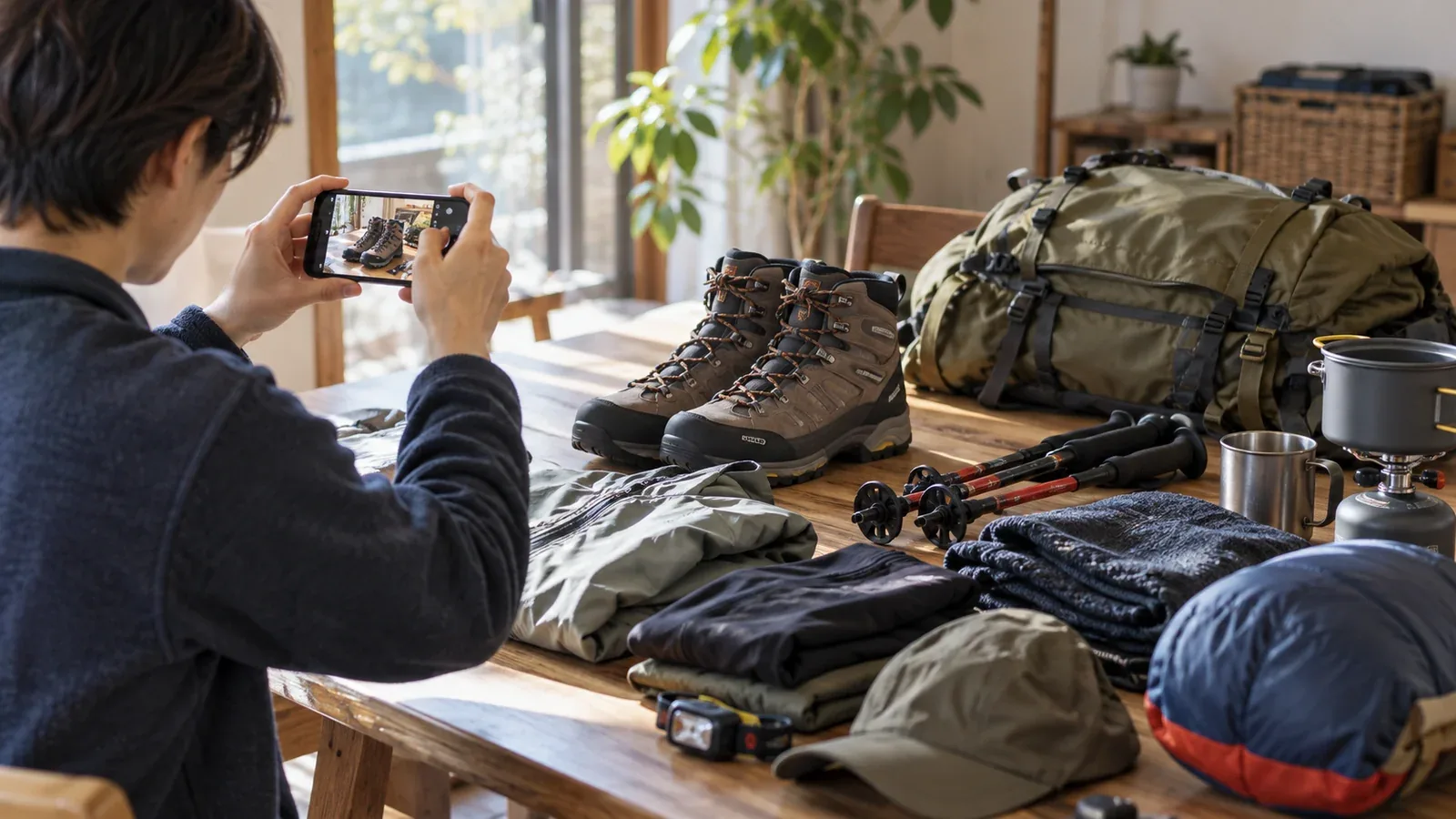
When you want to sell hiking gear, the first choice is often between listing it on an app and taking it to a resale shop. The better deal depends on the condition, brand, and time you have. Getting a higher price often takes more work.
This guide compares a sale between individuals with a dealer appraisal. It explains how to choose a route for each item and what to do next.
How marketplaces and buyback shops differ
On Japanese marketplaces such as Mercari or Rakuma, you set the price and sell to another person. You prepare photos and a description, handle questions, and ship the item. Your proceeds are the price minus fees, postage, and packing costs.
Resale shops and mail-in services appraise the item and buy it if you accept their offer. It is easier to sell several items together, but some categories or conditions may be ineligible. Compare the offer with what you would actually keep after marketplace fees and other costs.
There is no clear winner for every item. Weigh the category and condition against your time, postage, and packaging costs.
Which items suit a marketplace?
When listing an item can pay off
Items with the following characteristics can be good candidates for a marketplace.
- Clear brand and model number: Use the accurate manufacturer and model name so buyers can find the same item, whether it is Mammut, Arc’teryx, Montbell, or Black Diamond.
- Little use and no obvious damage or stains: Give specific details you can verify, such as “used twice” or “stored at home only.”
- Discontinued or hard-to-find models: Some buyers may be looking for them. Check completed sales for similar colors, sizes, and condition.
- Originally expensive items: A shell jacket or tent may net more than a shop offer even after fees and shipping. Compare actual sale prices for the item and size.
Packing and fees can leave little from inexpensive accessories or worn items. Where completed sales are scarce, factor in the effort of listing the item.
Use photos and descriptions to show condition
Post pictures of the actual item and describe its condition so buyers can see what they are getting.
- Use natural light and photograph scratches, stains, the logo, and the size label.
- Describe when you bought it, how often you used it, how you stored it, and any repairs you know about.
- Disclose scratches and stains in both the description and photos to avoid disputes.
- Use the manufacturer's model, color, and size names.
When and how to use a buyback service
When a shop makes sense
A shop can be a good choice in three common situations.
- You want to sell several items together: Skip photographing and listing each one. Check the categories and quantities the shop accepts.
- You are unsure how to value wear: A specialist may appraise gear with scratches or stains, though some conditions may make it ineligible.
- You have a deadline: It is hard to predict when a listing will sell. Ask the shop how long appraisal and payment take.
Types of buyback service
There are three common options for selling gear to a business.
- Outdoor resale specialists: Some can appraise by model and accessories. Ask whether they take tents, packs, and other categories you have.
- General resale shops: A nearby shop can take clothing and everyday gear in one visit. Check which categories and brands it accepts.
- Mail-in buyback: No visit is necessary. Check postage and packing requirements, what return shipping costs if you decline the offer, and when and how payment is made.
Look up completed sales of the same model in similar condition and estimate what you would keep if you sold it yourself. Compare offers from several shops if needed and ask what happens if they decline an item or you cancel.
Extra care when selling safety equipment
A visual check cannot reveal the impact or use history of harnesses, ropes, carabiners, helmets, or crampons. Do not list equipment that meets the manufacturer's retirement criteria.
For this kind of equipment, do not sell items with an unknown history, items that have sustained a major impact, or items that fail the manufacturer's inspection or meet its retirement criteria. Ask the manufacturer if you cannot determine whether an item can still be used. Dispose of retired gear as directed to prevent reuse. For eligible items, describe the use history, damage, and repairs accurately.
Checking condition and prices before selling
These steps can make the decision easier.
- Assess the item's condition: Check for scratches, stains, odors, and the condition of waterproofing, zippers, or soles. For safety equipment, check its history and manufacturer criteria first.
- Check marketplace prices: If the service shows completed sales, compare items with similar model, color, size, and condition. Treat active listing prices as asking prices.
- Compare the time and price difference: If the gap between the marketplace proceeds and shop offer is small and you are short on time, a shop can make sense.
- Calculate packing and postage: For bulky items, shipping, packing materials, and marketplace fees may reduce what you keep.
What to do next
Find completed sales of the same model in similar condition and estimate your proceeds after fees and postage. Set aside safety equipment and confirm its history and manufacturer criteria before comparing offers. If Nordwand's partner directory leads you to an outdoor shop, check with the shop whether it buys used gear.