
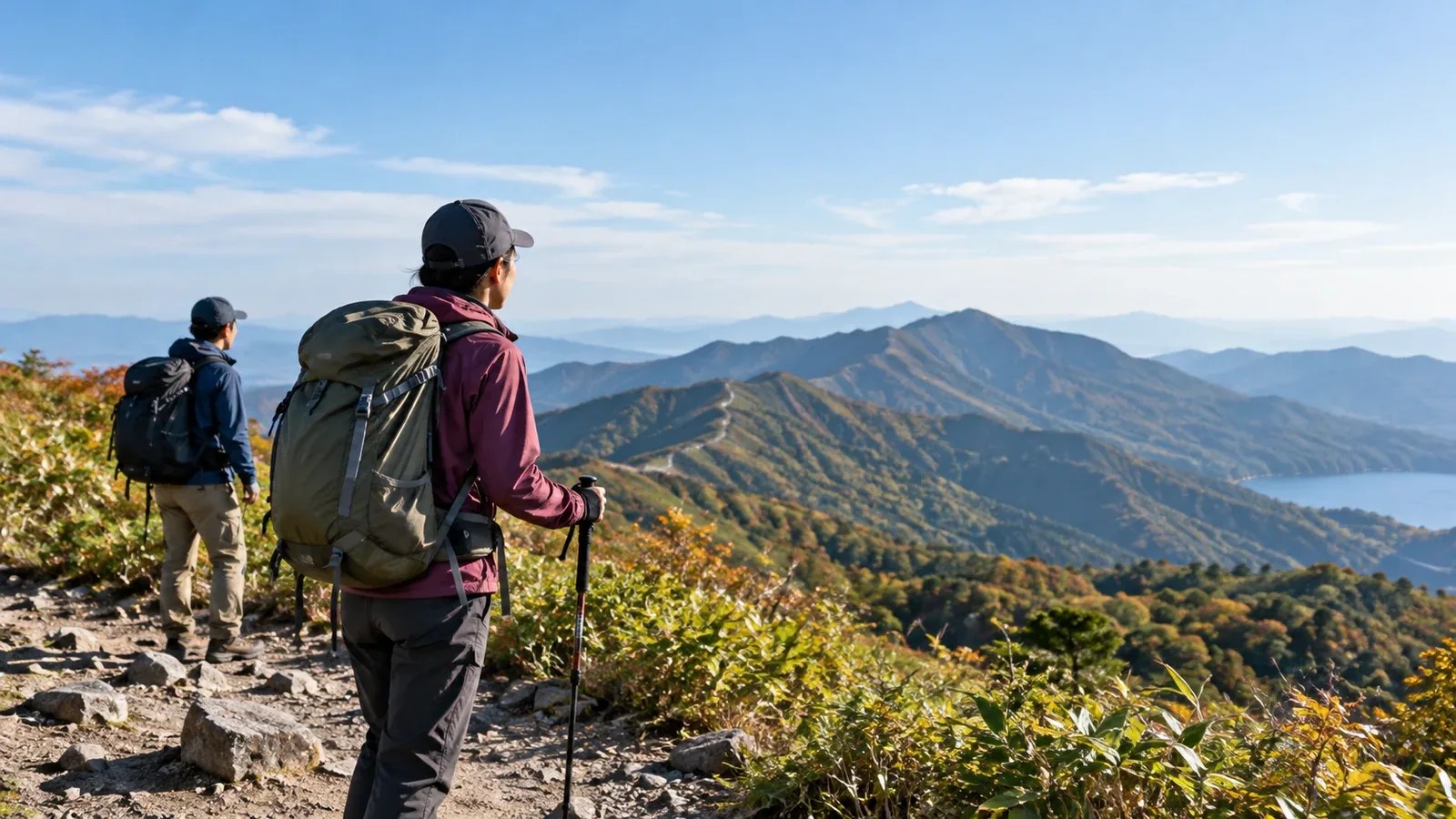
Getting started can feel overwhelming. Gear lists are full of expensive items, and search results mix easy, intermediate and advanced routes. Many people never get out the door because they can't tell where to begin.
This guide breaks your first three months into steps, from what to buy to where to walk. Get what you need for one trip, learn from it and prepare for the next. Building up gradually helps make hiking something you'll stick with.
Month one: walk one low mountain
Start by asking how long you can keep walking uphill. Without a feel for your stamina, it's easy to pick a mountain that looks easier on paper than it is in practice.
Choose a well-maintained trail with clear signs. If you're already used to walking, around 300–500 m of ascent and up to three to four hours round trip can be a starting point. Choose a shorter, easier outing if you're unsure.
Use three criteria when choosing a mountain.
- A maintained trail. Check mountains recommended for beginners by local governments or prefectural mountaineering associations.
- A clear way to turn back or get down if you feel unwell.
- Reasonable mobile reception, with no lengthy stretches entirely out of coverage. Check trailhead notices or local government information.
Once you've picked a mountain, check trailhead access, toilets and closures on the official site of the local government or managing organization. Guidebooks and articles can go out of date. Get into the habit of checking the latest information from the source.
Start with three pieces of gear and build from there
Buy gear gradually, and borrow or rent suitable equipment if needed. Carry navigation tools, a headlamp, food and water on your first hike, along with clothes for the conditions and supplies for delays.
Stage one: essentials for your first low-mountain hike
Hiking shoes are a good first purchase. Look for a secure fit, suitable protection and grip for the terrain. Low- or mid-cut hiking shoes can be a manageable option on easy paths. Wet rock and mud still call for care.
Try shoes on with the socks you'll actually hike in. Thick hiking socks can change the fit substantially. A specialist shop can help you find a pair that fits.
A waterproof jacket and separate rain pants help you stay warm and dry when conditions change. Separate pieces are easier to adjust as you walk. If comparing a waterproof rating such as 10,000 mm, treat it as one product specification and check the whole garment, including the seams.
A 20–25 L pack is a good starting point for a low-mountain day hike. The wrong back length can get painful over several hours, so try the pack on too.
Stage two: refine your kit after the first few hikes
- Hiking socks to help prevent blisters and rubbing.
- A headlamp from your first hike, in case you take longer than planned.
- Trail snacks and enough water for the whole outing.
- A paper map and compass, with an offline GPS app as an extra aid.
If you use a GPS app, download the area and test it offline before leaving. A power bank can help keep your phone charged. Learn how to navigate with your map and compass.
Month two: develop judgment through repeat outings
After your first low mountain, walk a similar route. The first time, you're often too busy getting used to hiking to notice much else. On the second and third trips, pay attention to your pace, when you need breaks, how the weather changes and how much water you drink.
Check the weather before every outing. Conditions in the mountains can change quickly. Check the Japan Meteorological Agency's regional forecast and warnings, plus local mountain weather information where available, the day before and again in the morning. If storms could affect the outing, choose a shorter route with a safe margin or postpone.
Make filing a hiking plan a habit from your first hike. It gives rescuers a starting point if you go missing. Check the submission methods accepted for the route, including prefectural police portals or trailhead boxes where available. Give your route and expected return time to someone you trust.
Month three: build your gear, knowledge and community
Several low-mountain hikes give you more options for your next trip. Think about three areas.
Preparing for higher mountains and longer routes
As you gain elevation, low temperatures, wind and UV exposure become more significant. Before a route with over 500 m of elevation difference or more than five to six hours of walking, reconsider your layers and how much water and food you need.
In October and November, temperatures in Japan vary considerably with elevation. Conditions on a ridge can feel close to midwinter. This is a good time to start checking the Japan Meteorological Agency's upper-air charts and forecasts for individual mountains.
Learn basic first aid
Sprains, blisters, heat illness and hypothermia can all happen on a hike. Along with carrying a first-aid kit, consider a course from the Japanese Red Cross Society or a mountaineering organization so you know how to act. If you have a chronic health condition, speak to your doctor before heading into the mountains.
Find people to hike with
Hiking with experienced, reliable companions gives you a chance to learn how to use your gear, set a pace and read a trail. You can meet people through a local mountaineering club or a hiking community app. Nordwand Base Camps connect people interested in the same area, and you can post a request for a certified guide.
After three months: choosing your next mountain
If you've walked three to five low mountains, you've started to build the fitness, gear and judgment you need. Before picking the next one, ask yourself these questions.
- Can I finish in time, allowing 1.2–1.5 times the published route time?
- Can I decide when to turn back if the weather changes?
- Does my gear suit the temperatures and terrain?
- Have I filed a plan and shared it with my emergency contact?
If any of those answers is uncertain, prepare a little more before taking on that mountain. Knowing when to wait is an important skill for a long life of hiking.
What to do next
Pick one nearby trail using current information from the local government or mountaineering association. Check access, the trailhead and toilets. Try hiking shoes on with the socks you'll wear. Check regional forecasts and local notices the day before and that morning. File your hiking plan where applicable and share it with someone you trust. Nordwand's Base Camps and guide requests are options if you'd like company.
References
- Japan Meteorological Agency, regional forecasts and advisories.
- National Police Agency, overview of mountain incidents.
- Prefectural police hiking plan submission offices.
- Japanese Red Cross Society, first-aid courses.
- Official hiking guides from prefectures, municipalities and mountaineering associations.