
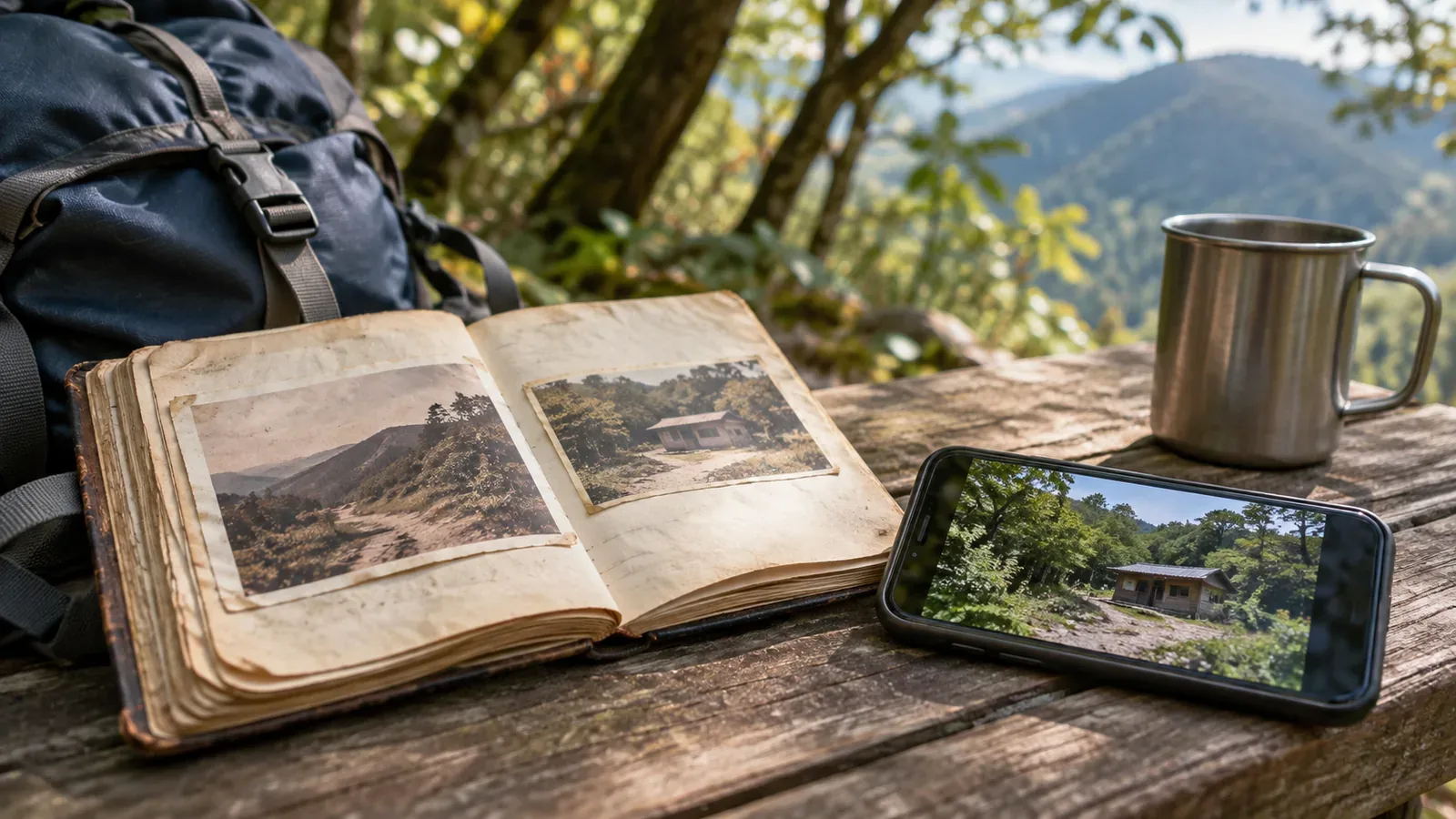
When you reread a trip report from years ago, the route and shops around your local mountain may have changed. Before deleting the article or simply updating its date, think about what it offers readers today and where it might mislead them. A hiking article can guide a current trip and also tell readers what a place was like at the time.
Identify what the article offers and where it could mislead
Start by identifying which parts describe your experience at the time, which are meant as current guidance and which draw on another source. A photo of the trailhead can show what it looked like that day. A bus timetable or directions in the same article may be read by someone planning a trip next weekend.
An old photo can still be worth keeping. A heading such as “Getting to the trailhead” may lead readers to treat everything underneath it as current guidance. Check what the title promises and whether someone who arrives at a particular section through search or a link will see the date.
Trail access, transport, opening hours and conditions of use can change. Ishikawa Prefecture notes that it updates its Mount Hakusan trail information when the center receives reports, so the information may not reflect the latest conditions. Put the date you checked and a link to the manager's current information alongside old directions or visitor details.
Date the records you keep and say what they cover
If you keep the article as a trip report, put the month and year of your visit and the area you saw firsthand where readers can find them. A caption explaining that a photo shows conditions at the time of the visit helps readers avoid using an old building or sign as a current landmark. If the date of a photo is uncertain, give only what you know.
If you add a note years later, distinguish the original experience from the information you found afterward. Wording such as “this is what I saw during my visit” and “I later checked the trail manager's notice” makes clear when you observed and verified each detail. That distinction also helps when looking back at how a place and daily life there have changed.
Links can change. When the Biodiversity Center of Japan's Ministry of the Environment moved its natural environment survey mapping service to Ikimono Map, it announced the closure of the old service and that some data would no longer be offered. This is an example of how access to source material can change. When a link breaks, look for the same institution's current page and check that it supports the same point before replacing the link.
Decide whether to update, combine or unpublish
If an article can still serve as a guide and you can verify what matters, consider updating it. Show what changed and when you checked, and decide whether to retain the original trip account. Remove anything you cannot confirm or mark it as unverified, and point readers to the official guide.
If several articles about the same mountain repeat directions, consider keeping one current guide and linking to it from the trip reports. Combining the visit dates and distinct observations into one current article could lose the chronology. Give the guide and trip reports distinct purposes, and let readers find the older reports from the consolidated page.
Temporarily take an article down if incorrect directions could send readers the wrong way before you fix them, or if it contains personal details that should be private. When the choice is unclear, weigh the value of keeping the older text against the consequences of readers mistaking it for current guidance. If you unpublish or delete it, you can keep a private copy to inform a correction or a decision to republish.
Use dates to show what has changed
The National Diet Library's WARP project collects and preserves websites from public institutions and other organisations, and marks the pages it displays as archived. When keeping a trip report, you can put the date in the title or captions so readers know it describes that moment.
The publication date, visit date and date you checked the information each mean something different. If the page has only one date field, add the year you visited and the date you verified the guide to the body. This helps readers distinguish when the photo was taken from when the directions were checked. A new page date alone cannot confirm old directions or links.
Review articles periodically and set priorities based on what they offer. Check details readers need for their trips first, and make sure articles about past landscapes show the date. If you cannot maintain everything as a current guide, start by helping readers reach official information.
Show the age of the article and decide what it is for
A list can help you keep track of the title, visit date, whether it contains directions, where to check them and the decision for each article. Even a short note such as “Keep as a photo record; direct transport questions to the official site” can explain the reasoning to the next editor. If the decision is pending, note why and whom you need to ask.
Check sections readers might open directly from search or another article as well as the page introduction. Put the date or current link beside older advice so readers who skip the opening can still find it. Describe what the link leads to rather than labelling it only “here.”
Before changing captions on old photos, check your notes from the time or local records to verify what they show. As Japan's Personal Information Protection Commission advises, look for people and addresses that appear in the image, as well as location data. If you republish the record, check what is still appropriate to make public.
An old hiking article can contain details to update for a current trip and observations worth keeping as a record. Distinguish the visit date from the verification date, review details that can change, then choose whether to update, combine or unpublish. Let what readers need to verify guide that choice. It helps pass the record of local mountains on to the next reader.
References and sources
- Ishikawa Prefecture: conditions at Mount Hakusan facilities and hiking trails
- Biodiversity Center of Japan, Ministry of the Environment: launch of Ikimono Map
- National Diet Library: WARP frequently asked questions
- Japan Personal Information Protection Commission: personal information examples and points to watch for